
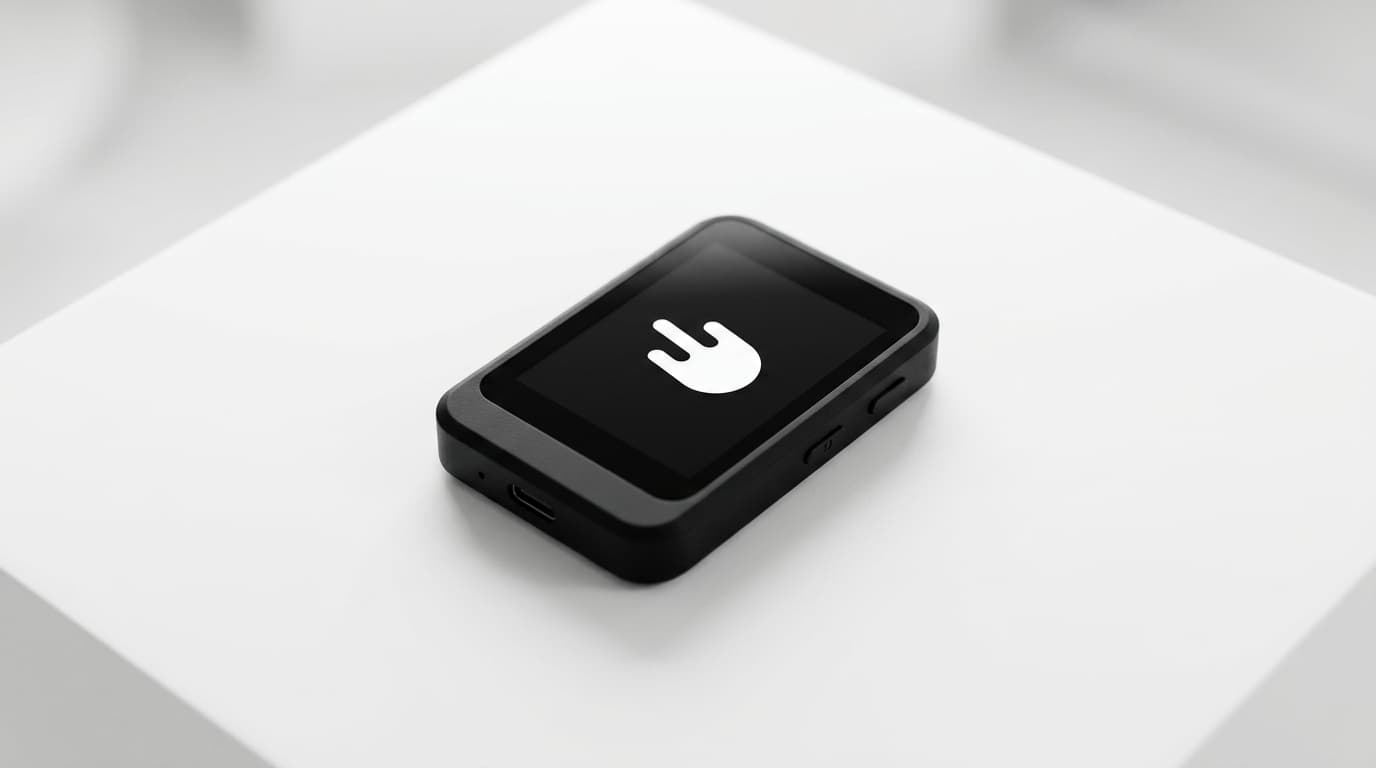
Blockstream Jade Core Launch Brings Air-Gapped Security to Bitcoin Beginners
Blockstream's $99 Jade Core hardware wallet simplifies Bitcoin self-custody for newcomers while maintaining institutional-grade security features.
At $99 with free worldwide shipping, Blockstream's new Jade Core hardware wallet undercuts the Ledger Nano X by roughly a third. But the price isn't the real story. What matters is that Blockstream has built a device specifically designed for people who've never touched a hardware wallet before, without stripping out the security features that make self-custody worthwhile in the first place.
The company launched Jade Core on April 27, 2026, positioning it as a bridge between exchange custody and true self-sovereignty. For the growing number of Bitcoin holders who want to move their coins off exchanges but find hardware wallets intimidating, this device attempts to solve a real problem.
Why Self-Custody Still Feels Hard
Hardware wallets have traditionally been built by technical people for technical people. The result: devices packed with features that confuse newcomers and setup processes that feel more like IT troubleshooting than financial security.
Blockstream's Chief Product Officer Jeff Boortz acknowledged this tension directly at launch, stating the device offers "secure, intuitive self-custody" aimed at broader adoption without compromising security. Whether the company has actually achieved that balance is worth examining.
The Jade Core pairs with Blockstream's mobile app via USB-C or Bluetooth, walking users through a guided setup process. The device generates a 12-word recovery phrase and features a color display for verifying transaction addresses before signing. These are table stakes features for hardware wallets, but Blockstream's bet is that the implementation matters as much as the feature list.
Security Without the Steep Learning Curve
The Jade Core shares its security architecture with the company's higher-end Jade Plus. This includes fully open-source hardware and firmware (a meaningful distinction from competitors who keep their code proprietary), offline transaction signing, and a "Genuine Check" feature for verifying device authenticity.
The most interesting security feature is the Blind Oracle PIN system. Traditional hardware wallets store an encrypted seed on the device itself, meaning a sophisticated attacker with physical access could potentially extract it. Jade Core takes a different approach: the device requires communication with Blockstream's oracle server to decrypt the seed, adding a layer of protection against physical compromise.
For privacy-conscious users, Blockstream allows self-hosting the oracle server. This addresses the obvious counterargument that relying on Blockstream's infrastructure defeats the point of self-custody. Whether most beginners will actually self-host is another question, but the option exists.
The Broader Strategy
Peter Bain, Blockstream's Chief Marketing Officer, framed the Jade Core as part of a larger strategy connecting retail tools to institutional infrastructure. This makes sense given the company's enterprise focus, but it also hints at Blockstream's theory of adoption: start users with accessible hardware, then graduate them to more sophisticated setups over time.
The timing is deliberate. After several high-profile exchange failures in recent years, demand for self-custody solutions has grown substantially. Yet the hardware wallet market has been slow to adapt, continuing to build products that assume a baseline of technical knowledge that most new Bitcoin holders simply don't have.
What This Means for New Bitcoin Holders
If you're currently keeping bitcoin on an exchange and have been meaning to take self-custody, the Jade Core addresses the most common objection: "it's too complicated." The $99 price point is low enough to feel like a reasonable experiment, and the guided setup reduces the chances of making a critical mistake during initial configuration.
For those using apps like Strike to accumulate bitcoin through dollar-cost averaging, the Jade Core represents a logical next step. Strike makes buying bitcoin simple; a device like the Jade Core makes securing it simple. The combination of a low-friction buying experience and accessible self-custody hardware is exactly what broader adoption probably requires.
That said, this is a first-week launch with no reported issues or sales data yet. The device's reputation will be built over months and years as users stress-test both the hardware and the security model. Open-source design means the community can audit the code, but it also means any vulnerabilities will be discovered publicly.
The Tradeoffs Worth Considering
The Blind Oracle PIN system is clever, but it does create a dependency on either Blockstream's servers or your own self-hosted oracle. If Blockstream's servers went offline and you hadn't set up your own oracle, you'd need your 12-word recovery phrase to access your funds through another wallet. This isn't a flaw, exactly, but it's a design choice that differs from purely air-gapped devices.
The Jade Core also lacks some features found on more expensive hardware wallets, like a larger screen or support for multiple cryptocurrencies beyond Bitcoin. For Bitcoin-only users, the latter is a feature, not a bug. But the simplified feature set is worth understanding before purchasing.
Looking Forward
Blockstream has placed a bet that the next wave of hardware wallet adoption will come from people who are comfortable with smartphone apps but wary of technical complexity. The Jade Core is purpose-built for that audience.
Whether it succeeds depends less on specifications and more on whether the company has correctly identified what's actually holding people back from self-custody. If the barrier is complexity, the Jade Core has a real shot. If the barrier is something deeper, like uncertainty about whether self-custody is worth the responsibility, no amount of UX polish will move the needle.
The device is available now at the Blockstream store. For Bitcoin beginners ready to take custody of their coins, it's worth watching how the community's experience unfolds over the coming months.