
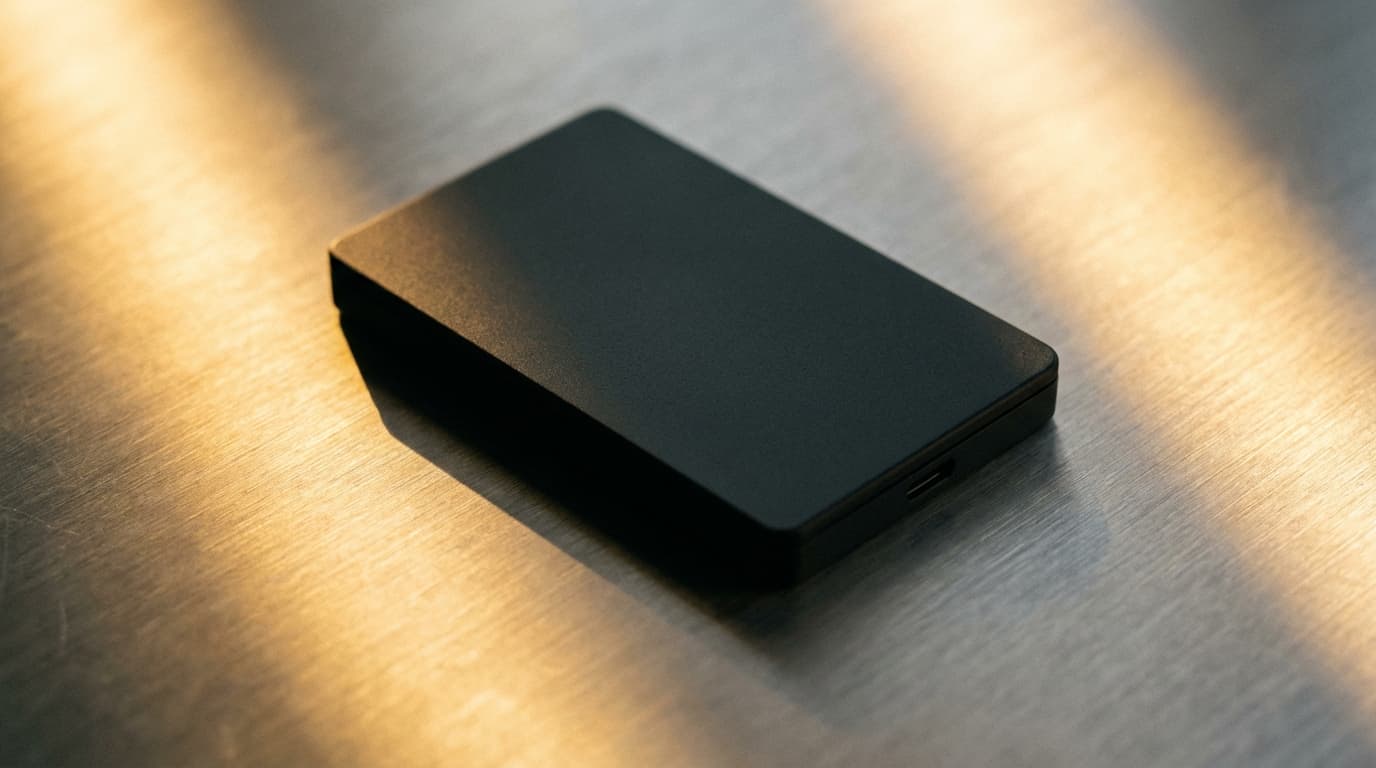
Why Coldcard Is Still the Gold Standard for Bitcoin Security
Coldcard's dual secure element architecture and true air-gap capability make it the most secure Bitcoin hardware wallet—if you can tolerate the trade-offs.
To extract private keys from a Coldcard Mk4, an attacker would need to compromise three separate chips manufactured by two different vendors. That's not marketing copy—it's the architectural reality that keeps this Canadian-made device at the top of Bitcoin security discussions in 2025, even as competitors have closed gaps in usability and price.
But security engineering involves trade-offs. Understanding why Coldcard remains the benchmark means understanding both what it does better than anything else and what it deliberately sacrifices to get there.
The Three-Chip Problem
Most hardware wallets protect your seed phrase with a single secure element—a tamper-resistant chip designed to keep secrets. Coldcard uses two, from different manufacturers: a Microchip ATECC608B and a Maxim DS28C36B.
Your 24-word BIP39 seed gets encrypted with AES-256-CTR, and the decryption key is split between these two secure elements and the main microcontroller. All three must cooperate to sign a transaction. A backdoor in one chip, even if it existed, accomplishes nothing without backdoors in the other two—manufactured by competing companies with different codebases and supply chains.
The device adds a third layer of paranoia to random number generation. Entropy comes from all three chips independently, so compromising one source doesn't weaken the randomness. If you trust none of them, you can roll physical dice and input the results manually.
True Air-Gap, No Workarounds
Air-gapping—keeping your signing device completely offline—sounds simple until you try implementing it. Many wallets require Bluetooth, USB connections, or awkward QR code workflows bolted on after the fact.
Coldcard was designed from the start around PSBT (Partially Signed Bitcoin Transactions), the BIP174 standard. You load unsigned transactions via microSD card, sign them offline, and carry the signed file back to your connected computer. No radio, no cable, no camera required—though the newer Coldcard Q model adds an optional QR scanner and NFC for those who prefer that workflow.
This isn't just theoretical hygiene. For anyone managing significant Bitcoin holdings, the attack surface reduction matters. The device never needs to connect to anything that connects to the internet.
Anti-Phishing and Duress Features
Here's where Coldcard's paranoia gets creative.
When you enter your PIN prefix, the device displays two anti-phishing words generated via HMAC/SHA-256 from the secure element. A fake Coldcard can't reproduce these words without your PIN and the specific secure element in your device. With roughly 4 million possible combinations and rate-limiting that would take 93 days to brute-force, this defeats supply chain attacks where someone swaps your device for a modified one.
The duress features address the $5 wrench attack—the scenario where someone threatens you physically until you hand over your Bitcoin. Coldcard lets you set up a decoy wallet accessible via an alternate PIN. Under coercion, you open this wallet, which contains some sacrificial funds. Your actual holdings remain hidden behind the real PIN.
If things get truly desperate, a "Brick Me" PIN destroys all secrets on the device instantly. A long-delay login option can buy time by requiring, say, a 12-hour countdown before access—forcing an attacker to keep you around overnight.
The Trade-Offs Are Real
None of this comes free.
At $157.94, the Mk4 costs roughly twice what you'd pay for a Trezor Safe 3 or Blockstream Jade. The numeric keypad interface has a learning curve that frustrates newcomers. There's no native mobile app—you're working with third-party wallet software or command-line tools.
The device is Bitcoin-only by design. If you hold Ethereum, Solana, or any other asset, Coldcard won't help you. Coinkite, the manufacturer, frames this as a feature: fewer codepaths mean fewer vulnerabilities. But for anyone with a diversified portfolio, it means buying a second device.
The open-source community can audit the firmware, but the secure element code itself remains closed-source—a philosophical compromise that bothers some hardcore open-source advocates.
Who Actually Needs This?
In 2025 comparative testing against Trezor, Jade, and BitBox02, Coldcard ranks highest for multisig support and handling large transactions with many UTXO inputs—real concerns for institutions and long-term holders consolidating funds. It's the device you want for managing a multi-signature treasury or cold storage that might sit untouched for years.
For someone buying their first hardware wallet to store a few thousand dollars in Bitcoin, the BitBox02 or Trezor Safe 3 offers a gentler introduction at half the price. The security difference is unlikely to matter at that scale.
But for Bitcoin maximalists, institutions, or anyone who lies awake thinking about supply chain attacks and coercion scenarios, Coldcard's engineering choices make sense. The clunky interface isn't a bug—it's the cost of requiring three independent chip compromises instead of one.
The gold standard doesn't mean the right choice for everyone. It means the benchmark against which everything else gets measured.