
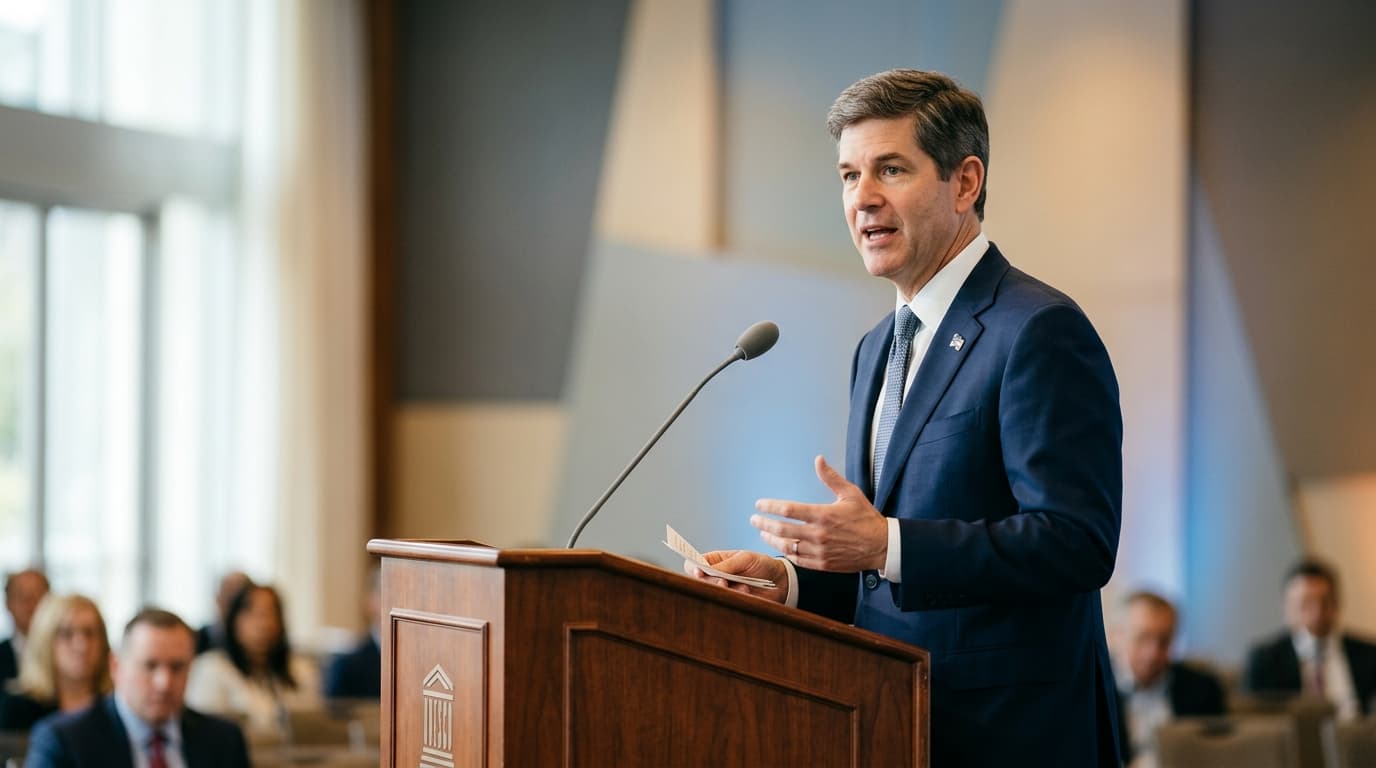
Kevin Warsh's Fed Confirmation Could Reshape Bitcoin Self-Custody Demand
A Bitcoin-friendly Fed chair who owns 30+ crypto assets may legitimize BTC as a macro hedge while keeping markets volatile, pushing demand toward hardware wallets.
Kevin Warsh disclosed ownership of more than 30 crypto assets during his Senate confirmation hearing. Now confirmed as Federal Reserve chair, he represents something new: a central banker who treats Bitcoin as a legitimate store of value while simultaneously favoring tighter monetary policy.
This combination, crypto-friendly rhetoric paired with hawkish rate stances, creates an unusual dynamic for Bitcoin markets. And it may quietly accelerate a trend that's been building since the exchange failures of 2022-2023: the shift toward self-custody.
A Fed Chair Who Doesn't Fear Bitcoin
Warsh's views on Bitcoin have been consistent and public. In a May 2025 Hoover Institution discussion, he described Bitcoin as a "sustainable store of value, like gold" and argued it serves as a market signal of policy misalignment rather than a threat to monetary stability. At his confirmation hearing, he reiterated that Bitcoin "doesn't trouble me" and characterized it as an "important asset."
This marks a sharp departure from Jerome Powell, who repeatedly stated that cryptocurrencies lack intrinsic value. Having a Fed chair who openly treats Bitcoin as a legitimate macro hedge could reduce what analysts call "career risk" for institutional asset managers considering Bitcoin allocations.
But Warsh isn't an evangelist. He's described crypto broadly as "software, not money" and has criticized many private crypto projects as fraudulent. His position is pragmatic and regulatory rather than promotional.
The Hawkish Paradox
Here's where things get complicated for Bitcoin holders. Warsh has been a consistent critic of quantitative easing and believes the Fed's balance sheet, currently around $6.6 trillion after being reduced from roughly $9 trillion, is still "far too high."
Markets have priced in this hawkishness. CME futures in early June 2026 implied more than a 93% chance the Fed would hold rates steady at Warsh's first FOMC meeting. Prediction platforms Kalshi and Polymarket saw over $42 million wagered on no rate change. Since Warsh took office on May 22, 2026, Bitcoin has fallen approximately 20%.
Some crypto strategists have framed this as a paradox: a "Bitcoin-friendly but rate-hawkish" Fed chair who legitimizes Bitcoin as a macro asset while maintaining conditions that pressure its price in the near term.
Why This May Benefit Hardware Wallets
The thesis connecting Warsh's appointment to hardware wallet demand runs through several channels.
First, legitimization. When the Federal Reserve chair treats Bitcoin as a meaningful market signal and store of value, it normalizes the asset for a broader audience. Institutional allocators who previously saw Bitcoin as career risk may reconsider, bringing larger balances that require robust custody solutions.
Second, volatility. A Fed that prioritizes inflation control over asset-market support means continued price swings. Volatile markets historically drive awareness of counterparty risk, the lesson many learned painfully during the 2022-2023 exchange collapses. Users holding significant balances through choppy conditions often migrate toward cold storage.
Third, regulatory clarity. Analysts suggest Warsh's combination of crypto literacy and skepticism of QE may encourage more nuanced U.S. regulatory frameworks focused on market integrity rather than outright hostility. Clearer rules could expand the addressable market for Bitcoin while maintaining pressure on centralized custodians.
The Hardware Wallet Market Is Already Growing
Multiple research firms project strong growth in hardware wallets over the coming decade, though their exact figures vary. Market Research Future valued the hardware wallet market at approximately $580 million in 2025, projecting roughly $770 million in 2026 and $5.48 billion by 2035. Research Nester estimated the 2025 market at around $680 million, growing to over $4.77 billion by 2035.
Ledger's planned $4 billion U.S. IPO, announced in January 2026, signals how significant this market has become. The company cited surging demand for secure crypto wallets following exchange failures and regulatory crackdowns.
Devices like the Trezor Safe 7, with its dual secure elements and post-quantum cryptography, represent the premium end of this market, targeting users who want future-proof security. The Blockstream Jade offers a different approach: fully open-source hardware with air-gapped QR signing at roughly half the price of competitors, appealing to users who prioritize transparency and want to verify rather than trust.
The Contrarian View
Not everyone agrees that Warsh's confirmation benefits hardware wallets. Some analysts caution that higher real rates could dampen near-term demand, since hardware wallet purchases often correlate with bull-market retail inflows. If Bitcoin prices remain under pressure, aggregate retail volumes may stay subdued regardless of improved regulatory sentiment.
The correlation between Bitcoin price and hardware wallet sales is well-established. A crypto-friendly Fed chair doesn't change that dynamic; it merely adds a potential tailwind for longer-term adoption.
What to Watch
There's currently no robust public data directly linking Warsh's nomination or confirmation to measurable changes in hardware wallet sales. Any claim that his Fed role has already "sparked" demand is based on narrative and sentiment rather than disclosed figures.
What we can say is this: the conditions that have historically driven hardware wallet adoption (regulatory uncertainty, exchange failures, growing institutional interest, volatile prices) remain present. A Fed chair who treats Bitcoin as legitimate adds a new variable to this mix.
If Warsh's tenure stabilizes regulatory expectations while keeping macro conditions volatile, hardware wallet manufacturers may benefit from what analysts call "higher-quality demand": larger balances and more sophisticated users who prioritize security over convenience. Whether this translates into meaningful sales growth will depend on Bitcoin's price trajectory and how effectively the self-custody message reaches mainstream investors.
For now, the infrastructure is ready. The question is whether a Bitcoin-friendly Fed chair helps more people realize they need it.