
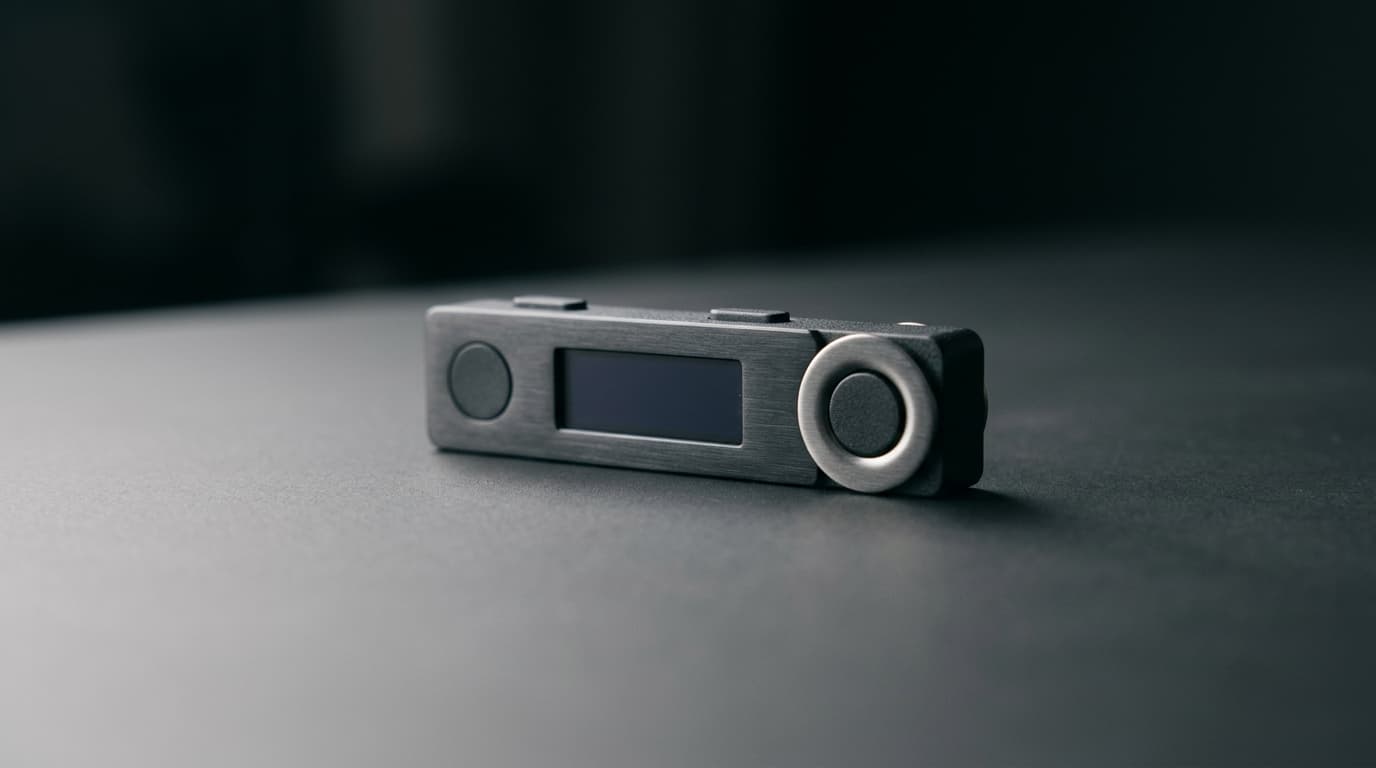
Ledger IPO Pause Reveals Hardware Wallet Market Shifting Toward Open-Source Transparency
Ledger's delayed IPO highlights growing user demand for open-source hardware wallets as trust concerns reshape the self-custody market.
When Ledger quietly shelved its planned $4 billion U.S. IPO in May 2026, the company cited "difficult market conditions." That's true enough. But the pause also exposes something deeper: a growing philosophical divide in the hardware wallet market between closed, certification-led devices and open-source alternatives that emphasize transparency and community verification.
The shift matters because it's reshaping how security-conscious users think about self-custody, and it may ultimately influence how investors value hardware wallet companies when the crypto IPO window reopens.
What Happened With Ledger's IPO
According to reporting from May 2026, Ledger had been working with Goldman Sachs, Jefferies, and Barclays on a New York Stock Exchange listing that could have valued the company at roughly $4 billion. The firm never filed a draft S-1 with the SEC. Instead, it's now reassessing options including private fundraising.
Ledger isn't alone. Consensys and Kraken have also delayed or suspended listing plans, part of what industry observers are calling a "crypto IPO winter" following a 2025 boom in crypto-related public offerings. BitGo remains the only crypto-native company to have gone public in 2026.
But market timing only tells part of the story. Ledger's equity narrative has grown more complicated, and much of that complication stems from how the hardware wallet market itself is evolving.
The Open-Source vs. Closed Firmware Divide
Ledger built its market dominance on certified secure elements (rated EAL5+ to EAL6+), polished user experience, and partnerships with major crypto platforms. Its current flagship devices support over 5,500 coins with Bluetooth and NFC connectivity.
The catch: Ledger's core secure-element firmware remains closed, locked under STMicroelectronics NDAs. While the company has opened most of its application-layer code, the security-critical foundation cannot be independently audited by the community.
Competitors have taken a different path. The Trezor Safe 7 pairs open-source firmware with dual secure elements, offering both hardware certification and full code transparency. BitBox02 promotes itself as a minimalist, fully open-source wallet using a dual-chip architecture. Foundation Devices' Passport caters to Bitcoin-only users who prioritize verifiable supply chains.
Independent comparisons from June 2026 describe Ledger's stack as "partial" open source, while rivals like Trezor and BitBox present fully auditable firmware and, in some cases, open hardware documentation.
Trust Concerns Are Real
The preference for open-source isn't just philosophical. It's grounded in specific incidents.
Ledger's 2020 customer data breach exposed contact details for hundreds of thousands of users, a reputational overhang that still appears in 2026 consumer reviews. More recently, a compromised employee credentials incident led to a malicious update that drained some user funds.
Then there's Ledger Recover, a service that shards seed phrases between third parties. For users who believe in "not your keys, not your crypto," the very existence of this feature undermines the self-custody promise, regardless of whether they opt in.
These concerns don't make Ledger devices insecure in absolute terms. But they've created an opening for competitors who can offer a different trust model.
Market Numbers Tell a Mixed Story
The hardware wallet market itself is healthy. Industry research from early 2026 estimates the global market at $0.72-0.77 billion this year, up from $0.54-0.58 billion in 2025. Forecasts project growth to $2.25-5.48 billion by the early 2030s, with compound annual growth rates around 23-26%.
Ledger and Trezor remain the dominant players in what analysts describe as a moderately concentrated market, with roughly 20 smaller brands competing on price, connectivity, or specialization.
But the composition of demand is shifting. Consumer-facing rankings for 2025-2026 increasingly feature open-source-first brands like Trezor, BitBox, Keystone, and Passport. Some reviewers now explicitly omit Ledger due to the concerns mentioned above.
Market research identifies a segmentation: mainstream users gravitate toward closed-firmware devices that prioritize UX, while a growing niche of power users and developers prefer open-source designs. That niche punches above its weight in influencing broader market perception.
The Nuance Matters
Fair counterarguments exist. Certified secure elements with closed firmware offer formally validated protection against physical attacks, including sophisticated side-channel attacks that open-source chips without such certifications may be more vulnerable to. Security isn't a simple open-vs-closed binary.
The bulk of new hardware wallet adopters still prioritize ease of use, mobile integration, and brand recognition. Ledger remains strong in all three areas. The shift toward open-source represents a high-end niche, not a mass-market revolution.
But niches can define market direction over time, especially when they're populated by the most vocal and technically sophisticated users.
What This Means for the Future
If crypto prices rebound sharply (some observers mention Bitcoin revisiting the $90,000 range) and regulatory clarity improves, the IPO window for crypto firms could reopen. When it does, the transparency question will be harder to avoid.
Regulators and institutional investors are increasingly attentive to governance, compliance, and software transparency. Firms with open-source stacks and clearer audit trails may find it easier to tell a clean equity story. Those dependent on proprietary secure elements and controversial features like Recover may face tougher questions.
Open-source hardware wallets also benefit from faster community-driven updates to address emerging threats. Closed systems rely on vendor-controlled release cycles, a distinction that matters in a fast-moving threat landscape.
The hardware wallet market isn't abandoning Ledger. But the terms of competition are shifting. Trust, once established primarily through certifications and brand reputation, increasingly requires verifiable transparency.
For users making decisions today, the choice comes down to priorities. If you value auditable code and community verification, open-source options like the Trezor Safe 7 or BitBox02 offer a different trust model. If you prioritize multi-asset support, polished mobile integration, and formal certifications, Ledger remains a capable choice, its IPO pause notwithstanding.
The market will keep growing either way. The question is which philosophy of security will define it.