
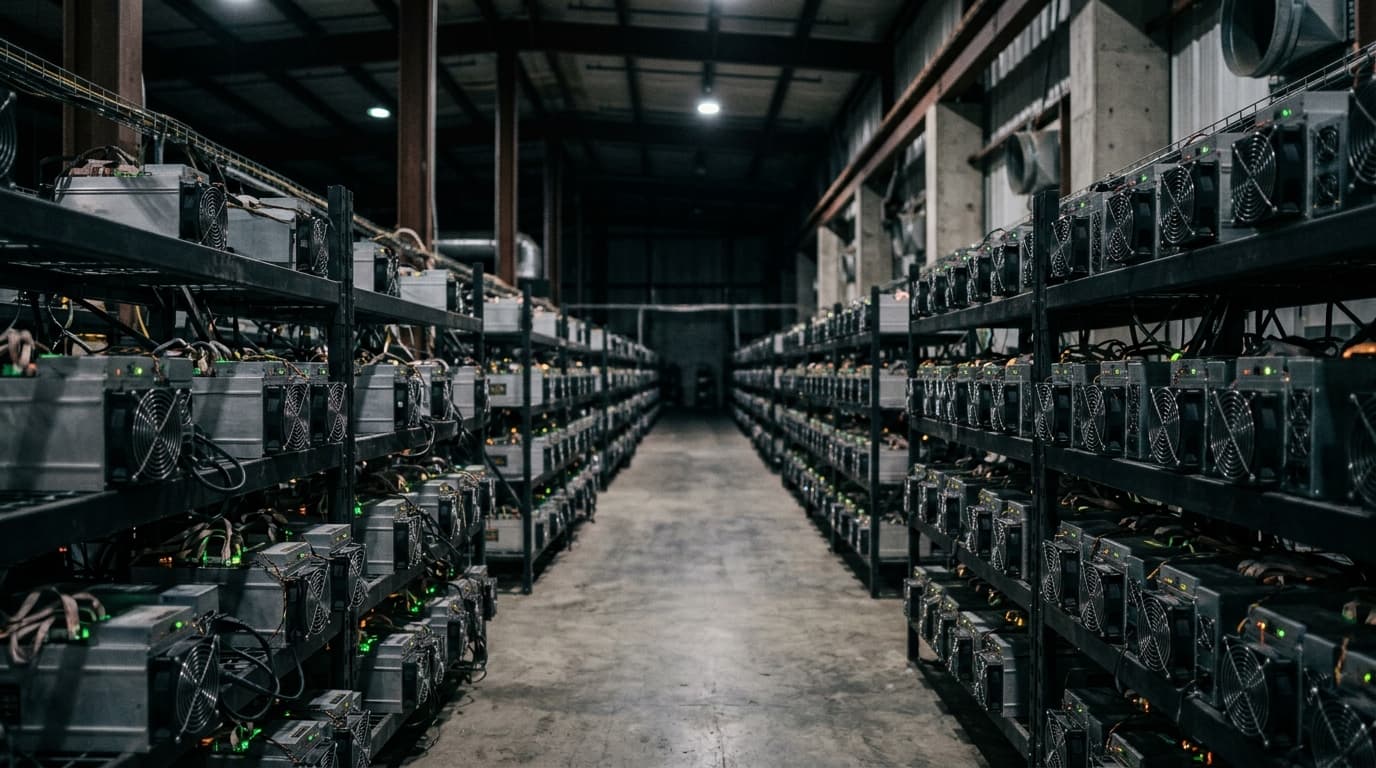
MARA's $1.5B Bitcoin Dump Exposes the Hidden Costs of Mining Treasury Strategy
Marathon Digital's massive BTC liquidation reveals structural flaws in the HODL-everything mining model when capital demands collide with crypto volatility.
When Marathon Digital (MARA) sold 15,133 bitcoin for roughly $1.1 billion in March 2026, it wasn't just a treasury management decision. It was an admission that the "mine it, keep it forever" playbook has a breaking point.
The sale, part of cumulative disposals that market commentators round to about $1.5 billion, marks a dramatic reversal for a company that spent years positioning itself as a leveraged bet on bitcoin's endless upside. Now MARA is using the proceeds to retire zero-coupon convertible notes at a discount and fund capital-intensive expansion into AI data centers and owned power infrastructure. The pivot reveals what critics have long suspected: mining-centric treasuries carry hidden costs that eventually come due.
The HODL Strategy Made Sense Until It Didn't
Marathon adopted its full HODL treasury policy in 2024, explicitly retaining all mined bitcoin and even purchasing additional BTC on the open market rather than selling output to cover operating costs. By early 2025, executives were still touting this approach as value-accretive for shareholders, framing MARA as "a leveraged proxy on bitcoin's upside."
The numbers looked impressive on paper. By July 2025, Marathon reported holding 50,639 BTC with more than $5 billion in liquid assets. The company's year-end 2025 filings showed 53,822 BTC, up about 20% year-on-year.
But the Q1 2025 earnings report told a different story. Marathon posted a net loss of approximately $533 million, driven almost entirely by a roughly $510 million unrealized loss on its bitcoin holdings after BTC declined 12% during the quarter. Revenue rose 30% year-on-year to around $214 million, but that operating performance was invisible beneath the mark-to-market carnage.
This is the first hidden cost of mining treasuries: accounting volatility that obscures underlying business health. When your balance sheet is dominated by a single volatile asset, your P&L becomes a bitcoin price chart with extra steps.
The Leverage Trap
Marathon funded its aggressive BTC accumulation through zero-coupon convertibles and ATM equity programs, a classic growth-company playbook that works beautifully in a sustained uptrend. The company raised cheap capital, bought or retained bitcoin, and watched its balance sheet swell.
The problem is path dependency. When BTC prices plateau or correct, the same structure exposes shareholders to a double hit: mark-to-market losses on holdings plus a heavier relative debt load. Eventually, companies are forced to liquidate coins once marketed as long-term "digital gold" to preserve solvency metrics.
By February 2026, Marathon had already reduced about 56% of its debt at an average 21% discount to par. The March sale accelerated that deleveraging, using roughly $1 billion of proceeds to repurchase $1 billion in face value of 2030 and 2031 convertible notes.
Some investors applauded the move for reducing balance-sheet risk and eliminating future dilution. Others framed it as a tacit admission that the earlier strategy had over-levered Marathon to bitcoin's cycle, forcing sales into an uncertain macro environment rather than opportunistically at a peak.
The Real Cost of Crypto Treasuries
Arkham Intelligence's 2025 research categorized Marathon as a crypto treasury company or "DATCO," emphasizing that miners like MARA effectively function as listed bitcoin funds with added operational leverage and credit risk layered on top. Galaxy Digital's June 2026 report on Digital Asset Treasury Companies reinforced this analysis, noting that such firms tend to trade at premiums or discounts to net asset value depending on balance-sheet opacity, leverage, and governance quality, not just headline BTC holdings.
The structural tension is clear: capital markets reward big BTC treasuries during bull phases, but creditors and sophisticated institutions demand balance-sheet de-risking and predictable cash flows as firms scale. This pushes miners toward active BTC management and occasional large disposals, exactly the opposite of the diamond-hands narrative they sell to retail investors.
Critics argue that using BTC as quasi-equity capital masks the true cost of mining expansions. Shareholders bear the opportunity cost of coins that could have been sold at or near cycle peaks, while management can claim non-dilutive financing until forced sales reveal the economic trade-offs.
A Different Model for Stranded Energy
Marathon's pivot toward owning and operating its own power infrastructure (the 390-MW Texas and Nebraska acquisition now accounts for roughly 45% of its mining portfolio) suggests the company recognizes that sustainable mining economics require more than balance-sheet BTC exposure.
This shift toward power ownership and operational efficiency mirrors a broader industry trend. The miners most likely to survive future price cycles are those blending disciplined treasury management, including pre-planned BTC sales, with low-cost, flexible power arrangements.
Companies like Gridless represent an alternative approach entirely. Rather than treating bitcoin mining as a vehicle for treasury accumulation, Gridless deploys mining infrastructure at African rural minigrids, using BTC revenue to make otherwise unviable renewable energy projects financially sustainable. The model generates returns while directly enabling rural electrification, flipping the typical miner-shareholder dynamic into something closer to infrastructure development.
This isn't a criticism of Marathon's business; it's a recognition that the HODL-everything approach creates structural fragility that eventually forces exactly the kind of large-scale liquidation we saw in March.
What Investors Should Take Away
Marathon's BTC sale wasn't a failure of nerve. It was the predictable outcome of a financing structure that works cleanly only in perpetual bull markets. The hidden costs of mining-centric treasuries include:
- Amplified earnings volatility that obscures operating performance
- Path-dependent leverage that can force sub-optimal sales
- Counterparty risk from lending and collateral arrangements
- Opportunity cost when management bandwidth focuses on balance-sheet BTC rather than operational resilience
Contrarians maintain that by selling a large block in 2026, Marathon may have forfeited upside if a new super-cycle materializes. That's a legitimate risk. But it's also the point: HODL strategies at public miners create exposure to timing decisions that management may not control.
Retail investors often underestimate the difference between owning BTC directly and owning shares in a BTC-heavy miner, which layers on operating risk, regulatory risk, power-market risk, and management execution. Marathon's experience should prompt anyone bullish on bitcoin to ask a simple question: do you want exposure to BTC, or exposure to a company that might be forced to sell BTC at the worst possible time?