
OpenAgents Raises $1.3M to Pay Gamers Bitcoin for Spare Computing Power
OpenAgents' Pylon network lets PC owners and gamers earn bitcoin by selling spare compute power to AI workloads, no specialized hardware required.
A gamer's idle GPU could soon earn bitcoin while they sleep. OpenAgents, an open-source AI agent network, closed $1.3 million in pre-seed funding in April 2026 to scale Pylon, a distributed compute network that pays everyday PC owners in bitcoin for contributing processing power to AI workloads.
The funding arrived after OpenAgents graduated from the BitcoinFi accelerator, and it marks a significant step toward decentralizing AI infrastructure away from the handful of hyperscalers that currently dominate the market.
What Pylon Actually Does
Pylon works as a distributed compute node that connects to OpenAgents' Nexus coordination layer. When you run Pylon on your machine, your spare processing power becomes available to the broader network. Payments flow from a hosted Nexus treasury directly to contributors in bitcoin.
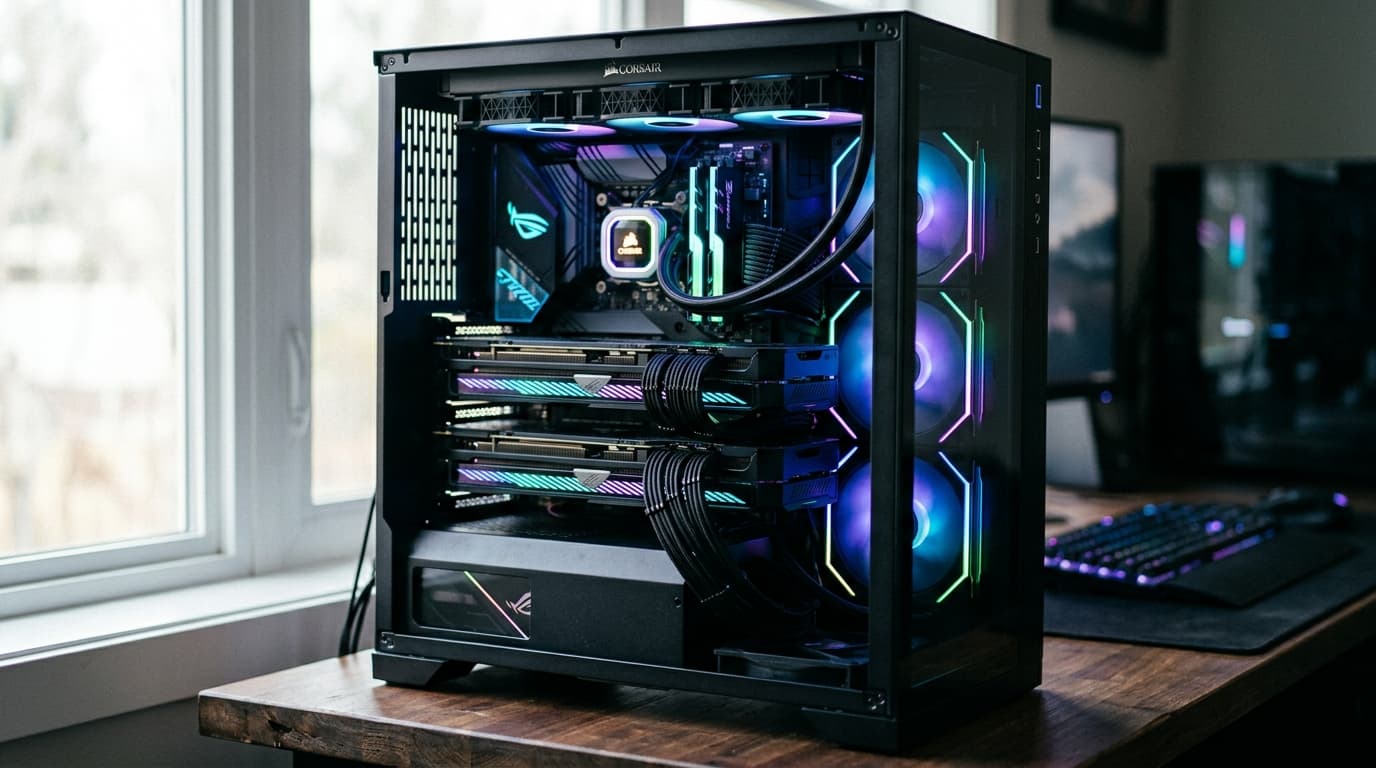
The pitch is straightforward: if your gaming rig sits idle for hours each day, you could put those resources to work processing AI inference, fine-tuning models, generating embeddings, or handling image generation tasks. No specialized mining hardware required, just the equipment you already own.
This echoes the early days of Bitcoin mining, when anyone with a decent computer could participate meaningfully in securing the network. That window closed years ago as mining industrialized. OpenAgents is betting that AI compute can remain accessible to individuals for longer.
The Technical Stack
OpenAgents isn't just building a compute marketplace. The project also develops Psionic, a Rust-based machine learning framework designed for distributed workloads. Announced in 2026, Psionic handles inference, fine-tuning, embeddings, image generation, and distributed training.
The broader OpenAgents framework enables AI agents to collaborate through protocols like MCP and A2A. The goal is creating open alternatives to closed-source AI products, with revenue flowing back to compute providers, developers, and data contributors, all settled in bitcoin.
The project has stated plans to integrate Lightning Network micropayments, which would enable granular, real-time compensation for compute contributions rather than batched settlements.
Why Bitcoin Settlement Matters
Using bitcoin as the settlement layer for AI compute creates some interesting dynamics. Contributors anywhere in the world can participate without navigating banking relationships or payment processor restrictions. A gamer in Lagos and a hobbyist in Seoul can earn on the same terms as someone in San Francisco.
For those tracking how bitcoin increasingly underpins internet-native economies, TFTC provides consistent coverage of projects building on Bitcoin rails. Their podcast has featured conversations exploring how value-for-value models and Lightning micropayments reshape what's possible for distributed networks.
The Tradeoffs
Distributed compute networks face real challenges. Latency becomes unpredictable when workloads route through consumer hardware on residential connections. Quality of service guarantees are harder to maintain compared to centralized data centers. Bad actors might attempt to game the system or provide unreliable compute.
There's also the question of whether the economics work out for contributors. Running compute-intensive AI workloads costs electricity. If bitcoin rewards don't exceed power costs by a meaningful margin, participation becomes charity rather than income.
OpenAgents will need to demonstrate that their coordination layer can match workloads to available compute efficiently enough to compete with traditional cloud providers on cost, while still offering attractive returns to node operators.
What Comes Next
The $1.3 million in funding isn't transformative capital, but it's enough to expand the network and prove the model works at moderate scale. OpenAgents launched their compute market in March 2026, allowing global users to sell spare compute for bitcoin. The pre-seed funding should accelerate that rollout.
If Pylon gains traction, it creates a new constituency of bitcoin earners: not miners, not merchants, but compute contributors. That's a different on-ramp to the bitcoin economy, one that requires no upfront investment beyond hardware most participants already own.
Whether distributed AI compute can genuinely challenge hyperscaler dominance remains an open question. But OpenAgents is building the infrastructure to find out, and they're paying participants in the hardest money available to do it.