
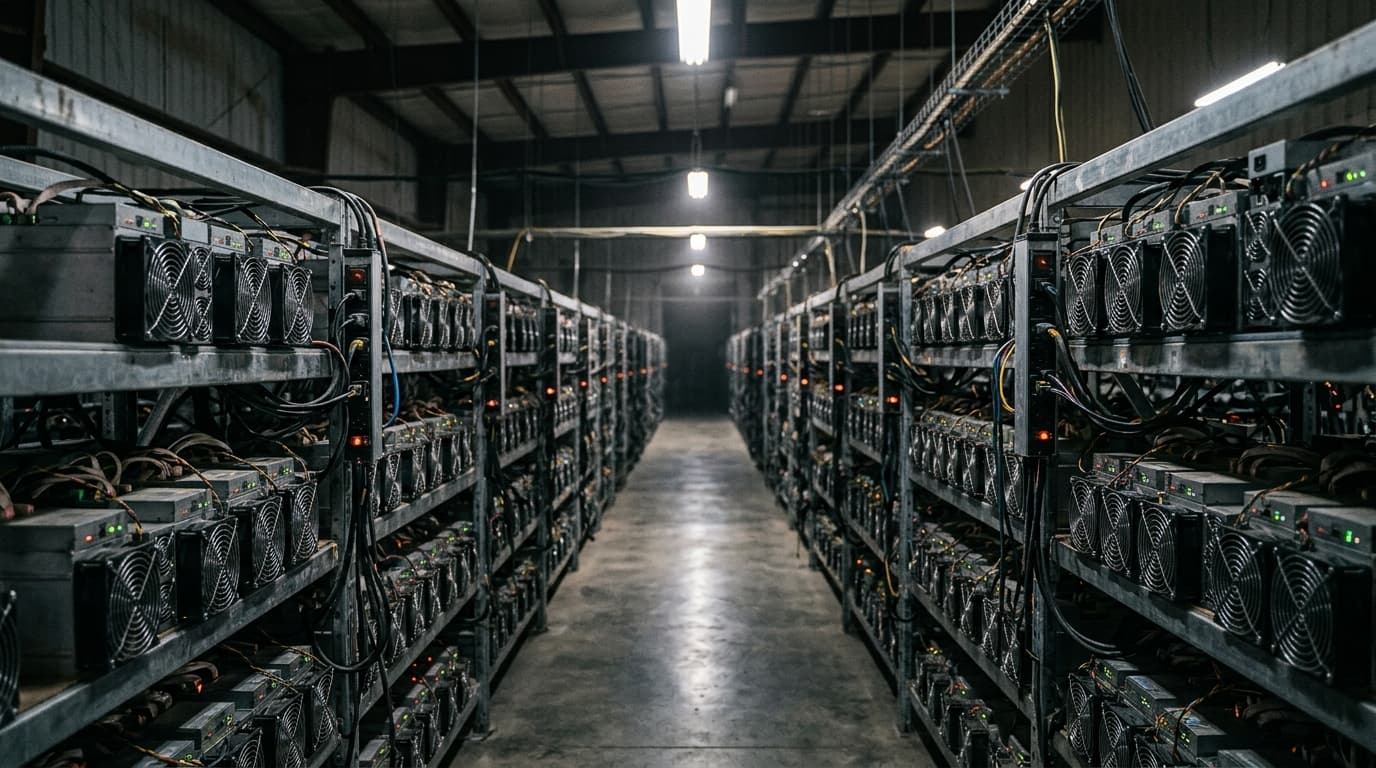
Tom Lee's $76,000 Bitcoin Threshold and How Miners Are Positioning for What Comes Next
Fundstrat's Tom Lee sees Bitcoin above $76K as bull market confirmation. Here's how miners are preparing infrastructure for the next cycle.
Bitcoin closed May 2026 trading around $80,000, comfortably above the $76,000 level that Fundstrat's Tom Lee identified as the line between bear market continuation and bull market confirmation. For miners, this distinction matters enormously. The difference between positioning before a cycle turn and scrambling after one can mean the difference between profitable operations and playing catch-up at inflated prices.
What Lee's $76,000 Call Actually Means
Speaking at Consensus 2026 on May 7, Tom Lee explained his reasoning: a monthly close above $76,000 in May would mark three consecutive positive monthly closes off the February 2026 lows. According to Lee, this pattern has never occurred during prior bear markets. It's not a price target so much as a structural signal.
The context matters here. Bitcoin hit an all-time high of $126,000 in October 2025 before falling to $60,000 in February 2026, a 52% drawdown that rattled confidence across the industry. As of May 9, Bitcoin traded at $80,610, with ETF inflows reaching 2026 highs.
Lee has maintained his $250,000 Bitcoin target for 2026, though he's been clear this won't be a smooth ride. He warned in January of a "jagged" year with significant turbulence, framing pullbacks as buying opportunities rather than reasons for concern.
The Post-Halving Reality Miners Face
The 2024 halving cut block rewards to 3.125 BTC, and the math has been unforgiving. Mining remains profitable only for efficient operations with power costs below $0.10 per kilowatt-hour. Miner revenues declined 11% in March 2026 alone.
Yet something interesting is happening: despite revenue pressure, miner outflows to exchanges rose only 1% during that same period. Major public miners are HODLing their Bitcoin rather than selling, adopting treasury strategies reminiscent of MicroStrategy. By the end of 2025, public miners ranked among the top Bitcoin holders globally.
CleanSpark reported producing 640 BTC in April 2026, averaging over 21 BTC daily. That's substantial accumulation for a company betting that the asset they're mining will appreciate significantly.
The AI Pivot That's Changing Mining Economics
Here's where the story gets more nuanced. Companies like CleanSpark, Core Scientific, Marathon Digital, Riot Platforms, and Cipher are aggressively diversifying into AI and high-performance computing data centers. Projections suggest AI revenue could surpass mining revenue for some of these companies by the end of 2026.
This pivot leverages existing infrastructure, particularly power contracts and cooling systems that work equally well for AI workloads. It's a hedge against Bitcoin price volatility and mining difficulty increases.
The contrarian view worth noting: some analysts have lowered their Bitcoin price targets for 2026 precisely because this AI diversification may reduce selling pressure from miners. Less forced selling could mean less downside, but also potentially less dramatic rebounds since miners won't need to accumulate as aggressively during dips.
What This Means for Mining Positioning
If Lee's thesis proves correct and we're entering a confirmed bull market, the window for acquiring mining infrastructure at reasonable prices narrows quickly. Historical patterns show that equipment costs tend to lag Bitcoin price movements by several months before catching up, sometimes dramatically.
For those looking to enter or expand mining operations, hosting services like Simple Mining offer a path that sidesteps some timing risks. Their model, providing turnkey hosting at $0.07-0.08 per kilowatt-hour across U.S. data centers with 60% renewable energy, means you can focus on hardware acquisition rather than infrastructure buildout. The ability to pause hosting during volatility without penalty provides flexibility that pure capital expenditure doesn't.
On the hardware side, suppliers like Altair Tech are positioned for miners at various scales. Their domestic shipping and Bitcoin payment discounts appeal to operators who want to move quickly when market conditions align. For smaller operations or those testing the waters, their lower-power options like space heater miners or educational devices offer entry points without massive capital commitments.
The Honest Assessment
Lee's track record includes both prescient calls and misses. His $76,000 threshold is a reasonable technical interpretation, not a guarantee. Bitcoin could close May above that level and still face significant volatility throughout 2026.
The mining industry's dual strategy, holding Bitcoin while diversifying into AI, represents genuine maturation. Companies are no longer purely dependent on Bitcoin price appreciation to survive. Whether that's bullish (more sustainable operations) or bearish (less committed participants) depends on your perspective.
What's clear is that the miners who survived the post-halving compression are entering this potential bull market with stronger balance sheets, more efficient operations, and diversified revenue streams. They're not waiting for confirmation. They're positioning now.
For individual miners considering their next move, the question isn't whether Lee's call will prove exactly right. It's whether you want to be acquiring infrastructure during a potential accumulation phase or competing for equipment alongside everyone else once the trend becomes obvious to all.