
Trump Media Posts $406 Million Loss as Bitcoin Holdings Tank, Exposing Corporate Crypto Strategy Risks
Trump Media's $406M Q1 loss reveals the dangers of poorly timed corporate Bitcoin purchases. What institutional holders can learn from this case.
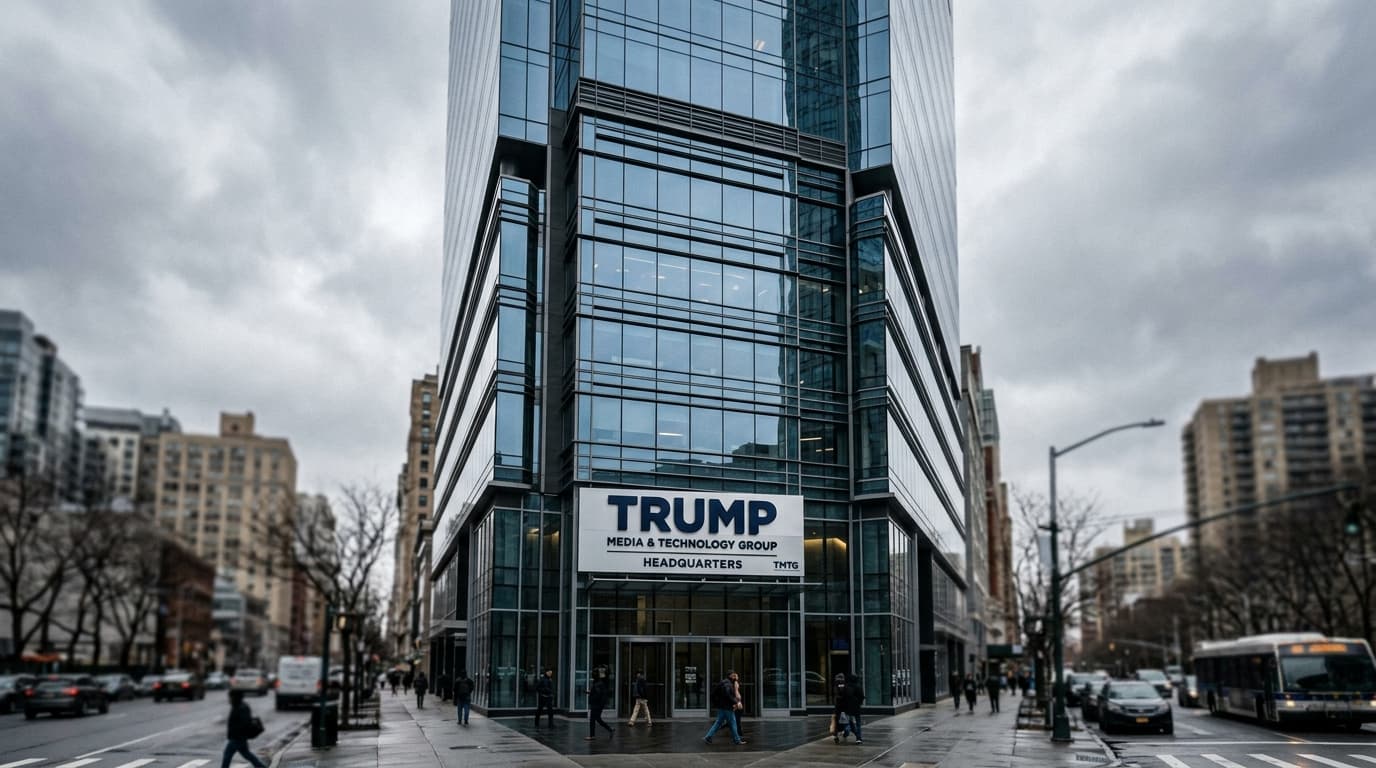
Trump Media & Technology Group just posted a $406 million loss for Q1 2026, and almost all of it traces back to one decision: buying roughly 9,500 bitcoin at an average price of $108,500 per coin.
The company behind Truth Social isn't bleeding cash. It actually generated $17.9 million in positive operating cash flow during the quarter, its fourth consecutive quarter in the black on that metric. But accounting rules require marking crypto holdings to market value, and when bitcoin pulled back sharply from its late-2025 highs above $100,000, TMTG's balance sheet absorbed the hit.
By early May 2026, the company's digital asset portfolio (bitcoin plus some CRO tokens from Crypto.com) was valued at around $822 million against a cost basis of approximately $1.24 billion. That's an unrealized loss of roughly $423 million sitting on the books.
The Timing Problem
Trump Media began accumulating bitcoin in July 2025, funding the purchases with about $2.3 billion raised from stock and convertible note issuance rather than debt. Management has framed this as a long-term diversification strategy similar to MicroStrategy's approach, emphasizing that unrealized losses aren't being crystallized because the assets haven't been sold.
That framing is accurate but incomplete. The company bought aggressively near bitcoin's all-time highs, and now its income statement will swing wildly with crypto prices for the foreseeable future. TMTG's 2025 full-year results, released in February 2026, already showed a $712 million net loss driven mainly by digital asset markdowns.
With under $1 million in quarterly revenue from its actual media business, Trump Media now trades more like a leveraged bitcoin fund with a social media app attached than a conventional tech company.
What This Means for Corporate Bitcoin Strategies
Trump Media's situation offers a case study in how not to approach corporate bitcoin treasury allocation. The company concentrated heavily in a single asset class, bought near cycle highs, and did so at a scale that dwarfs its operating business.
Contrast this with more disciplined approaches to bitcoin-backed financial strategies. Platforms like Ledn offer corporate and individual holders ways to access liquidity from their bitcoin without selling, using 50% loan-to-value ratios that provide a buffer against volatility. For holders who accumulated at lower cost bases, this kind of approach allows maintaining upside exposure while meeting capital needs.
The key difference is timing and position sizing. Trump Media went all-in near the top; more conservative corporate adopters have typically dollar-cost averaged or used bitcoin as one component of a diversified treasury rather than the dominant asset.
The Disconnect Between Stock Price and Fundamentals
DJT shares have dropped more than 60% over the 12 months leading into early 2026, even as the company's total assets ballooned to $2.2 billion. The market seems to be repricing what TMTG actually is: a politically charged meme stock with enormous crypto exposure and minimal operating revenue.
Investor commentary has highlighted the absurd valuation math. At various points, DJT has traded at price-to-sales multiples orders of magnitude above typical social media peers, despite Truth Social generating single-digit millions in annual revenue with no clear path to meaningful scale.
Management points to the balance sheet strength (roughly $2.1 billion in financial assets) and consecutive quarters of positive operating cash flow as evidence the underlying business is healthier than GAAP losses suggest. Critics counter that with user metrics not publicly disclosed in detail, it's impossible to assess whether Truth Social is gaining traction beyond Donald Trump's political base.
What Happens Next
Trump Media's fate now hinges largely on bitcoin's price trajectory. If bitcoin recovers above the company's $108,500 average purchase price, those unrealized losses reverse into gains. If it enters a prolonged downturn, the quarterly loss parade continues.
The company kept its bitcoin holdings unchanged through Q1 2026 despite the drawdown, which believers interpret as conviction and skeptics see as doubling down on a poorly timed bet. Either way, the decision concentrates risk further.
For investors and corporate treasury managers watching this play out, the lesson is straightforward: bitcoin can be a legitimate treasury asset, but entry price matters enormously, position sizing matters, and buying near all-time highs with capital you raised specifically for the purchase is speculation, not strategy.
Trump Media has the cash runway to wait for a recovery. Not every company making similar bets would be so fortunate.