
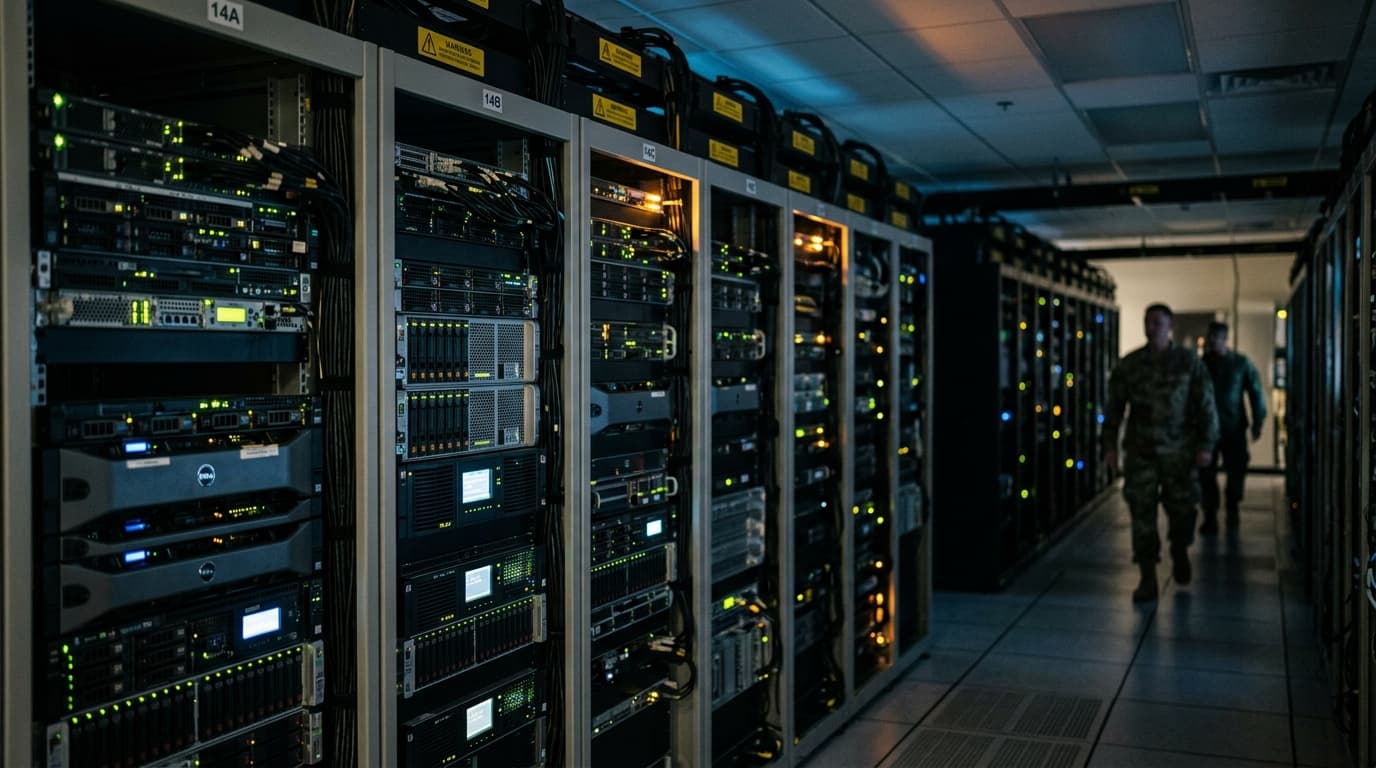
Admiral Paparo Confirms US Military Runs Bitcoin Node for Cryptographic Testing
Four-star Admiral Samuel Paparo revealed the US Indo-Pacific Command operates a Bitcoin node for cybersecurity testing, marking first confirmed military participation.
The U.S. military is running an active Bitcoin node. That confirmation came directly from Admiral Samuel Paparo, Commander of U.S. Indo-Pacific Command, during congressional testimony on April 21-22, 2026. It marks the first time a sitting combatant commander has publicly acknowledged direct military participation in the Bitcoin peer-to-peer network.
"We have a node on the Bitcoin network right now," Paparo told lawmakers during House and Senate Armed Services Committee hearings on FY2027 defense authorization. "We're not mining Bitcoin. We're using it to monitor, and we're doing a number of operational tests to secure and protect networks using the Bitcoin protocol."
The distinction matters. This isn't about the Pentagon accumulating bitcoin or speculating on price. It's about studying the protocol's cryptographic architecture for potential defense applications.
Why the Military Cares About Bitcoin's Technical Layer
Paparo framed Bitcoin as a "computer science tool" and "means of power projection" rather than a financial asset. His testimony emphasized the protocol's cryptography, blockchain structure, and reusable proof-of-work mechanisms as the features of interest.
The Pentagon's testing reportedly includes evaluating Bitcoin's distributed ledger for secure communications, supply chain verification, and network protection scenarios. In an era of increasing cyber threats, the military appears interested in understanding whether Bitcoin's architecture offers lessons for hardening critical infrastructure.
This framing aligns with how cryptographers have long viewed Bitcoin. The network has operated continuously since 2009, surviving countless attack attempts while securing hundreds of billions of dollars in value. Its proven resilience represents a real-world stress test that no laboratory simulation could replicate.
What One Node Actually Means
Context helps here. The Bitcoin network currently has approximately 15,000 to 20,000 publicly reachable full nodes. INDOPACOM's node represents one participant among thousands, albeit one with significant symbolic weight.
Running a node allows the military to independently verify Bitcoin transactions, monitor network activity, and study the protocol's behavior under various conditions. It provides direct access to observe how the network handles load, recovers from disruptions, and maintains consensus across a globally distributed system.
The initiative remains experimental, according to Paparo's testimony. There's no disclosed timeline for broader implementation or any indication that other military branches are involved.
Validation at the Highest Level
Skeptics of Bitcoin's security model have long questioned whether the protocol could withstand scrutiny from nation-state adversaries. The U.S. military's decision to operate a node for cryptographic testing represents implicit acknowledgment that Bitcoin's architecture warrants serious technical evaluation.
This doesn't mean the Pentagon endorses Bitcoin as money or investment. Paparo was careful to draw that line. But it does suggest that military cryptographers see something worth studying in how the network achieves distributed consensus and maintains integrity without central coordination.
The timing coincides with broader government engagement with digital assets. The Strategic Bitcoin Reserve established in early 2025 reflected a policy shift toward treating bitcoin as a strategic asset. INDOPACOM's technical evaluation, while distinct from treasury policy, adds another dimension to how federal institutions are approaching the protocol.
What Comes Next
Paparo's testimony raises questions his remarks didn't answer. How long has the military been running this node? What specific findings have emerged from operational testing? Are other agencies conducting similar evaluations?
The experimental nature of the program suggests we're in early stages. Defense applications of Bitcoin's architecture, if any emerge, would likely take years to develop and deploy. Bureaucratic and security considerations could also limit what the public ever learns about specific use cases.
Still, the disclosure itself represents a meaningful data point. When a four-star admiral tells Congress that the U.S. military is actively studying Bitcoin's protocol for network security applications, it signals that the technology has moved beyond the realm of financial speculation in the eyes of national security planners.
For Bitcoin advocates who have long argued that the protocol's cryptographic foundations are its most underappreciated feature, the military's interest offers a kind of validation that no price chart could provide.