
Alcoa Finalizes Sale of Massena East Smelter to NYDIG for Bitcoin Mining Expansion
Alcoa's idle New York smelter will become a major Bitcoin mining facility under NYDIG, part of a broader trend of repurposing industrial sites for crypto.
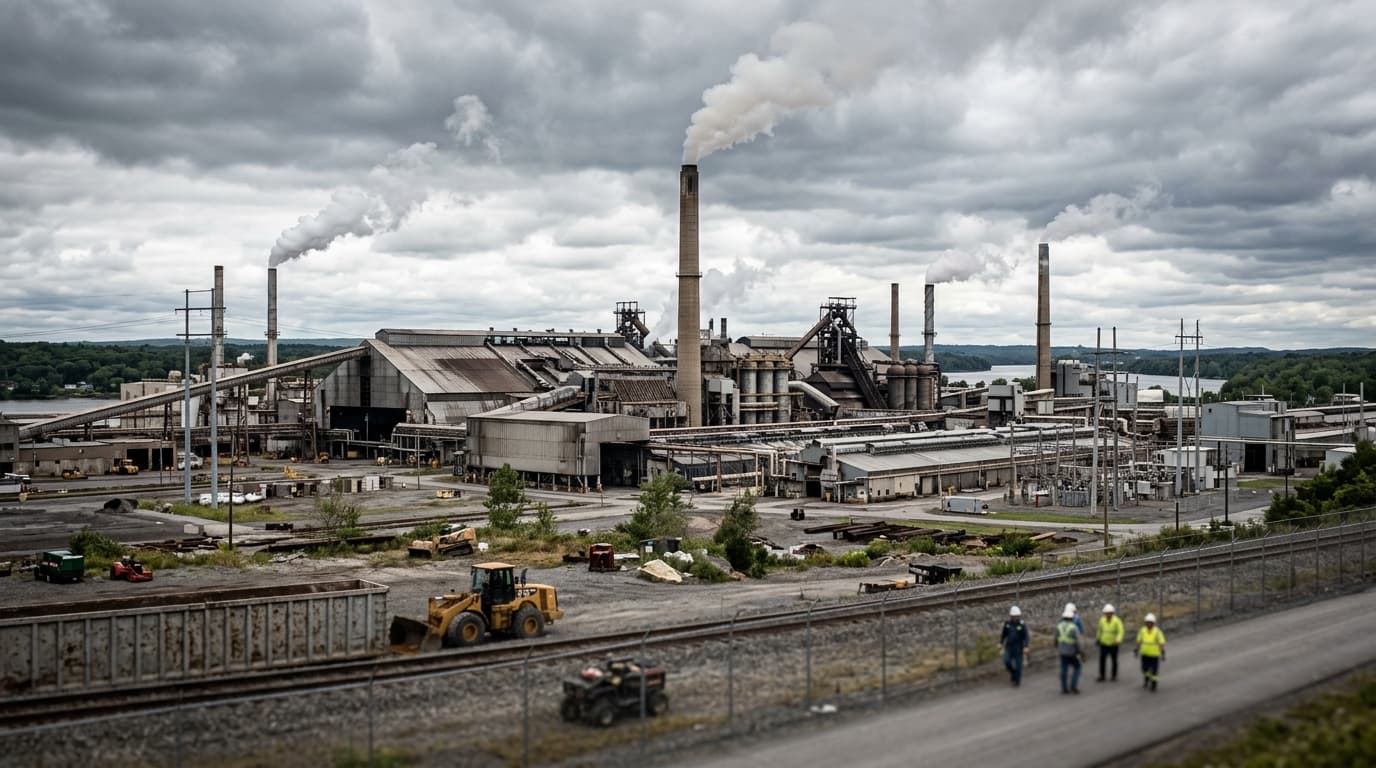
A 1,300-acre aluminum smelter that went dark in 2014 is about to become one of the largest Bitcoin mining operations in the northeastern United States. Alcoa has confirmed advanced talks to sell its Massena East facility along the St. Lawrence River to NYDIG, with the deal expected to close by mid-2026.
The transaction represents more than a simple real estate sale. It signals how legacy industrial infrastructure, particularly sites with substantial power allocations, is finding new economic life through cryptocurrency mining.
From Aluminum to Bitcoin
The Massena East smelter stopped producing aluminum over a decade ago, a casualty of high energy costs and fierce global competition. But the site retained something valuable: access to 435 megawatts of hydropower capacity from the New York Power Authority.
That power infrastructure is already partially in use. Through a partnership with Coinmint (operating via North Country Collocation Services), the site currently hosts approximately 54,000 Bitcoin miners across six production lines, drawing 166 MW. NYDIG took a strategic stake in Coinmint in October 2024, positioning itself for this expansion after third-party mining clients like CleanSpark exited the facility.
The current operation employs roughly 85 full-time workers across Massena and the company's Plattsburgh location. NYDIG's ownership is expected to increase that headcount as additional mining capacity comes online.
A Broader Industrial Shift
Alcoa isn't treating Massena East as an isolated divestiture. The company plans to sell approximately 10 idle U.S. smelter sites to data centers and cryptocurrency miners, according to statements made during their Q1 2026 earnings discussions. The strategy reflects a pragmatic calculation: these facilities may never again be competitive for aluminum production, but their electrical infrastructure retains substantial value.
Similar transactions are happening across the aluminum industry. Century Aluminum recently sold its Hawesville smelter to TeraWulf for $200 million, with that facility being repurposed for high-performance computing and AI workloads rather than Bitcoin mining specifically.
NYDIG has been particularly aggressive in accumulating mining capacity. In March 2025, the company acquired over 270 MW of Bitcoin mining operations from Crusoe Energy, adding to a series of North American acquisitions throughout 2024.
Why Smelters Make Attractive Mining Sites
The appeal of former aluminum facilities goes beyond nostalgia for industrial heritage. These sites were engineered to handle enormous, consistent electrical loads, exactly what Bitcoin mining requires. The substations, transformers, and grid connections that served smelting operations can often be repurposed with relatively modest modifications.
Hydropower access adds another dimension. Unlike natural gas or coal-fired generation, hydroelectric power produces no direct carbon emissions during operation. For mining companies facing scrutiny over energy consumption, carbon-free power offers both environmental and public relations advantages.
Companies like Giga Energy have built businesses around helping miners deploy at sites with existing power infrastructure. Their modular data centers and electrical equipment are designed for rapid deployment at facilities where traditional mining infrastructure would take years to build. For economic developers and utilities looking to monetize stranded power assets, this kind of turnkey approach can transform dormant industrial sites into productive facilities within weeks rather than years.
What This Means Going Forward
The Alcoa-NYDIG transaction illustrates a maturing dynamic in Bitcoin mining. The industry's early years were characterized by improvised setups in warehouses and garages. Today, serious operators are acquiring purpose-built industrial sites with multi-hundred-megawatt power allocations.
This raises interesting questions about grid planning and regional economic development. Former manufacturing centers that lost major employers to globalization may find partial replacement through mining operations, though the job numbers will likely be smaller. The Massena site's 85 employees compare to the hundreds who once worked the smelter at full capacity.
For local communities, the tradeoff involves accepting a different kind of industrial activity with a different employment footprint. For Bitcoin mining companies, it means access to the kind of infrastructure that would cost hundreds of millions and many years to build from scratch.
The deal is expected to close around April 2026. If completed, it will mark another step in the transformation of America's industrial landscape, where the factories that once made physical goods are being repurposed to secure a digital monetary network.