
Alcoa's Deal to Sell Its Massena Smelter to NYDIG Signals a New Era for Industrial Real Estate
Alcoa's advanced talks to sell its 435 MW Massena East smelter to NYDIG shows how traditional industry is monetizing stranded assets through Bitcoin mining.
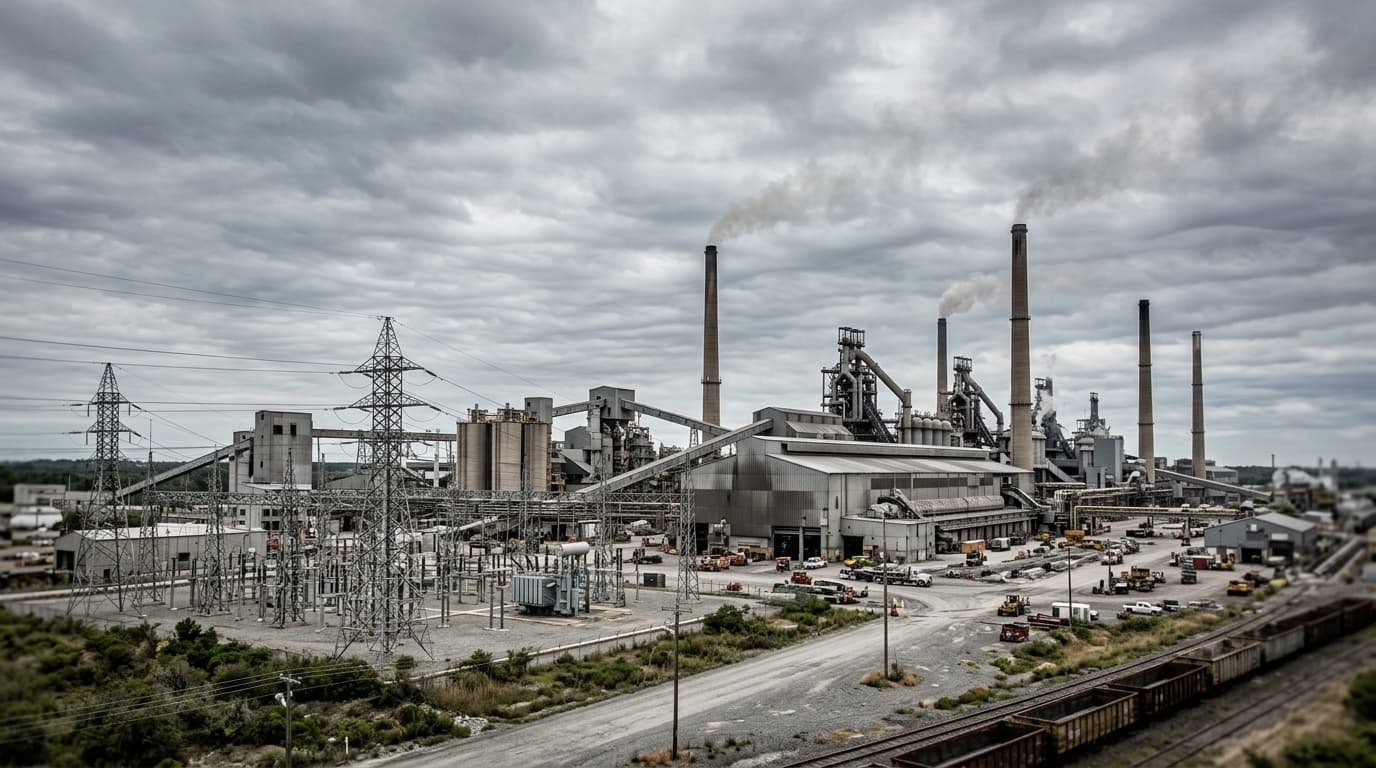
A 1,300-acre aluminum smelter that went dark in 2014 is about to become one of the largest Bitcoin mining facilities in the northeastern United States. Alcoa Corp. is in advanced talks to sell its Massena East site in upstate New York to NYDIG, with the deal expected to close by mid-2026.
The transaction represents more than a simple asset sale. It's a template for how traditional heavy industry can monetize stranded infrastructure by pivoting to crypto mining, and it raises interesting questions about what happens when digital compute demand meets legacy industrial capacity.
The Massena Deal in Context
The Massena East facility sits along the St. Lawrence River with access to 435 MW of hydropower capacity from the New York Power Authority. That power connection, originally built to smelt aluminum, became economically unviable years ago due to high energy costs and overseas competition. The smelter has been idle for over a decade.
But the infrastructure remained. Coinmint began operating Bitcoin miners at the site in 2018 under a 10-year lease with Alcoa, currently running roughly 54,000 machines across six former smelting lines using 166 MW of the available capacity. NYDIG took a strategic stake in Coinmint in October 2024, and acquiring the underlying real estate would give them full control of a site with significant room to expand.
For NYDIG, Massena fits a clear pattern. The company acquired Crusoe Energy's 270 MW bitcoin mining business in March 2025 and picked up 120 MW from Consensus Technology Group in late 2024. Full ownership of Massena would add another major facility to their portfolio.
Alcoa's Broader Strategy
Massena isn't an isolated divestiture. Alcoa has publicly stated plans to sell approximately 10 dormant U.S. smelter sites to data center developers and crypto miners, with CEO Bill Oplinger confirming in February 2026 that the company is targeting first-half 2026 sales.
The timing makes sense from Alcoa's perspective. The company reported strong Q1 2026 results (net income of $425 million, adjusted EBITDA of $595 million) amid favorable aluminum prices. Rather than carry idle assets on the books, they can convert them to cash while someone else figures out how to put that power capacity to work.
Alcoa isn't alone in this approach. Century Aluminum sold its Hawesville, Kentucky smelter to TeraWulf for $200 million earlier this year for digital infrastructure use. The pattern is becoming a recognizable playbook: old smelter with grid connection plus crypto miner seeking power equals transaction.
Why This Model Works (and Its Limitations)
The appeal is straightforward. Bitcoin mining is essentially arbitrage on cheap electricity, and industrial sites come with two things miners desperately need: existing grid connections and permits that would take years to obtain for new construction. A smelter already has the substations, the land, and the regulatory approvals. Converting it to mining infrastructure is vastly faster than building from scratch.
Hydropower makes Massena particularly attractive. Mining operations face increasing scrutiny over their carbon footprint, and a facility running on New York Power Authority hydro can credibly claim clean energy credentials.
That said, there are real constraints. Not every idle industrial site has favorable power contracts. The Massena facility benefits from its proximity to Canadian hydro resources and existing NYPA agreements, advantages that won't replicate everywhere. And Bitcoin mining economics remain volatile; the operators acquiring these sites are making long-term bets on both Bitcoin prices and energy costs.
There's also a broader pivot underway. Many miners are diversifying into AI and high-performance computing, which offer potentially steadier revenue. Some analysts project that HPC could drive 70% of revenue for companies like TeraWulf and Core Scientific by the end of 2026. Industrial sites being converted today may end up hosting workloads beyond Bitcoin mining.
What This Means Going Forward
The Alcoa-NYDIG deal, if it closes as expected, establishes a clear precedent: stranded industrial assets with grid access have found a new buyer class. For companies holding dormant facilities, crypto miners and data center operators represent a path to monetization that didn't exist a decade ago.
For the Bitcoin mining industry, acquisitions like Massena provide something harder to value but equally important: legitimacy through association with traditional industry. When an aluminum company sells to a Bitcoin miner, it normalizes the sector in ways that purely crypto-native transactions don't.
The convergence of heavy industry infrastructure and digital compute demand is still in early stages. Massena won't be the last smelter to find new life as a mining facility, and the template being established now will likely shape how these transitions happen for years to come.