
Alcoa's NYDIG Deal Signals How Legacy Industrial Giants Are Pivoting to Bitcoin Mining
Alcoa's pending sale of its 435 MW Massena East smelter to NYDIG shows how traditional energy-intensive industries are converting to Bitcoin mining.
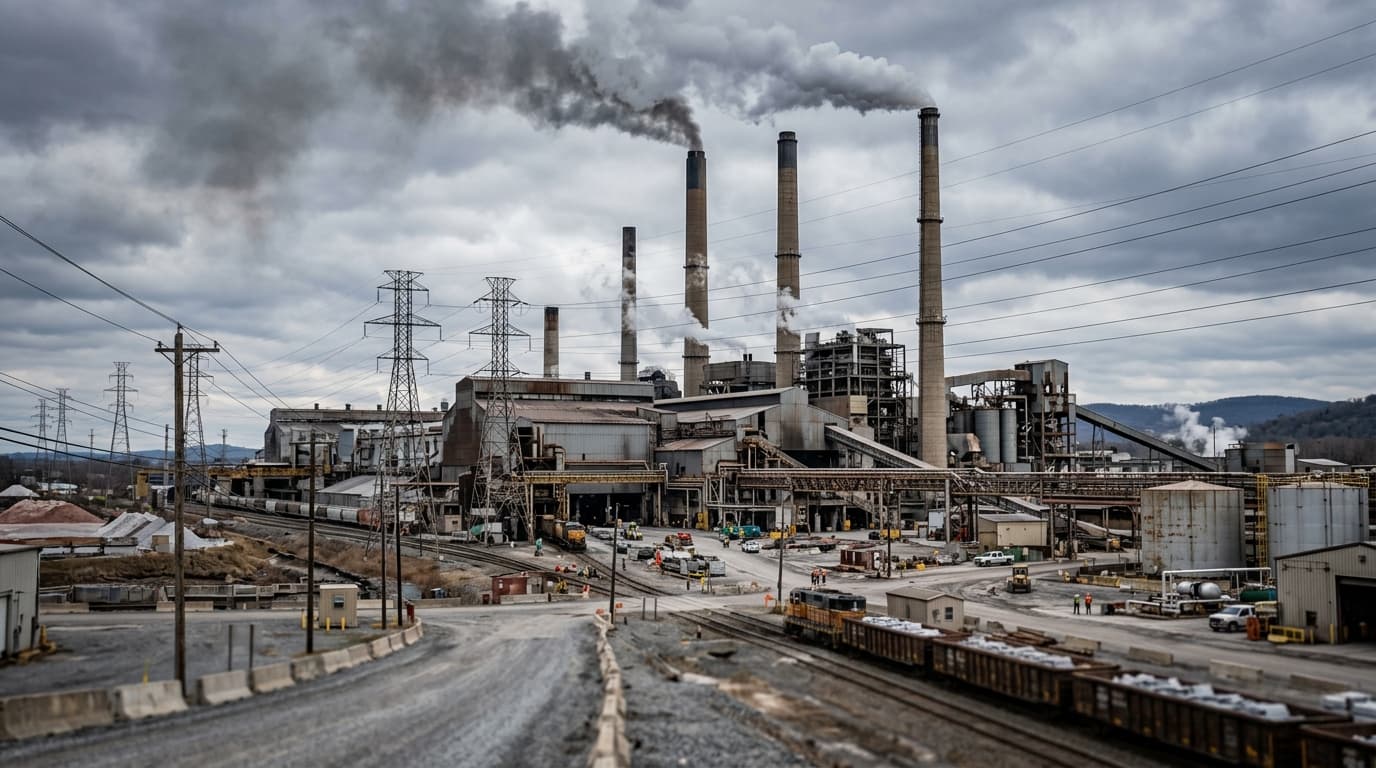
A 1,300-acre aluminum smelter that went dark in 2014 is about to become one of the largest Bitcoin mining operations in the United States. Alcoa's pending sale of its Massena East facility to NYDIG, expected to close by mid-2026, represents more than a single real estate transaction. It's a blueprint for how legacy industrial infrastructure is finding new life in cryptocurrency.
The deal makes practical sense when you look at the numbers: 435 megawatts of hydropower access from the New York Power Authority, existing grid connections, and the kind of heavy-duty electrical infrastructure that costs a fortune to build from scratch. For Bitcoin miners, who essentially compete on electricity costs, that's a turnkey operation.
Why Aluminum Smelters Make Ideal Mining Sites
Aluminum smelting and Bitcoin mining share an unusual requirement: both consume massive amounts of electricity around the clock. When aluminum prices crashed and energy costs rose, facilities like Massena East became stranded assets. The same infrastructure that once melted bauxite now powers SHA-256 hash computations.
NYDIG isn't starting from zero at this site. Since 2018, Coinmint has operated approximately 54,000 Bitcoin miners at Massena East under a lease, drawing 166 MW of power. NYDIG already holds a strategic stake in Coinmint, acquired in October 2024. The Alcoa deal would give them full ownership and access to the site's remaining 269 MW of untapped capacity.
This acquisition fits NYDIG's aggressive expansion pattern. In late 2024, the company acquired 120 MW from Consensus Technology Group across four states. In March 2025, it purchased Crusoe Energy's Bitcoin mining business, adding over 270 MW. The Massena East deal would push NYDIG's total mining capacity well past 800 MW.
Alcoa's Broader Divestment Strategy
Alcoa CEO Bill Oplinger confirmed in the company's Q1 2026 earnings call that Massena East is just the beginning. The aluminum producer plans to divest approximately 10 dormant U.S. smelter sites to data center operators and crypto miners seeking pre-wired industrial power.
Alcoa isn't alone in monetizing idle capacity. In February 2026, Century Aluminum sold its Hawesville smelter to TeraWulf for $200 million plus equity, though that deal targets high-performance computing and AI workloads rather than pure Bitcoin mining.
The divergence is notable. Many public Bitcoin miners, including MARA, Core Scientific, and Hut 8, are pivoting toward AI infrastructure. Industry projections suggest some could derive up to 70% of revenue from AI by the end of 2026, driven by post-halving margin compression and the premium prices hyperscalers pay for computing capacity.
NYDIG's Contrarian Bet
NYDIG is swimming against this current, doubling down on proof-of-work mining while competitors chase AI revenue. The strategy carries real risk. Bitcoin's April 2024 halving cut block rewards in half, squeezing mining margins precisely when energy costs remain elevated.
But there's logic to the contrarian position. If major miners continue exiting pure Bitcoin operations for AI, the competitive landscape shifts. Fewer miners competing for the same block rewards means survivors capture larger shares. NYDIG appears to be betting that its scale, low-cost hydropower access, and vertical integration will position it favorably when the dust settles.
The Massena East site's hydropower access matters here. Unlike natural gas or grid electricity, hydropower provides both cost stability and a compelling environmental narrative, something increasingly important as institutional investors scrutinize Bitcoin's energy footprint.
What This Means Going Forward
The Alcoa-NYDIG deal illustrates a broader phenomenon: the infrastructure of the 20th century industrial economy repurposing for 21st century digital commodity production. Aluminum smelters, steel mills, and paper plants built near cheap power sources decades ago are finding unexpected second lives.
For communities like Massena, which lost hundreds of jobs when the smelter closed in 2014, the transition offers mixed results. Bitcoin mining operations employ far fewer workers than manufacturing facilities. But they do generate tax revenue and prevent these sites from becoming permanent liabilities.
The deal is expected to close by mid-2026, pending regulatory approvals and final negotiations. If it proceeds as reported, it will mark one of the largest single-site Bitcoin mining acquisitions to date, and further evidence that traditional energy companies see cryptocurrency mining as a viable exit strategy for stranded industrial assets.