
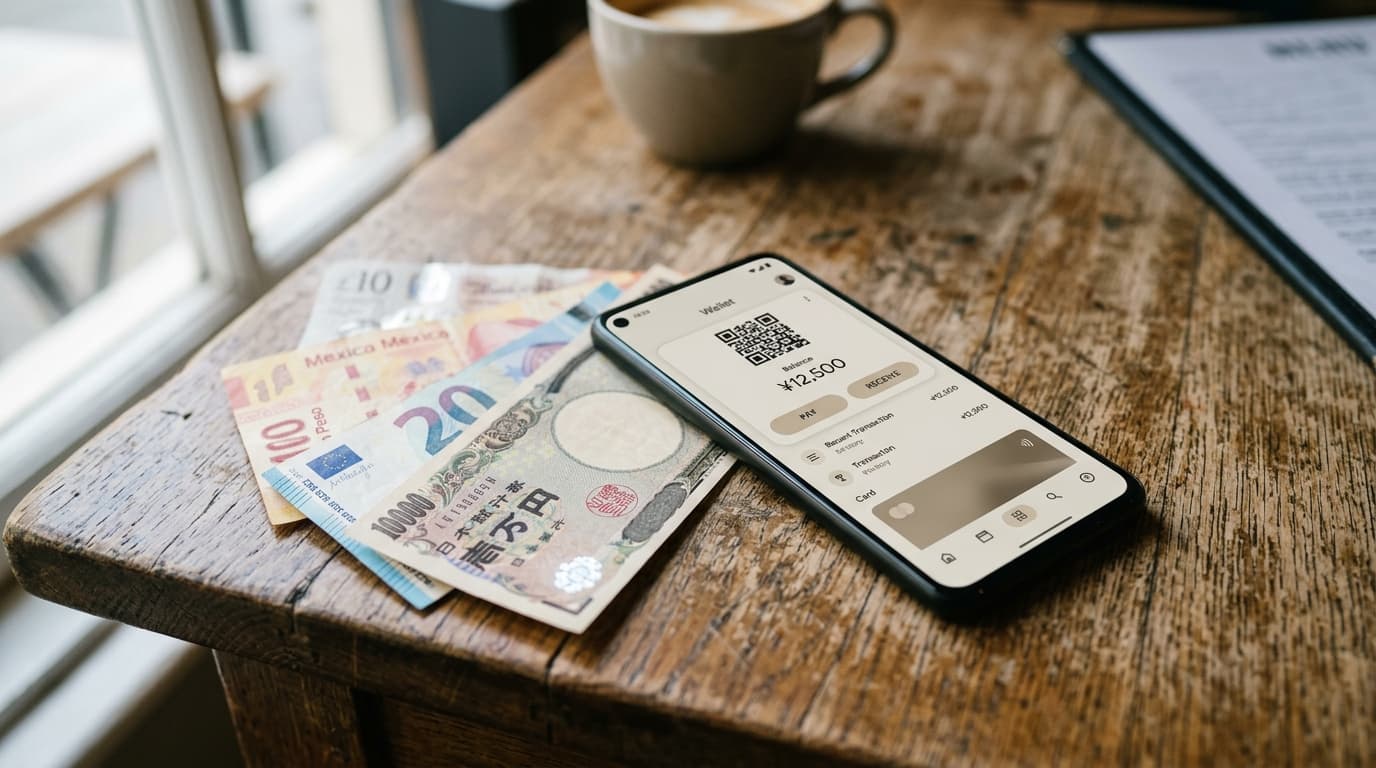
Aqua Wallet Review for Cross-Border Payments in 2026
A research-based review of Aqua Wallet for international remittances, comparing its Liquid USDt fees to Western Union and examining its real tradeoffs.
Sending $100 through Western Union costs about $8.99 in fees. Sending the same amount as USDt over the Liquid Network through Aqua Wallet costs roughly $0.03. That fee differential, verified as of mid-2026, represents the core promise of Aqua Wallet: a non-custodial mobile wallet that treats cross-border payments as a first-class use case rather than an afterthought.
But fee comparisons only tell part of the story. Understanding whether Aqua actually delivers on its remittance promise requires looking at how it works, where it falls short, and who it's really designed for.
What Aqua Actually Is
Aqua is a mobile-first Bitcoin wallet built by JAN3 that combines several networks into a single interface: on-chain Bitcoin, the Liquid Network (a Bitcoin sidechain), and Lightning payments. It also supports Tether USDt across multiple blockchains, including Liquid, Ethereum, Tron, BNB Chain, TON, Polygon, and Solana.
The wallet's positioning as a "Bitcoin super-app" reflects an ambitious scope. Users can hold Bitcoin for long-term savings, USDt for stable-value transactions, and swap between networks depending on their needs. The 12-word seed phrase backup means users maintain custody of their own keys.
For cross-border payments specifically, Aqua's value proposition centers on letting users hold, send, and receive digital dollars globally without needing a bank account. In markets with currency volatility (Argentina and Zimbabwe are frequently cited examples), this means people can save in Bitcoin while using USDt for everyday transactions and international transfers.
How the Lightning Integration Actually Works
Aqua supports Lightning payments, but with an important technical caveat: it's not a native Lightning wallet. When users send or receive Lightning payments, Aqua routes these through submarine swaps via Boltz, a third-party swap service.
Here's what happens when someone pays you via Lightning: Boltz generates the Lightning invoice, receives the funds, performs an atomic swap on Liquid, and sends L-BTC (Liquid Bitcoin) to your Aqua wallet. The process reverses for outgoing payments.
This architecture has tradeoffs. On the positive side, Aqua avoids the complexity of managing Lightning channels, making the wallet simpler for everyday users. On the negative side, users are exposed to Boltz's availability and can't connect to their own Lightning node. Technical analysis from 2024 noted that Boltz's lack of transaction batching required minimum spends of roughly 460 satoshis per swap, limiting micropayment efficiency.
For most remittance use cases (larger, less frequent transfers), this limitation matters less than it would for point-of-sale micro-transactions.
The Fee Comparison in Context
Aqua's marketing prominently compares Liquid USDt transfer costs to legacy remittance services:
- Liquid Network: ~$0.03 to move $100
- Tron: ~$2.00 for the same amount
- Ethereum: ~$8.00
- Western Union: ~$8.99
These numbers, published by Aqua in mid-2026, favor the wallet's strongest use case: wallet-to-wallet digital dollar transfers. The comparison is fair for that specific scenario but doesn't capture the full picture.
What the fee comparison doesn't address: the friction involved in converting USDt to local fiat currency at the receiving end. If your grandmother in El Salvador receives USDt but needs actual dollars or local currency to pay her electric bill, she'll need an off-ramp, which may involve additional fees, exchange rate spreads, or simply not being available in her area.
Aqua's competitive edge is strongest when both sender and receiver can use digital dollars directly, or when the receiver has easy access to cash-out options.
The Dolphin Card and Its Limitations
In 2025, Aqua introduced the Dolphin Card, a virtual Visa prepaid card that lets users spend BTC or L-BTC anywhere Visa is accepted. The card features a $4,000 monthly spending cap, a 1% spending fee, no fee to load, and a USD-denominated balance to reduce volatility exposure. Notably, it requires no KYC for the card itself.
As of early 2026, the Dolphin Card remains in beta and is unavailable in the US and Canada. Physical cards and mobile wallet integrations (Apple Pay, Google Pay) are described as "coming soon."
The card represents an interesting bridge between crypto holdings and real-world spending, but its reliance on Visa's traditional merchant infrastructure means Aqua's cost advantages don't necessarily extend to card-present retail payments. The 1% spending fee, while competitive with many crypto cards, adds up for regular use.
Latin America Focus and Pix Integration
Aqua's strategy has sharpened around Latin American markets. In March 2025, CEO Samson Mow announced integrations with national payment systems, most notably Brazil's instant payment network Pix. This allows users to pay local invoices directly from their BTC or Liquid USDt balances.
The Pix integration addresses a genuine pain point: converting crypto to useful local spending without going through multiple steps or third-party exchanges. Media coverage describes Aqua's intent to offer a user experience similar to conventional banking but at lower cost.
However, adoption data remains sparse. There are no published, independently verified user numbers, remittance volumes, or average transaction sizes for Aqua as of mid-2026. The product's cross-border impact must be inferred from features and positioning rather than hard performance metrics.
What Aqua Does Well
Simplicity for its intended use case: The combination of Bitcoin, Liquid, Lightning (via swaps), and multi-chain USDt in a single mobile interface lowers the barrier for users who want to move between these networks without managing multiple wallets.
Fee payment in USDt: Users can pay Liquid network fees directly in USDt, eliminating the need for separate gas tokens. This removes a friction point that frustrates users of other stablecoin platforms.
No internal limits: Because Aqua is non-custodial, there are no wallet-imposed limits on send/receive amounts (though third-party swap services like SideShift may have their own liquidity constraints for certain chain swaps).
Replace-By-Fee support: For Bitcoin on-chain transactions, RBF lets users speed up stuck transactions, a useful feature during network congestion.
Legitimate Concerns and Gaps
Regulatory uncertainty: Aqua's marketing doesn't prominently address potential stablecoin restrictions, FX conversion challenges, or compliance questions around KYC-free card use in different jurisdictions. These aren't Aqua-specific problems, but they're relevant for anyone evaluating cross-border payment options.
Third-party dependency: Lightning functionality depends on Boltz's availability and routing. While atomic swaps preserve security (funds aren't at risk of theft), service disruptions could affect payment reliability.
No node connectivity: Users can't connect Aqua to their own Bitcoin or Lightning node, limiting appeal for privacy-conscious users who want to verify transactions independently.
Off-ramp friction: The gap between receiving USDt and having usable local currency varies dramatically by location. Aqua's value proposition is strongest where the receiving party can use digital dollars directly or has easy local conversion options.
Who Should Consider Aqua
Aqua makes the most sense for mobile-first users who:
- Regularly send or receive money across borders, particularly involving Latin American markets
- Want to hold savings in Bitcoin while using stablecoins for transactions
- Prefer non-custodial control over their funds
- Don't need to connect to their own Lightning node
- Have recipients who can use digital dollars directly or access reliable off-ramps
For users who primarily need a native Lightning wallet with channel management, or who want maximum privacy through node connectivity, other options may fit better.
The Broader Trend
Aqua exists within a growing ecosystem of stablecoin-based cross-border payment tools. MoonPay's acquisition of Iron and integration with Mastercard in 2025 reflects the same market forces: demand for faster, cheaper international transfers using crypto rails with traditional card network interfaces.
Whether Aqua specifically wins significant market share depends partly on execution (the Pix integration, Dolphin Card rollout, and regional expansion) and partly on factors outside its control (stablecoin regulation, Liquid Network adoption, and competitive offerings from well-funded fintech players).
The fee comparison against Western Union is compelling on paper. The practical question is whether Aqua can build enough on-ramps and off-ramps, in enough markets, to make those savings accessible to people who aren't already comfortable managing crypto wallets. That's the work still ahead.