
How to Spend Bitcoin in Costa Rica Using the Bitcoin Jungle Wallet
A practical guide to using Bitcoin Jungle for Lightning payments at restaurants, markets, and shops across Costa Rica's south Pacific coast.
More than 600 merchants in Costa Rica now accept Bitcoin, concentrated heavily in a stretch of Pacific coastline where you can pay for your morning coffee, a surf lesson, and dinner without touching colónes or dollars. The infrastructure making this possible is Bitcoin Jungle, a Lightning wallet built specifically for everyday spending in what's become one of the world's most developed circular Bitcoin economies.
This guide covers what you need to know before visiting: how to set up the wallet, where to spend, and what to expect when you're actually standing at a register trying to pay.
What Bitcoin Jungle Actually Is
Bitcoin Jungle is an open-source Lightning wallet designed for local commerce, not long-term savings. The project itself recommends cold storage for larger balances and positions the wallet as a spending tool. It's built on the same codebase as the Bitcoin Beach Wallet (from El Salvador's famous experiment) and is powered by Galoy's infrastructure.
The key distinction: this is a spending rail, optimized for fast, small transactions at local businesses. Think of it like a digital wallet for your trip, not a vault for your savings.
The Golden Triangle and Beyond
Bitcoin Jungle's core zone spans Costa Rica's south Pacific coast, centered around Uvita and including Dominical, Ojochal, Platanillo, and Tinamaste. This region, sometimes called the Golden Triangle, has the highest concentration of Bitcoin-accepting businesses.
The merchant mix is genuinely diverse: hotels, restaurants, cafes, breweries, bars, tour operators, farmers markets, and activity providers. A BTCPay Server case study noted that merchants could start accepting Bitcoin payments in under two minutes with the system, which helps explain the rapid adoption.
Bitcoin Jungle maintains a live map of participating businesses on their website, which is worth checking before you travel. Merchant counts have grown significantly; reporting from 2024 documented around 50 market vendors and 30 stationary businesses in Costa Ballena alone, with about 1,000 active monthly wallet users at that time. By August 2025, Bitcoin Magazine reported over 600 merchants accepting Bitcoin through the network.
Setting Up the Wallet
The setup process is straightforward:
- Download Bitcoin Jungle from your device's app store
- Create a new wallet (you'll receive a recovery phrase; store it securely offline)
- Fund your wallet via Lightning from another wallet, or use the Bull Bitcoin integration
For Costa Rican residents, Bull Bitcoin offers an on-ramp through SINPE Móvil (the national instant payment system), allowing purchases via bank transfer with Lightning credits arriving in about 20 seconds. Tourists without local bank accounts will need to fund from an external Lightning wallet.
A practical note: load only what you expect to spend. The project's own documentation advises against keeping large balances in the wallet. Treat it like cash in your pocket, not savings in a bank.
How Payments Work in Practice
When you're ready to pay at a participating merchant:
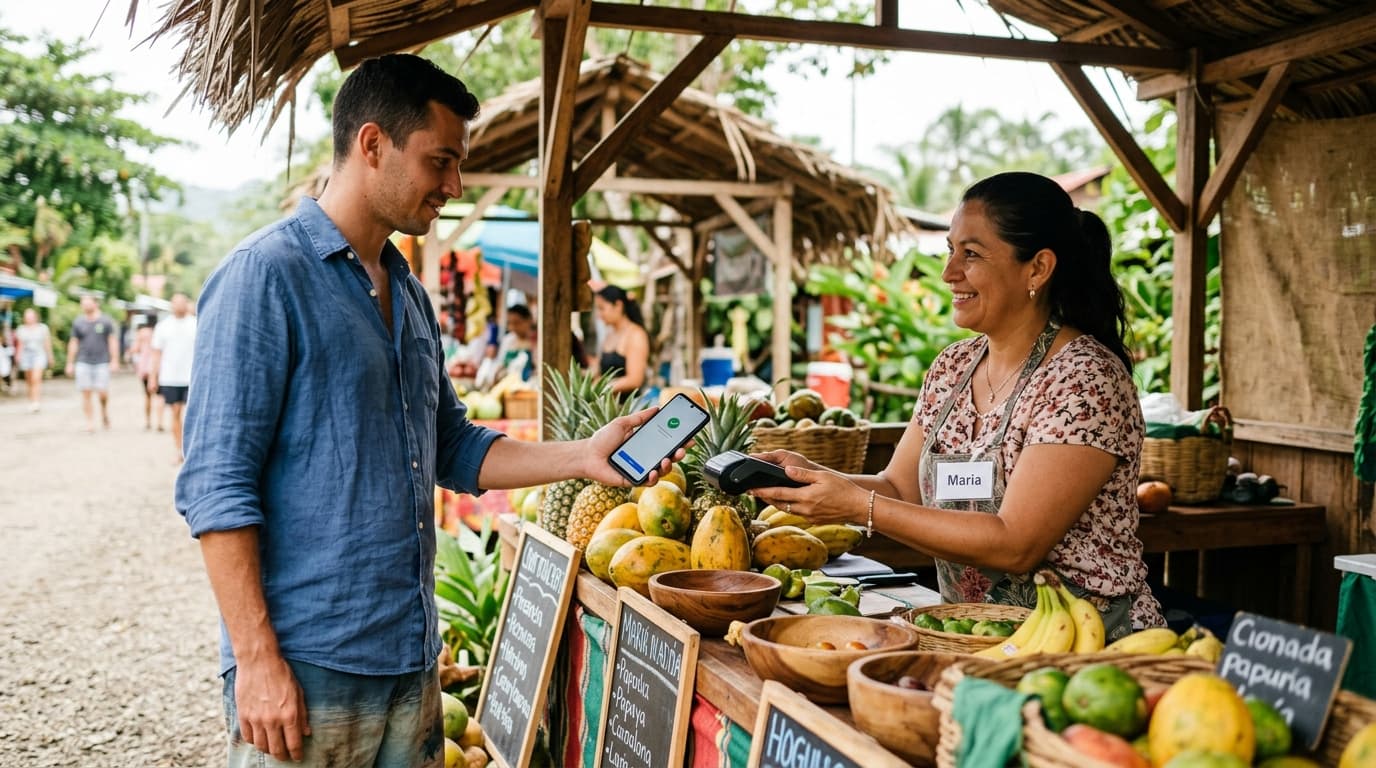
- The merchant generates a Lightning invoice (usually displayed as a QR code)
- You scan the code with the Bitcoin Jungle app
- Confirm the amount and send
- The payment settles in seconds
Lightning transactions are fast enough for retail; you won't be standing awkwardly waiting for confirmations. The merchant sees the payment arrive almost instantly.
One thing to understand: Bitcoin is not legal tender in Costa Rica. It's treated as a legal private intangible asset, meaning businesses can accept it voluntarily, but no one is required to. The colón remains the official currency. This means you should always have a backup payment method.
What Merchants Do With the Bitcoin
A common question: do merchants actually keep the Bitcoin, or convert it immediately to fiat?
The answer varies, and this is where the "circular economy" concept comes into play. Some merchants hold Bitcoin, some convert through Bull Bitcoin's fiat off-ramp (which sends colónes to a phone number or bank account), and some do a mix. Bull Bitcoin processed over 32,000 bitcoin-to-fiat conversions between May 2024 and May 2025, indicating substantial conversion activity alongside whatever Bitcoin is being held or re-spent within the community.
This hybrid approach is realistic. Not every merchant can hold volatile assets on their balance sheet, and the conversion infrastructure makes Bitcoin acceptance practical for businesses that prefer fiat.
Practical Tips for Visitors
Check the map before you go. Bitcoin Jungle's merchant map shows what's accepting Bitcoin and where. Concentrations are highest in the core zone, sparser elsewhere.
Don't overload the wallet. Fund it with what you'll realistically spend in a few days. Keep larger amounts in proper cold storage.
Have backup payment methods. Not every business accepts Bitcoin, and technical issues can happen. Carry some cash or a card.
Prices may be quoted in dollars. Many tourist-facing businesses in Costa Rica price in USD. The Lightning invoice will convert to a satoshi amount at the current rate.
Community support exists. Bitcoin Jungle offers WhatsApp-based support for both users and merchants. If you're new to Lightning payments, help is available.
The Bigger Picture
Bitcoin Jungle represents something more than a tourist curiosity. The transaction volumes, merchant counts, and integration with national payment rails suggest a functional economic layer, not just a proof of concept.
That said, it's still concentrated geographically. Outside the south Pacific zone, Bitcoin acceptance drops significantly. And like any Bitcoin venture, it exists in a regulatory gray area; Costa Rica permits it but hasn't built specific frameworks around it.
For visitors interested in experiencing Bitcoin as a medium of exchange rather than just a speculative asset, Costa Rica's Golden Triangle offers a genuine opportunity. The infrastructure works, the merchant network is real, and you can actually buy things without the experience feeling forced or experimental.
Just don't mistake a spending wallet for a savings account.