
Bitcoin Jungle Review and How Costa Rica Built a Working Lightning Circular Economy
Bitcoin Jungle powers 600+ merchants in Costa Rica's Golden Triangle with zero-fee Lightning payments. Here's how this circular economy actually works.
At the February 2025 Bitcoin Freedom Festival in Ojochal, Costa Rica, 300 attendees generated 5,243 Lightning transactions over a few days. That's roughly 14 transactions per person, a volume that would be remarkable at any Bitcoin conference but is almost routine in Costa Rica's Golden Triangle, where Bitcoin Jungle has quietly built one of the world's most functional circular Bitcoin economies.
The project, launched in 2021, now supports over 600 merchants accepting Bitcoin via the Lightning Network across the coastal towns of Uvita, Dominical, and Ojochal. Unlike El Salvador's top-down Chivo wallet experiment, Bitcoin Jungle grew organically from the bottom up, one cafe and farmer's market vendor at a time.
What Bitcoin Jungle Actually Does
Bitcoin Jungle is an open-source Lightning wallet designed specifically for Costa Rica's local economy. The core proposition is simple: merchants accept Bitcoin with zero fees and no commissions, while customers (tourists, expats, and locals alike) spend Bitcoin directly without converting to colones.
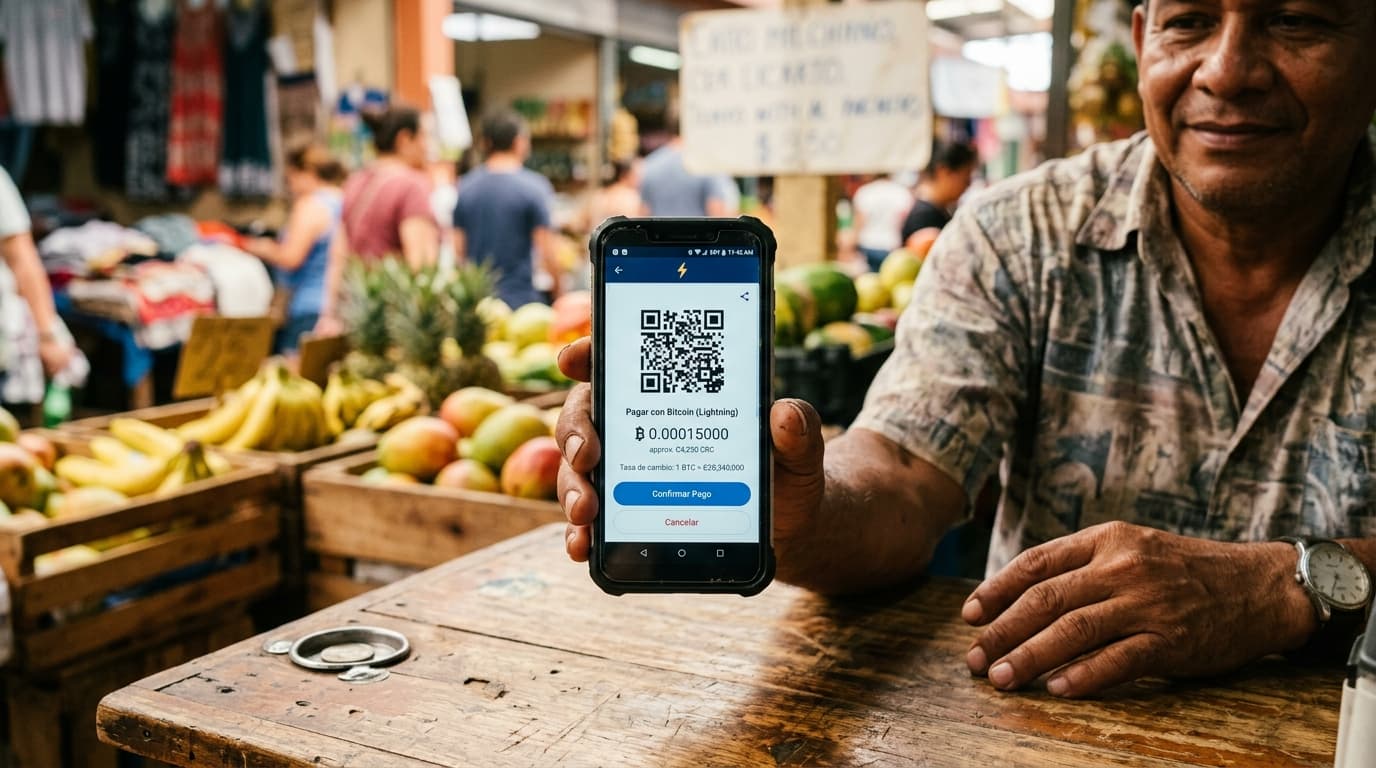
The wallet works like any modern Lightning wallet. Scan a QR code, confirm the payment, done. What makes it different is the ecosystem around it. In the Golden Triangle, you can genuinely live day-to-day on Bitcoin. Grab breakfast at a cafe, buy vegetables at the farmers market, pay for a surf lesson, settle your restaurant tab. All Lightning, all instant, all without touching fiat.
For merchants, the appeal is practical. Credit card fees in Costa Rica run 3-8%, which adds up fast for small businesses operating on thin margins. Early adopters back in 2022 reported saving meaningful percentages by accepting Bitcoin instead, though the value depends on how much of their revenue actually comes through Lightning versus traditional payment rails.
The Bull Bitcoin Integration Changes the Game
One persistent challenge for any circular economy is what happens when someone needs fiat. A restaurant owner might happily accept Bitcoin, but their landlord probably wants colones.
Bull Bitcoin's integration with Bitcoin Jungle addresses this directly. From May 2024 to May 2025, the platform processed 32,774 Bitcoin-to-fiat conversions through Costa Rica's SINPE payment system, with a success rate above 99%. Merchants can receive Lightning payments and seamlessly convert to local currency when needed, paying any SINPE-connected account.
Francis Pouliot of Bull Bitcoin has noted that this bridge enables living "exclusively off Bitcoin" in the region, though he's also been transparent that the infrastructure isn't yet profitable due to operational overhead. That honesty matters; it signals this is a long-term infrastructure play rather than a money grab.
Who Bitcoin Jungle Works Best For
The primary audience is tourists visiting Costa Rica who want to spend Bitcoin directly. If you're traveling to the southern Pacific coast and hold Bitcoin, Bitcoin Jungle offers a genuine alternative to ATM fees and currency exchange hassles. The merchant density in the Golden Triangle is high enough that you could realistically cover most daily expenses.
Costa Rican merchants and small business owners represent the other key user group. The zero-commission model is compelling for anyone tired of payment processor fees, and the SINPE integration means they're not forced to hold Bitcoin if they'd rather not. Farmers market vendors and local artisans have been particularly active adopters.
Beginners with minimal Bitcoin experience can also participate. The project maintains educational resources and WhatsApp community support specifically to help first-time users and merchants get started. User reviews on Google Play (as of mid-2024) describe the app as straightforward and easy to use.
What This Tells Us About Circular Economies
Bitcoin Jungle's growth offers some evidence that circular economies can work without government mandates. The project grew from roughly 50 market vendors and 20 businesses in 2022 to over 600 merchant locations today. That's meaningful adoption, even if it remains concentrated in a specific geographic region popular with crypto-friendly tourists and expats.
The project has also become a gathering point for the broader Bitcoin community. It hosted Nostrica 2023 with over 300 participants, and discussions at the 2026 Bitcoin Conference have highlighted Costa Rica's territorial tax structure and other advantages for Bitcoiners.
There are legitimate questions about sustainability. How much transaction volume comes from Bitcoin enthusiasts already committed to the ecosystem versus genuine organic adoption by locals? Does the economy depend heavily on tourist traffic, and what happens during off-seasons? These aren't criticisms so much as open questions that any honest assessment should acknowledge.
The Bottom Line
Bitcoin Jungle represents one of the more successful real-world implementations of a Lightning-powered local economy. The infrastructure works, the merchant network is substantial, and the SINPE integration solves the fiat off-ramp problem that hamstrings many similar projects.
If you're planning to visit Costa Rica's Golden Triangle and hold Bitcoin, the ecosystem is mature enough to use comfortably. If you're a researcher or builder interested in circular economies, it's worth studying. And if you're a local merchant curious about Bitcoin acceptance, the zero-fee model and community support make it a relatively low-risk experiment.
The broader lesson may be about how Bitcoin adoption actually spreads: not through government decrees, but through communities of like-minded people building something useful in places where it makes practical sense. Costa Rica's combination of tourism, expat communities, and merchant-friendly payment economics created fertile ground. Whether that model can replicate elsewhere remains an open question worth watching.