
How to Calculate Mining Profitability with Simple Mining Hosting Rates
Learn to calculate Bitcoin mining ROI using real hosting rates. Step-by-step formulas for daily costs, break-even points, and net profit.
A single number determines whether your Bitcoin mining operation makes money or bleeds it: your all-in cost per kilowatt-hour. At $0.08/kWh, a current-generation ASIC can generate roughly $100 monthly profit. At $0.15/kWh, that same machine loses money every day it runs.
This guide walks through the actual math of mining profitability using real 2026 hosting rates, so you can calculate whether any given ASIC makes financial sense before you commit capital.
The Three Variables That Determine Everything
Mining profitability comes down to three factors you can control:
Electricity cost consumes 75-90% of operational expenses. A typical 3,645W miner burns through about 2,624 kWh monthly. At residential rates ($0.12-$0.18/kWh in most U.S. markets), that's $315-$472 just in power. At professional hosted rates like Simple Mining's $0.07-$0.08/kWh, it's $184-$210.
Hardware efficiency measures how many watts your miner needs to produce one terahash of computing power. Current competitive equipment runs sub-15 J/TH; high-efficiency hydro-cooled units like the Antminer S23 Hydro achieve 9.5 J/TH. Anything above 20 J/TH struggles to profit even with cheap power.
Uptime and reliability often gets overlooked. Professional facilities typically deliver 95-98% uptime with 24/7 monitoring. Home setups vary wildly depending on your climate, electrical infrastructure, and willingness to troubleshoot at 2 AM.
The Daily Cost Formula
Start with your miner's wattage. Here's the formula:
(Wattage ÷ 1,000) × 24 × $/kWh = Daily electricity cost
For an Antminer S21 XP pulling 3,645W at Simple Mining's $0.08/kWh rate:
(3,645 ÷ 1,000) × 24 × $0.08 = $7.00 per day
At residential power ($0.15/kWh), the same miner costs:
(3,645 ÷ 1,000) × 24 × $0.15 = $13.12 per day
That $6.12 daily difference compounds to over $2,200 annually, often the difference between profit and loss.
Calculating Net Profit
An Antminer S21 XP (270 TH/s at 13.5 J/TH efficiency) generates roughly $10 per day in gross revenue under typical market conditions as of early 2026. Here's how net profit shakes out:
At $0.08/kWh hosted rates:
- Gross daily revenue: ~$10
- Daily power cost: $7.00
- Pool fees (1%): $0.10
- Net daily profit: ~$2.90
- Monthly net: ~$87-100
At $0.15/kWh residential rates:
- Gross daily revenue: ~$10
- Daily power cost: $13.12
- Pool fees (1%): $0.10
- Net daily profit: -$3.22
- Monthly net: -$97 (loss)
The math doesn't lie: home mining on standard residential electricity is unprofitable for most operators in 2026.
Break-Even and Payback Calculations
The Antminer S21 XP costs approximately $4,800 as of early 2026. At ~$100 monthly net profit with professional hosting, simple division gives you:
$4,800 ÷ $100 = 48 months (4 years) to break even
In practice, most operators see 5-6 year payback periods once you account for occasional downtime and difficulty adjustments. The April 2024 halving cut block rewards from 6.25 BTC to 3.125 BTC, compressing margins across the network. The next halving (expected 2028) will squeeze them further.
Sensitivity Analysis
These projections assume stable Bitcoin prices and difficulty. In reality:
- Network difficulty adjusts every 2,016 blocks (roughly every two weeks)
- Bitcoin price volatility can double or halve your gross revenue month-to-month
- Hardware efficiency degrades slightly over time
Conservative planning should assume 10-20% lower returns than calculator projections.
Comparing Different ASIC Models
Not all hardware makes sense at every price point. Here's how efficiency affects the math:
| Model | Efficiency | Hashrate | Power Draw | Monthly Profit @ $0.08/kWh |
|-------|------------|----------|------------|---------------------------|
| S23 Hydro | 9.5 J/TH | 255 TH/s | 2,422W | Higher margin |
| S21 XP | 13.5 J/TH | 270 TH/s | 3,645W | ~$100 |
| Older S19 | 17+ J/TH | 95-110 TH/s | ~3,250W | Marginal/Loss |
The efficiency rating matters more than raw hashrate. A less powerful but more efficient miner can outperform a hashrate monster that guzzles electricity.
What Hosting Rates Actually Include
When comparing hosting providers, "all-in" rates should cover:
- Electricity at the stated $/kWh
- Rack space and cooling
- Basic maintenance and monitoring
- Security (physical and network)
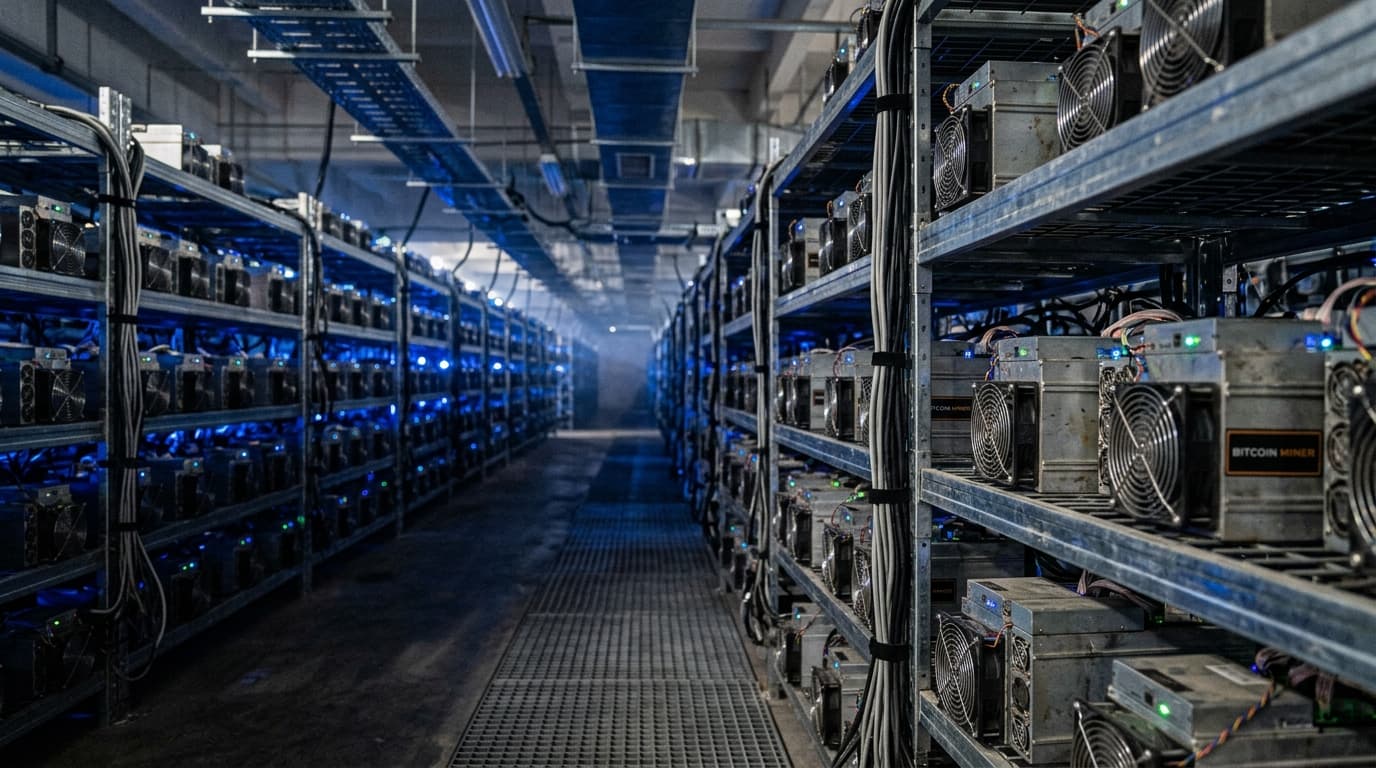
Simple Mining's $0.07-$0.08/kWh rates include free repairs and 24/7 monitoring across their nine U.S. data centers. Their model requires purchasing miners from their inventory rather than bringing your own equipment, which simplifies the vendor relationship but limits hardware flexibility.
Hidden Costs to Watch
Self-hosted operations typically add 5-10% of annual revenue in maintenance costs. Pool fees run 0.5-3% of revenue depending on your provider; some hosting partnerships offer rates as low as 0.5%.
For tax planning, Bitcoin mining hardware may qualify for 100% bonus depreciation under current U.S. tax law, potentially accelerating write-offs.
Running Your Own Numbers
Before committing capital, calculate these figures for your specific situation:
- Daily power cost: (Wattage ÷ 1,000) × 24 × $/kWh
- Monthly power cost: Daily cost × 30
- Gross monthly revenue: Use current hashprice data from NiceHash or ASIC Miner Value
- Net monthly profit: Gross revenue - power cost - pool fees
- Payback period: Hardware cost ÷ net monthly profit
If your payback period exceeds 4-5 years, you're betting heavily on Bitcoin price appreciation to make the investment work. That might be a reasonable bet, but acknowledge you're making it.
The Bottom Line
Bitcoin mining profitability in 2026 requires electricity under $0.10/kWh and hardware efficiency below 20 J/TH. Professional hosting at $0.07-$0.08/kWh transforms the economics from losing proposition to modest profit.
A $4,800 current-generation ASIC at these rates generates roughly $100 monthly net profit, implying a 5-6 year payback. Whether that risk-reward profile suits your investment goals depends on your Bitcoin price outlook, alternative uses for that capital, and tolerance for the operational complexity that even "simple" mining involves.
Run the formulas with your actual costs before writing any checks. The math either works or it doesn't.