
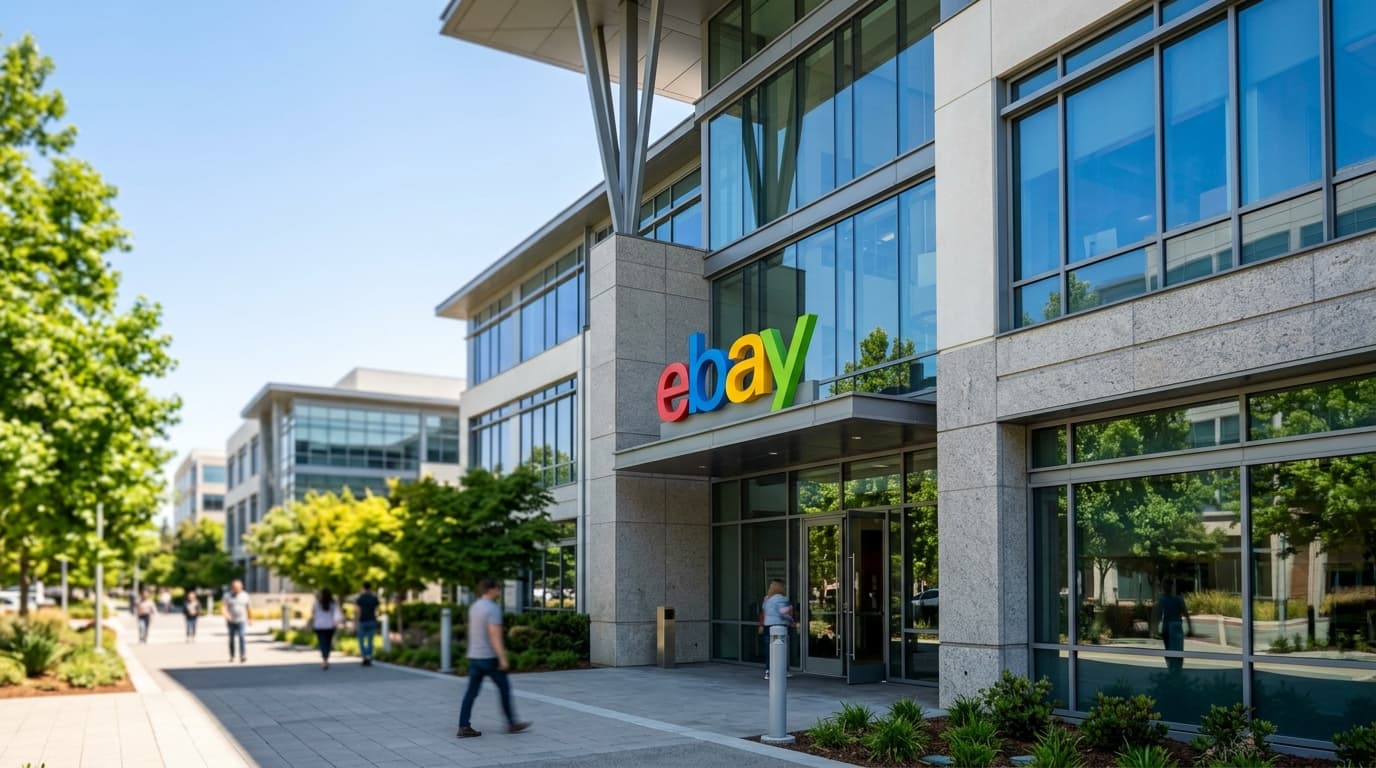
eBay's $2.4 Billion Payment Processing Problem and the Bitcoin Fix That Could Cut It in Half
eBay spends an estimated $2.4B yearly on payment processing. Bitcoin Lightning could slash that by 50%, saving $1.2B annually.
eBay processes roughly $80 billion in gross merchandise volume each year, and somewhere between 2.5% and 3% of every transaction disappears into credit card interchange fees and payment processing costs. At the midpoint, that's approximately $2.4 billion annually that never reaches sellers or improves the platform. It just evaporates into the legacy financial system.
This isn't just an accounting line item. It's a structural problem that cascades down to the 18 million sellers on the platform, who currently pay final value fees averaging 13.25% (which includes that processing cut). And recent fee increases in 2026, including a 33% hike in per-order fees, have made the burden heavier.
The Real Cost of Moving Money the Old Way
eBay's Q1 2026 earnings showed $22.2 billion in GMV, up 18% year-over-year. That's good news for volume. But the company also reported $138 million in transaction losses, nearly double the $81 million from the same quarter last year.
The traditional payment rails that eBay relies on come with well-documented friction: settlement delays of two to five days, chargeback fraud exposure, and the constant bleed of percentage-based fees that scale with every successful transaction. When your business model is taking a cut of other people's sales, those intermediary costs eat directly into what you can offer sellers and buyers.
eBay moved to its Managed Payments system in 2021, consolidating processing into its fee structure. That gave the company more control but didn't eliminate the underlying economics. Credit card networks still take their cut.
What Steak 'n Shake's Numbers Actually Show
The fast-food chain Steak 'n Shake began accepting Bitcoin via Lightning Network in May 2025 and reported a confirmed 50% reduction in payment processing fees. That's not a theoretical projection or a whitepaper promise; it's an operational result from a business handling real transactions.
Lightning Network fees average under 0.0029%, meaning a $1,000 transaction costs less than $0.10 to process. Compare that to the 2.5% to 3.5% that traditional card processing extracts, and the math becomes straightforward. For eBay's scale, a 50% fee reduction on $2.4 billion in processing costs equals roughly $1.2 billion in annual savings.
Steak 'n Shake also added $10 million in Bitcoin to its treasury by January 2026. Whether that's wise corporate strategy depends on your view of Bitcoin's volatility (more on that below), but it demonstrates that companies are finding multiple uses for Bitcoin infrastructure beyond just payment acceptance.
How This Would Actually Work
The Lightning Network enables instant settlement and eliminates chargebacks entirely. When a payment confirms on Lightning, it's final. There's no 90-day window where a buyer can dispute and claw back funds. For a marketplace like eBay, where seller protection is a constant tension point, this changes the risk calculus significantly.
Cross-border payments become simpler too. A seller in Vietnam and a buyer in Germany don't need to navigate currency conversion fees or banking delays. The transaction settles in seconds at negligible cost.
Merchants looking to implement similar systems today can use tools like BTCPay Server, an open-source payment processor that lets businesses accept Bitcoin directly to their own wallets with zero percentage-based fees. It integrates with existing e-commerce platforms and includes Lightning Network support for instant, low-cost transactions. For high-volume sellers currently losing thousands annually to processing fees, the economics are compelling.
The GameStop Angle
GameStop's unsolicited $55.5 billion bid for eBay in May 2026 has put cost structure under the microscope. The bid reportedly includes plans for $1.2 billion in marketing cuts to justify the premium. That's the same number that Bitcoin payment adoption could theoretically save, without reducing marketing investment.
It's a coincidence of figures, but it highlights something real: when activist investors or acquirers look at eBay, they see a company with structural inefficiencies that competitors might exploit. Whether the solution is cutting costs elsewhere or fixing the payment layer itself is a strategic choice.
The Honest Counterarguments
Bitcoin payment adoption isn't without friction. The volatility concern is legitimate. If eBay held Bitcoin on its balance sheet and the price dropped 30%, that would hurt more than processing fees. The Steak 'n Shake approach of converting most payments to dollars while holding a small Bitcoin treasury is one way to manage this, but it requires active decisions about exposure.
Regulatory complexity is another hurdle. Crypto tax reporting requirements in the U.S. remain cumbersome, and buyers using Bitcoin for purchases trigger taxable events. Until that friction is addressed (through legislation or better tooling), mainstream adoption faces headwinds.
Buyer adoption is perhaps the biggest practical barrier. Most eBay customers pay with credit cards and expect buyer protection, rewards points, and familiar interfaces. Shifting behavior takes time, and the platform would need to offer compelling reasons for buyers to choose Bitcoin payment options.
There's also no indication that eBay is planning any Bitcoin integration as of May 2026. This analysis is about what's technically possible and economically attractive, not what the company has announced.
Where This Leaves Sellers and Buyers
For eBay sellers frustrated by fee increases, the takeaway is that the payment infrastructure causing those fees isn't inevitable. Alternatives exist, and they're being proven at scale by other businesses. Whether eBay adopts them depends on competitive pressure, leadership priorities, and the broader trajectory of Bitcoin adoption in e-commerce.
For buyers, the question is whether the benefits (lower prices if savings pass through, faster cross-border transactions) outweigh the learning curve and tax complexity.
eBay's recent Depop acquisition for $1.2 billion (closing Q3 2026) shows the company is willing to make major investments to expand its marketplace. Investing in payment infrastructure modernization could deliver similar or greater returns, without requiring new debt or marketing cuts.
The $1.2 billion question isn't whether the savings are real. Steak 'n Shake already answered that. The question is whether legacy e-commerce platforms will adapt before competitors do.