
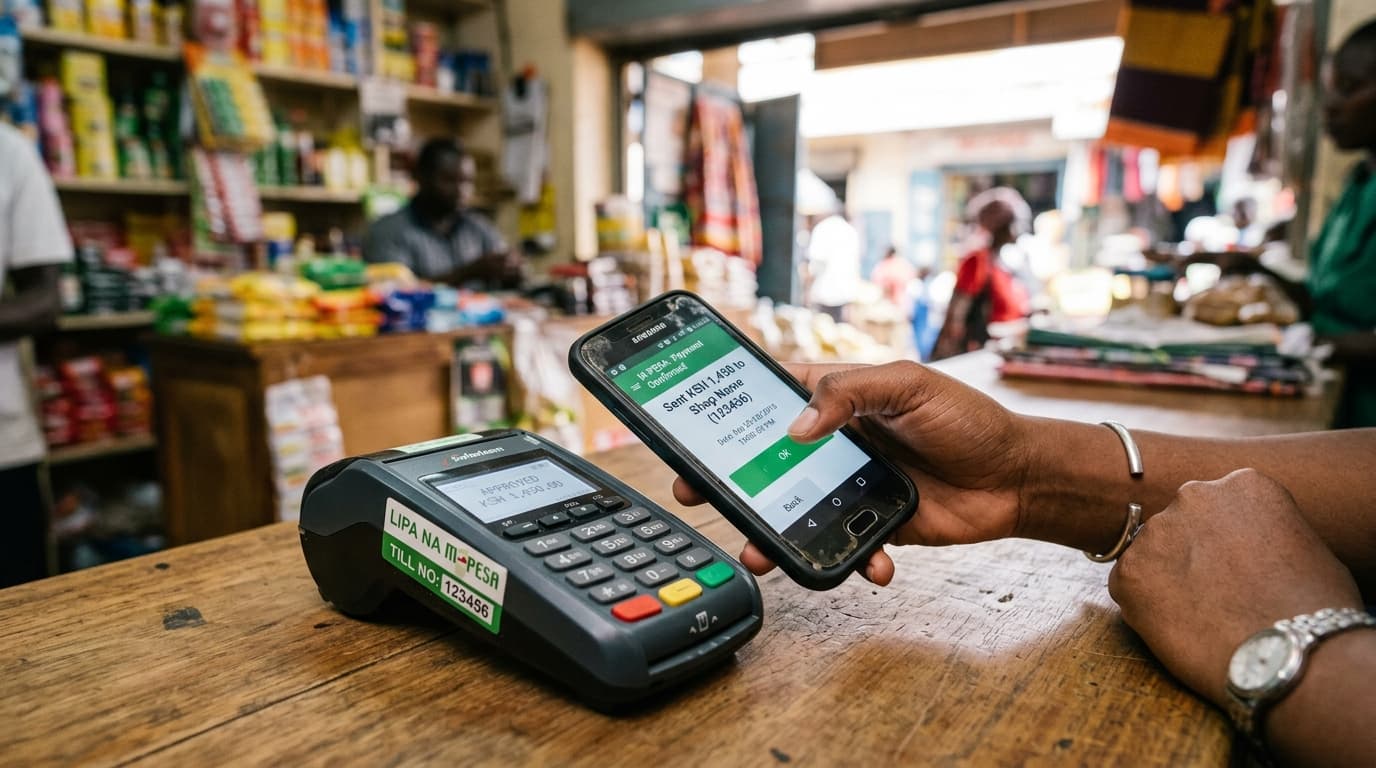
How to Spend Bitcoin Directly in Kenya Using Tando and M-Pesa
Learn how to spend bitcoin at any M-Pesa merchant in Kenya using Tando. Zero fees, instant settlement, and no KYC required.
Nearly 300 Bitcoin transactions flow through Kenyan M-Pesa merchants every day, and the recipients have no idea they're being paid in sats. That's the quiet revolution happening through Tando, a free app that converts Lightning Network payments into Kenyan shillings at the moment of purchase.
For Kenyans holding bitcoin, whether earned through remote work, received as remittances, or simply held as savings, Tando eliminates the awkward dance of selling on exchanges before paying for everyday expenses. Your bitcoin stays bitcoin until the exact moment you buy groceries, pay a utility bill, or send money to family.
How Tando Actually Works
The concept is straightforward: you have bitcoin in a Lightning wallet, you want to pay someone who only accepts M-Pesa, and Tando bridges that gap instantly.
When you initiate a payment through Tando, the app generates a Lightning invoice for the equivalent amount in satoshis. You pay that invoice from any Lightning wallet. Tando then settles with the M-Pesa recipient in Kenyan shillings, all within seconds. The merchant sees a normal M-Pesa payment; they don't need to understand or accept bitcoin directly.
This works because M-Pesa has been Kenya's dominant payment network since 2007, with around 54 million people using it. Rather than asking merchants to adopt new payment rails, Tando meets Kenya where it already is.
Getting Started with Tando
The app is available on both Google Play and the Apple App Store. You can also access Tando as a Mini App within the Fedi wallet, which added integration in early 2026.
No KYC verification is required. You download the app, and you can start spending immediately. This stands in contrast to local exchanges that typically require identity documents and waiting periods before you can trade.
The minimum transaction is remarkably low, around KES 15 (roughly 791 sats at recent exchange rates), making it practical for small everyday purchases rather than just large transfers.
Four Payment Types Explained
Tando supports the full range of M-Pesa transaction types:
Send Money lets you transfer shillings directly to any M-Pesa phone number. This is useful for paying individuals, splitting bills, or sending funds to family members who don't hold bitcoin.
Buy Goods works at any merchant with an M-Pesa till number. Walk into a shop, ask for their till number, enter it in Tando, and pay with sats.
Pay Bills handles utility payments, school fees, and other biller codes registered in the M-Pesa ecosystem. Your electricity bill doesn't care whether the original funds were bitcoin.
Scan QR is the fastest option when a merchant displays an M-Pesa QR code. Point your camera, confirm the amount, and pay.
The Fee Structure
Tando charges zero transaction fees. This is worth emphasizing because the alternatives, selling bitcoin on P2P platforms like Binance or through local exchanges, typically involve spreads, withdrawal fees, or both.
By late 2025, users had collectively saved over 1.6 million KES in fees by avoiding these conversion costs. For anyone regularly spending bitcoin into the M-Pesa ecosystem, those savings compound quickly.
Practical Use Cases
The most obvious beneficiary is the remote worker earning bitcoin or receiving Lightning payments for services. Rather than maintaining separate pools of local currency and bitcoin, they can hold their earnings in sats and spend as needed.
Remittances represent another strong use case. Diaspora members can send Lightning payments to family in Kenya, who then spend those funds directly into M-Pesa without visiting an exchange or paying traditional remittance fees.
For Bitcoin-curious Kenyans who are comfortable with M-Pesa but unfamiliar with cryptocurrency, Tando offers a gentle entry point. The interface deliberately mirrors familiar M-Pesa patterns, reducing the learning curve while introducing Bitcoin's benefits.
What to Consider Before Using Tando
No tool is without tradeoffs.
Bitcoin's price volatility means the purchasing power of your sats can fluctuate significantly between when you receive them and when you spend them. If you're paid in bitcoin on Monday and the price drops 10% by Friday, your effective wage just decreased. This cuts both ways, of course, but it's a risk that doesn't exist when holding Kenyan shillings.
The system also depends on Lightning Network reliability. While Lightning has matured considerably, payment routing can occasionally fail, particularly for larger amounts or during network congestion. Most users report smooth experiences, but it's not infallible.
Finally, while Tando has operated without reported regulatory issues, Kenya's regulatory stance toward cryptocurrency could evolve. The app currently functions in a practical gray zone where regulators haven't intervened, but that's not a guarantee of future status.
Looking Forward
Tando represents something important for Bitcoin adoption in Africa: proof that cryptocurrency can function as a medium of exchange, not just a speculative asset. By connecting global Bitcoin rails to Kenya's entrenched payment infrastructure, it makes spending bitcoin as unremarkable as any other transaction.
For Kenyans already holding bitcoin or curious about starting, Tando removes the friction that typically makes cryptocurrency impractical for daily life. Whether that convenience outweighs the volatility risk depends on your individual situation, your income sources, and your risk tolerance.
But the option now exists. And nearly 300 transactions per day suggest plenty of Kenyans find the tradeoff worthwhile.