
How to Find Bitcoin Merchants Near You with BTC Map
Learn to use BTC Map's search features and filters to find Lightning and on-chain Bitcoin merchants anywhere. A complete walkthrough for spending sats locally.
Holding Bitcoin is straightforward. Spending it at the coffee shop down the street, less so. The gap between owning sats and actually using them in daily life remains one of Bitcoin's practical challenges. BTC Map exists to close that gap.
This free, open-source directory maps Bitcoin-accepting merchants worldwide, from restaurants and retail shops to service providers. Whether you're traveling through a new city or trying to build a circular economy in your hometown, here's how to actually use it.
What BTC Map Is and How It Works
BTC Map pulls its data from OpenStreetMap, the collaborative mapping project that powers countless location services. When merchants get tagged as accepting Bitcoin (either on-chain or via Lightning Network), that information feeds into BTC Map's searchable interface.
The result is a community-verified directory rather than a corporate database. Local Bitcoin communities maintain their regional data through a leaderboard system at btcmap.org/communities/leaderboard, which means the information tends to stay current where there's an active Bitcoin scene. In areas without engaged communities, listings may be sparser or occasionally outdated.
You can access BTC Map through the website at btcmap.org or through dedicated apps on iOS and Android. The mobile apps are particularly useful when you're walking around a city looking for somewhere to spend sats.
Finding Merchants Step by Step
Using Location Services
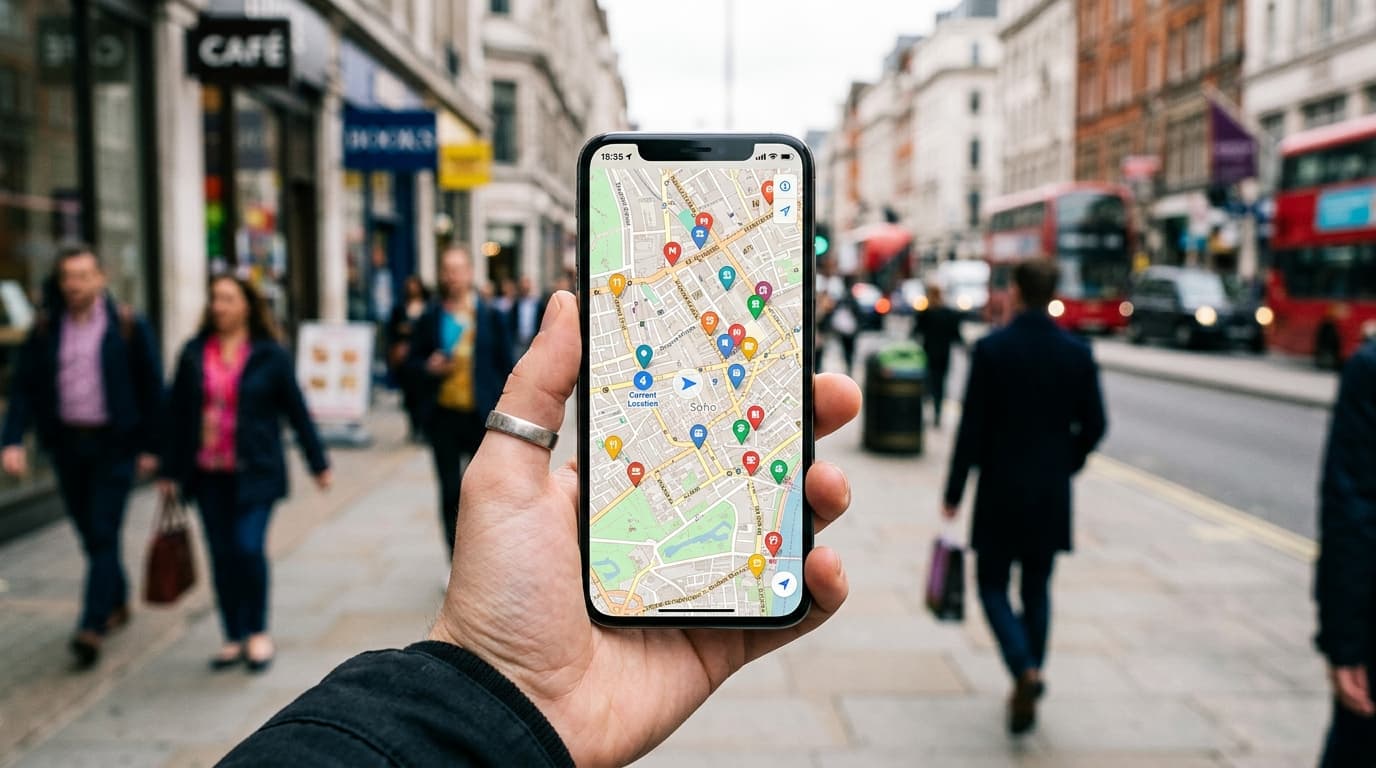
The simplest approach: enable location services when you visit btcmap.org or open the app. The map centers on your position and displays nearby merchants as pins. Zoom out to see more options in your broader area, or zoom in to navigate dense clusters in Bitcoin-friendly neighborhoods.
Searching by City or Name
If you're planning ahead for a trip or researching a specific area, the search function lets you jump to any city worldwide. Type in "Prague" or "Austin" and the map repositions accordingly. You can also search for specific business names if you're trying to verify whether a particular shop accepts Bitcoin.
Filtering by Category
Not every Bitcoin merchant is a coffee shop (though many are). BTC Map offers category filters to narrow results by business type, including restaurants, retail stores, accommodations, and services. This helps when you have a specific need rather than general curiosity.
Checking Payment Methods
Merchant listings typically indicate whether they accept on-chain payments, Lightning payments, or both. This matters practically, since Lightning works better for small purchases where speed and low fees matter, while some merchants may only have set up one payment method.
The Community Verification System
One of BTC Map's strengths, and potential weaknesses, is its reliance on community verification. Volunteers check whether listings are accurate, whether businesses are still operating, and whether the payment methods described actually work.
This community approach means that in cities with active Bitcoin meetups and engaged Bitcoiners, the data tends to be reliable. Local communities track their verification efforts on public leaderboards, and active regions often have comprehensive, well-maintained listings.
The tradeoff: in areas without organized Bitcoin communities, you might find outdated listings or gaps in coverage. It's worth calling ahead or checking recent reviews if you're making a special trip to a merchant.
Adding a Business or Verifying Listings
BTC Map isn't just for consumers. If you run a business that accepts Bitcoin, you can add it through the form at btcmap.org/add-location. A volunteer reviews submissions before they appear on the map. Alternatively, if you're familiar with OpenStreetMap, you can directly edit the relevant tags.
Even if you don't own a business, you can contribute by verifying existing listings when you visit them. Found a merchant that no longer accepts Bitcoin? Report it. Discovered a new place that does? Add it. This kind of participation is what keeps the directory useful.
Recent Developments Worth Knowing
The Bitcoin merchant landscape has expanded significantly since late 2025, when Block (Jack Dorsey's company) integrated Bitcoin payments into Square for its four million merchants via Lightning Network. Merchants who opt in can appear on Cash App's Bitcoin Map, which adds another discovery tool alongside BTC Map.
These Square-integrated merchants may or may not appear on BTC Map depending on whether someone has added them. The two directories serve complementary purposes: Cash App's map for Square merchants specifically, BTC Map for the broader ecosystem of Bitcoin-accepting businesses.
Alternatives to Consider
BTC Map isn't the only option. Coinmap.org offers a similar service with a different interface. The SatMap app focuses specifically on mobile discovery. Cash App's Bitcoin Map covers Square merchants who've opted in. Some BTCPay Server users list their businesses through that platform's directories.
BTC Map's advantage lies in its open-source nature and community verification system. It's not controlled by any company and doesn't require merchants to use specific payment infrastructure. That said, cross-referencing multiple directories often yields the most complete picture of Bitcoin commerce in a given area.
Making It Practical
The best way to use BTC Map is probably the simplest: check it before you need it. Before traveling somewhere new, spend a few minutes exploring what's available. Bookmark a few promising spots. When you're planning a night out locally, see if any Bitcoin-accepting restaurants interest you.
The circular economy ideal, where Bitcoiners earn, save, and spend entirely in sats, remains more aspiration than reality for most people. But tools like BTC Map make incremental progress possible. Every coffee bought with Lightning, every meal paid in sats, builds the infrastructure and habits that make broader Bitcoin commerce more viable.
For those committed to spending Bitcoin rather than just holding it, BTC Map is the most comprehensive free tool available. Its limitations are real but manageable, and its community-driven approach means that using it and contributing to it can be part of the same activity.