
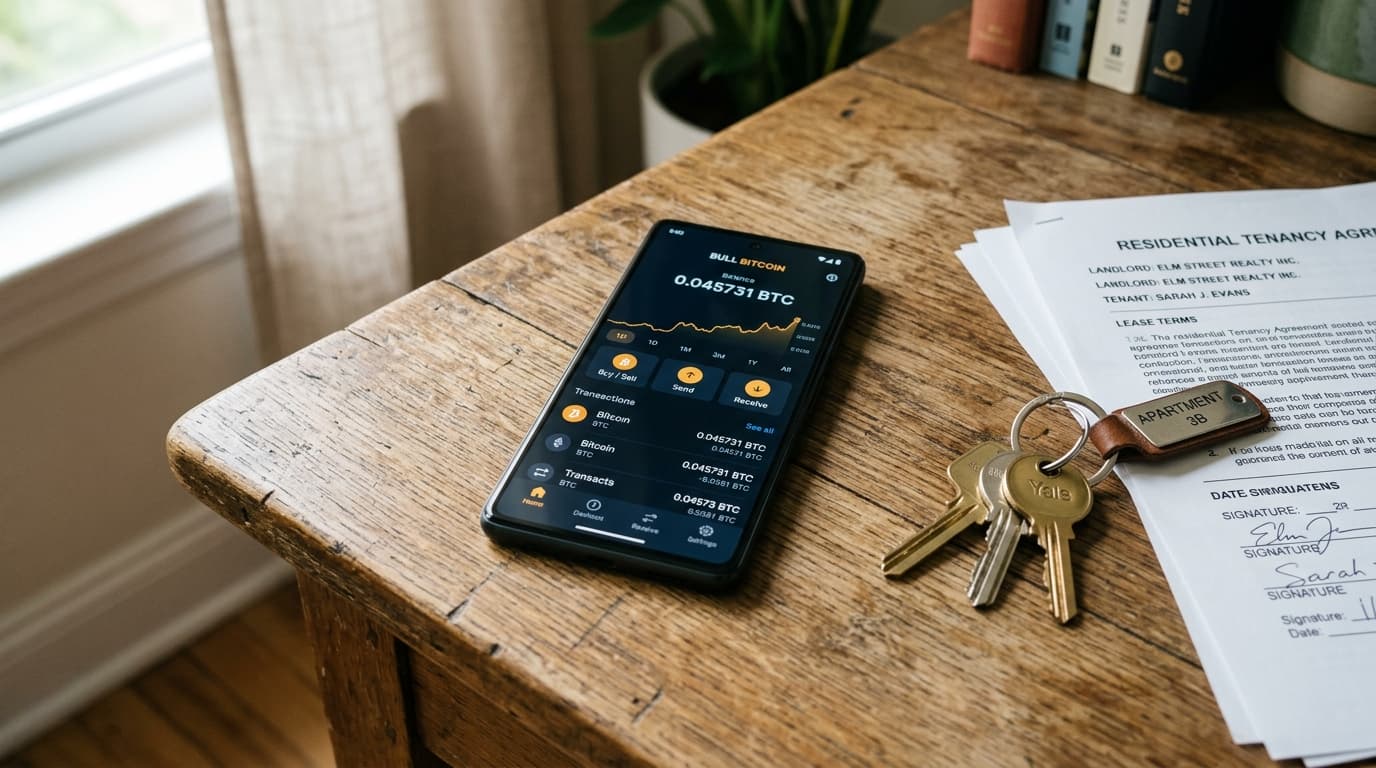
How to Pay Your Rent with Bitcoin Using Bull Bitcoin
Learn how Bull Bitcoin's bill pay feature lets you pay rent directly from your self-custodial wallet without your landlord needing to know anything about Bitcoin.
Your landlord doesn't accept Bitcoin. Neither does your utility company, your phone provider, or your credit card issuer. And yet, with the right tools, you can pay all of them directly from your self-custodial Bitcoin wallet without ever touching a traditional exchange or moving coins into someone else's custody.
Bull Bitcoin has been facilitating Bitcoin-to-fiat bill payments since 2013, and their current system makes the process surprisingly straightforward. Here's exactly how it works for rent payments, though the same approach applies to virtually any bill.
How the Payment Flow Works
The core concept is simple: you send Bitcoin from your own wallet, Bull Bitcoin converts it to fiat at a locked-in rate, and the funds arrive in your landlord's bank account. Your landlord sees a normal bank deposit. They don't need to understand Bitcoin, create any accounts, or do anything differently than they would with any other tenant.
This non-custodial approach means Bull Bitcoin never holds your Bitcoin. You control your private keys throughout the process, sending coins only at the moment of payment.
Step-by-Step Process
1. Log into your Bull Bitcoin account at app.bullbitcoin.com. If you're making transactions under 1,000 CAD for selling or bill payments, you won't need identity verification, making smaller regular payments accessible without extensive documentation.
2. Select "Pay Anyone" from the main menu. This is the bill payment feature that lets you send fiat to any bank account, credit card, or biller in Canada.
3. Add your landlord's banking details. You'll need their bank account information for the transfer. This is a one-time setup; once saved, you can reuse it for monthly payments.
4. Enter your rent amount in Canadian dollars. The system will calculate the exact Bitcoin amount needed based on current rates.
5. Send the specified BTC amount from your self-custodial wallet. You can use on-chain Bitcoin, Lightning Network, or Liquid Network depending on your preference and fee considerations. The exchange rate locks the moment your Bitcoin send is confirmed.
6. Wait for settlement. Bank transfers typically settle same-day or next-day. If you're using Interac e-Transfer (for recipients who accept it), funds arrive nearly instantly.
What This Actually Costs
Bull Bitcoin charges a transparent spread on Bitcoin sells rather than hidden fees. The rate you see when initiating the payment is the rate you get, locked at the moment your Bitcoin transaction confirms. There's no guessing about what you'll actually receive after mysterious deductions.
The practical cost depends on current network fees (if you're sending on-chain) plus the sell spread. For recurring rent payments, Lightning or Liquid transactions can minimize the network fee portion significantly.
Geographic Availability
While Bull Bitcoin's full bill payment ecosystem remains Canada-focused, the platform has expanded to support users in Europe, Mexico, Costa Rica, Argentina, and Colombia as of 2026. Mexican users, for example, can send to SPEI bank accounts, while Costa Rican users have SINPE access.
For Canadians specifically, this means rent, utilities, phone bills, credit cards, and essentially any entity with a Canadian bank account can receive Bitcoin-funded payments.
The Tradeoffs Worth Considering
This approach works well for people committed to holding Bitcoin as their primary savings while needing to meet fiat obligations. It lets you avoid the mental accounting of maintaining separate fiat and Bitcoin pools.
However, you are selling Bitcoin each month. If your conviction is that Bitcoin's long-term trajectory is upward, every rent payment means parting with an asset you expect to appreciate. The convenience of "living on Bitcoin" comes with the cost of reducing your holdings.
For some, the discipline of earning in fiat and paying bills in fiat while accumulating Bitcoin separately makes more sense. There's no universally correct answer here; it depends on your income sources, your cash flow needs, and your philosophy about spending versus holding.
Setting Up Recurring Payments
While each payment requires manually sending Bitcoin (the non-custodial model means no one can automatically pull from your wallet), you can save recipient details for quick repeat transactions. Some users combine this with Bull Bitcoin's automated DCA purchases, effectively creating a cycle where Bitcoin flows in through regular buys and out through bill payments.
The BULL Wallet, with its descriptor-based architecture and option to connect your own node, integrates naturally with this workflow for those who want maximum control over their transaction privacy and verification.
Making It Work for You
Paying rent with Bitcoin isn't about convincing your landlord to accept cryptocurrency. It's about using Bitcoin as your monetary base while seamlessly meeting obligations in the fiat world. Bull Bitcoin's bill payment feature bridges that gap without requiring you to trust a custodian or navigate traditional exchange withdrawal processes.
The practical question is whether this fits your financial situation. If you're already holding Bitcoin and earning in fiat, selling Bitcoin for rent means reducing your position. If you're earning in Bitcoin (or converting a portion of income to Bitcoin as it arrives), this creates a coherent system where Bitcoin functions as your actual money rather than a speculative asset you never touch.
Either way, the option exists, the process works, and your landlord remains blissfully unaware that their rent payment originated from a decentralized monetary network.