
New York Sues Coinbase and Gemini for $3.4 Billion Over Prediction Markets
NY Attorney General claims Coinbase and Gemini run illegal gambling operations. The CFTC responded by suing New York State three days later.
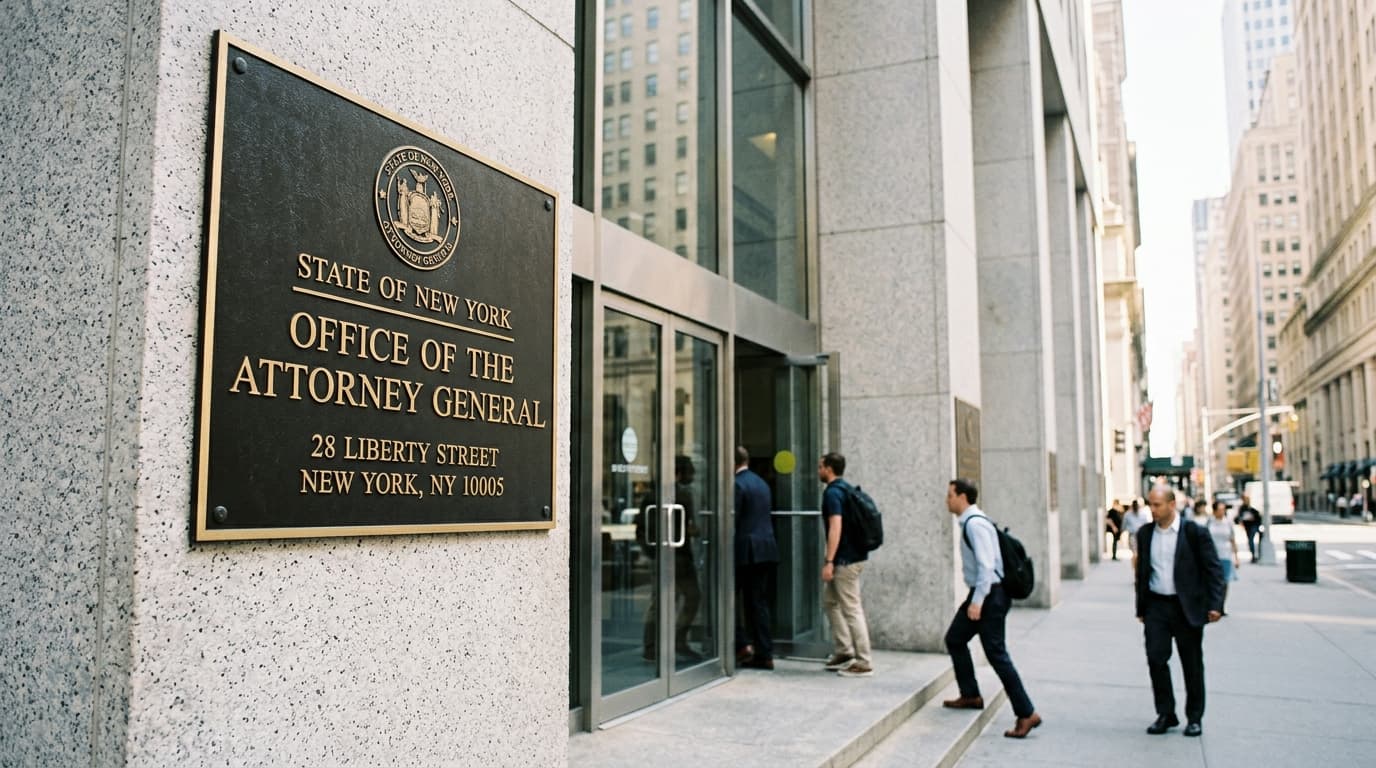
New York Attorney General Letitia James filed lawsuits against Coinbase and Gemini on April 21, 2026, seeking $3.4 billion in combined damages and claiming their prediction market platforms are unlicensed gambling operations. Three days later, the federal government fired back by suing New York State.
This isn't just another regulatory skirmish. It's a direct collision between state gambling authorities and federal financial regulators over who gets to define what prediction markets actually are.
What New York Is Claiming
The lawsuits, filed in Manhattan State Supreme Court, target both companies on similar grounds. New York seeks $1.2 billion from Coinbase and $2.2 billion from Gemini, arguing that their prediction market offerings:
- Constitute unlicensed gambling operations that never obtained approval from the New York State Gaming Commission
- Allow users aged 18 and older to trade prediction contracts, violating New York's 21-and-over gambling age requirement
- Evade the 51% tax on gross revenues that licensed casinos and mobile sportsbooks must pay
- Offer contracts on sports outcomes, entertainment events, and elections that are "event contracts disguised as legitimate financial instruments"
Coinbase's stock dropped 6.1% to $198.65 following the announcement. Gemini fell 3.3% to $4.51.
The Federal Preemption Argument
Coinbase immediately removed the case to federal court, arguing that prediction markets are CFTC-regulated derivatives contracts and therefore fall under exclusive federal jurisdiction. This isn't a new strategy for the industry.
In October 2025, Kalshi (Coinbase's prediction market partner since January 2026) sued the New York State Gaming Commission using the same federal preemption argument. In December 2025, Coinbase itself sued Connecticut, Michigan, and Illinois on identical grounds.
The industry's position is straightforward: if the CFTC regulates these products as derivatives, states can't simultaneously classify them as gambling and impose their own rules.
The CFTC Enters the Fight
On April 24, 2026, the Commodity Futures Trading Commission did something unusual: it sued New York State directly, seeking a declaratory judgment that it has exclusive federal authority over prediction markets.
The CFTC has also taken similar legal action against Arizona, Connecticut, and Illinois to block state-level regulation of prediction markets. This represents a significant escalation, with the federal government actively defending its regulatory turf against state encroachment.
Why This Fight Matters for Bitcoin and Crypto
Prediction markets sit at an interesting intersection of crypto, finance, and gambling. The classification question has real consequences:
If states win: Prediction market operators would need to navigate a patchwork of state gambling licenses, age restrictions, and potentially crushing tax rates. The 51% gross revenue tax New York imposes on licensed gambling would fundamentally change the economics of these platforms.
If the feds win: Prediction markets operate under CFTC oversight with uniform national rules, similar to other derivatives products. States would be largely frozen out of regulation.
The outcome will also signal how regulators approach other novel crypto products that don't fit neatly into existing categories. When something can plausibly be called both a "derivatives contract" and a "wager," whoever wins the naming contest gets to write the rules.
What Happens Next
Coinbase's removal to federal court means a federal judge will first decide whether the case belongs there at all. If New York succeeds in sending it back to state court, that itself would be a significant defeat for the federal preemption argument.
The CFTC's counter-lawsuit against New York adds another layer. It's possible we'll see conflicting rulings from different courts before this gets resolved, potentially pushing the question toward higher courts.
For users of prediction markets in New York, the immediate practical impact is uncertain. Neither lawsuit includes an injunction halting operations, but the legal exposure for both companies is now substantial.
This much is clear: the question of what prediction markets are, legally speaking, won't be settled by press releases or blog posts. It's going to be decided in courtrooms, and the crypto industry is betting heavily that federal regulators will protect their jurisdiction.