
Parasite Pool Mines Second Block as Plebs-First Mining Model Proves Its Staying Power
Parasite Pool mined its second Bitcoin block on April 17, validating its hybrid payout model that rewards small home miners over industrial operations.
Forty-eight days without a single payout, and the small miners stayed anyway.
On April 17, 2026, Parasite Pool mined its second Bitcoin block at height 945,601, proving that its unconventional "plebs eat first" model can retain hashrate through the long dry spells that would normally drive participants to larger, more predictable pools.
The block included 7,398 transactions and roughly 0.002 BTC in fees. At Bitcoin's price of approximately $76,213 that day, the full block reward of 3.125 BTC represented about $238,000 in value. But the real story isn't the money; it's what the 48-day gap between blocks reveals about small-scale mining economics.
How Parasite Pool's Hybrid Model Works
Most mining pools operate on pay-per-share models that smooth out variance for participants. You contribute hashrate, you get paid proportionally, regardless of whether your pool actually finds a block that day. This works well for industrial operations but effectively subsidizes larger miners at the expense of smaller ones.
Parasite Pool takes a different approach. When the pool finds a block, the individual miner whose machine actually solved it receives 1 BTC outright. The remaining ~2.125 BTC plus transaction fees gets distributed proportionally to all participants based on shares submitted since the last block.
The pool charges zero fees, and payouts route through the Lightning Network, bypassing the standard 100-block coinbase maturity rule through custom coinbase logic. This means miners see their Bitcoin faster than they would through traditional pool structures.
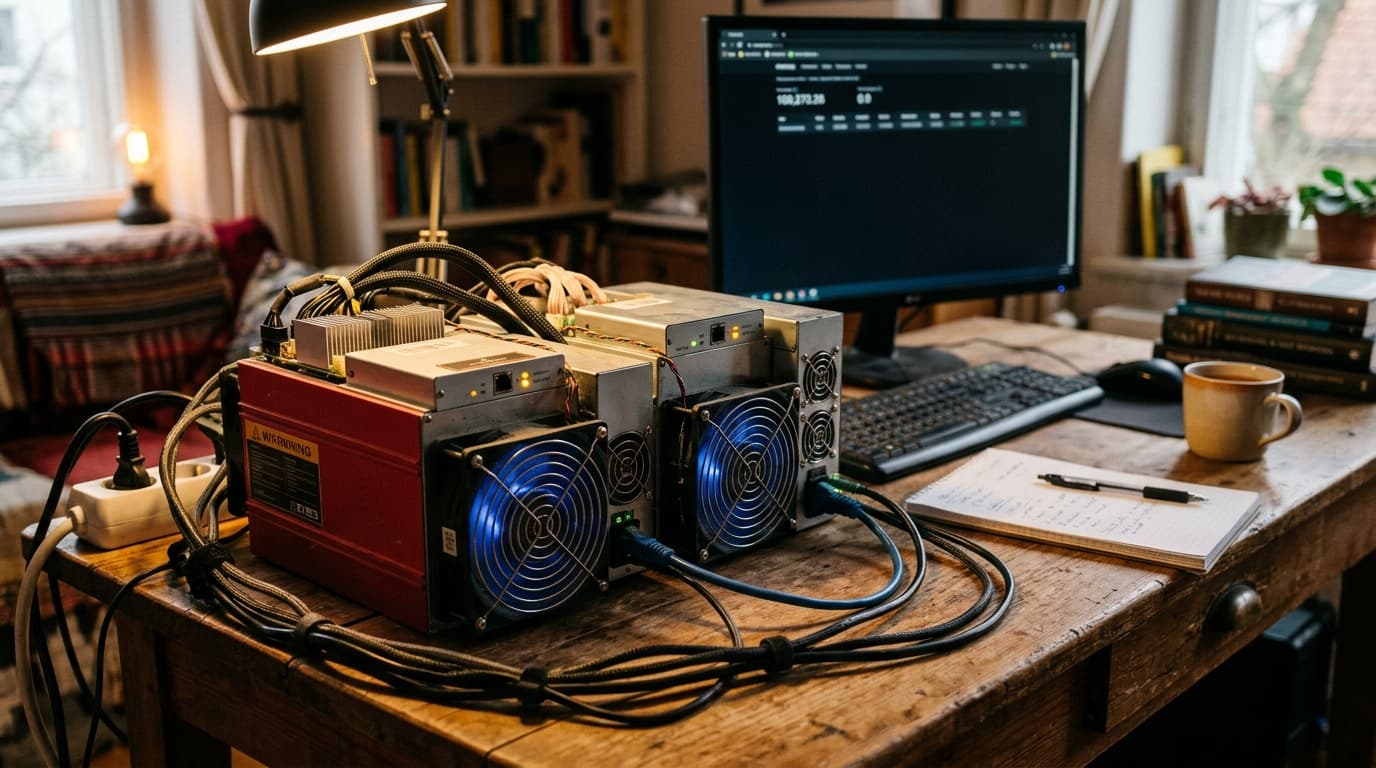
It's part lottery, part cooperative, designed specifically for home miners running small operations rather than warehouse-scale deployments.
The Retention Question
Here's what makes the second block significant: the pool held onto participants for 48 days without distributing any rewards. Its first block came on February 28, 2026, at height 938,713. Between then and April 17, miners kept their machines pointed at Parasite Pool despite earning nothing.
That's a real test of the model's incentive structure. Traditional pay-per-share pools offer daily predictability. Solo mining offers the full block reward but astronomical variance. Parasite Pool sits in between, and the question was whether that middle ground would hold.
The answer, at least for this cohort of miners, appears to be yes.
The pool's current hashrate sits at 52 PH/s, down considerably from a peak of 182 PH/s in June 2025. That decline might reflect miners leaving during the long wait, or it might simply reflect the broader ebb and flow of home mining interest. Either way, 52 PH/s represents approximately 0.005% of Bitcoin's roughly 1 ZH/s network hashrate, a tiny slice but enough to find blocks occasionally.
Can Plebs-First Mining Actually Compete?
The honest answer: probably not at scale, and that might be the point.
Industrial mining operations benefit from economies of scale that home miners simply cannot match. Cheaper electricity contracts, purpose-built facilities, professional maintenance, and the ability to negotiate bulk hardware purchases all favor large players. Post-2024 halving economics, with block rewards now at 3.125 BTC and scheduled to drop to 1.5625 BTC in 2028, only intensify these pressures.
Parasite Pool isn't trying to compete on efficiency. It's offering something different: a way for small miners to participate in Bitcoin's security model while retaining more upside than traditional pool structures allow.
The 1 BTC finder's fee creates a meaningful lottery element that rewards the actual work of mining, not just contributing hashrate to someone else's operation. For home miners running one or two machines, that's a qualitatively different value proposition than collecting fractional satoshis from a pay-per-share pool.
Whether this model can survive another halving is an open question. The math gets harder every four years.
The Broader Pleb Mining Movement
Parasite Pool exists within a larger trend of decentralization efforts in Bitcoin mining. Throughout 2025 and into early 2026, small-scale mining saw renewed interest. Events like Pleb Day 2025 distributed over 1 PH/s of Bitaxe devices to home miners, and solo or small-pool miners found approximately 22 blocks during that period.
ZK Shark, the Parasite Pool founder (also known for creating the Ordinal Maxi Biz NFT collection), launched the pool in April 2025 explicitly targeting this demographic. The "plebs eat first" ethos rejects both the industrial pay-per-share model and the pure solo lottery approach.
For those interested in mining but unwilling to deal with the noise, heat, and electrical demands of running ASICs at home, hosted mining services offer an alternative path. Sazmining provides a hands-off approach where you own the hardware but they handle deployment, maintenance, and electricity at renewable-powered facilities. It's a different philosophy than Parasite Pool's scrappy home mining ethos, but it serves Bitcoiners who want exposure to mining economics without becoming hardware technicians.
What This Means Going Forward
Parasite Pool's second block doesn't prove that small-scale mining will dominate Bitcoin's future. It proves something more modest but perhaps more important: that alternative pool structures can work, that miners will accept variance for better terms, and that decentralization in mining isn't purely theoretical.
The pool's hashrate will fluctuate. Some participants will leave for more predictable payouts. Others will join, attracted by the 1 BTC finder's fee or the zero-fee structure. The next block might come in two weeks or two months.
But for now, 52 PH/s worth of home miners are making a different calculation than the spreadsheet-optimized industrial operations. They're betting that Bitcoin mining should look more like a network of individuals and less like a handful of mega-facilities.
Whether that bet pays off depends on factors well beyond any single pool's control. But two blocks in, the model is at least proving it can survive.