
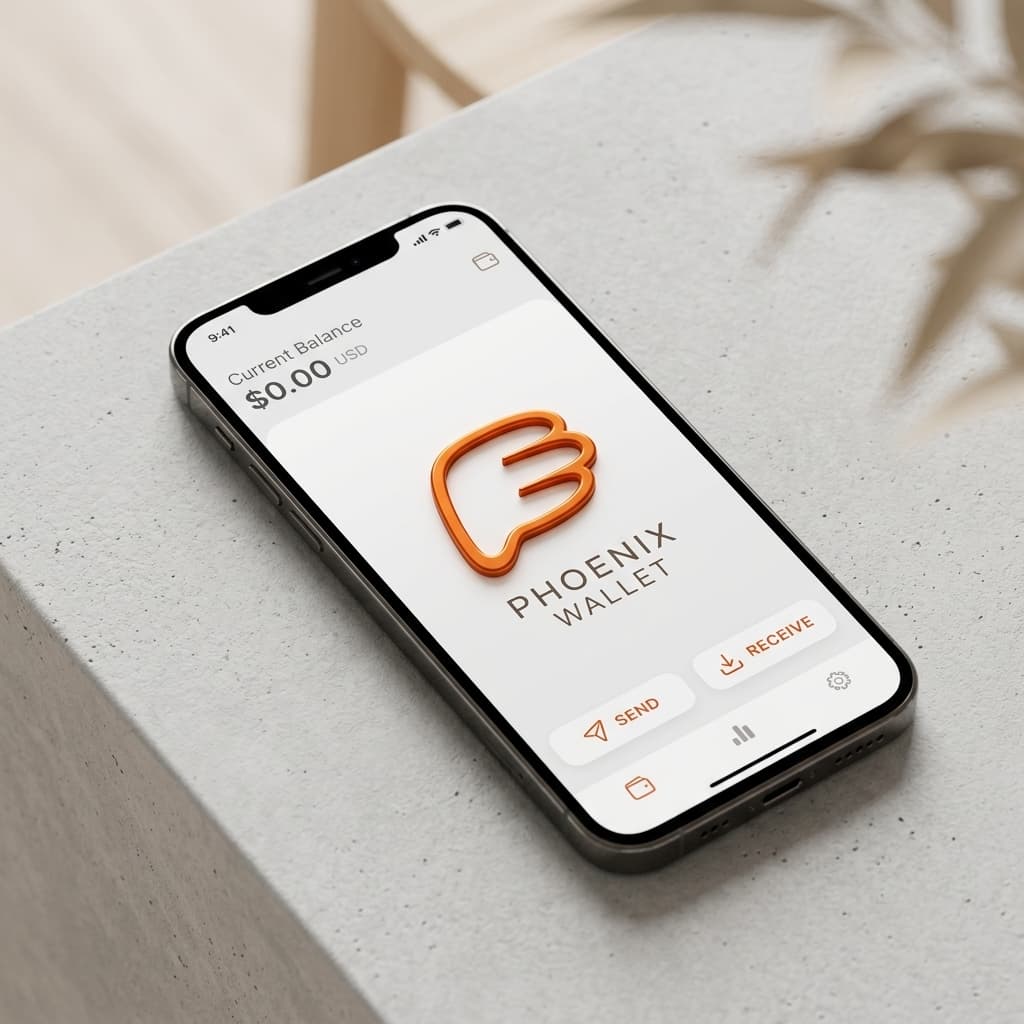
Phoenix Wallet Review (2026): Fees, Custody, US Status
Phoenix is the easiest real self-custodial Lightning wallet, but its fees, channel minimums, and US availability need an honest look. The current, no-hype review.
For eleven months, the United States government did to Phoenix what no hacker ever has. It took the wallet away from American Bitcoiners.
ACINQ pulled Phoenix from US app stores on May 3, 2024, a few days after the feds indicted the Samourai Wallet developers for the crime of publishing software. The message to everyone building self-custody tools was not subtle: write code that lets Americans hold their own keys and you might get classified as a money transmitter, or end up a defendant. Wallet of Satoshi fled the US market the same year.
Phoenix came back on April 8, 2025, when the regulatory weather changed.
So here is the honest accounting of what you actually get, what it costs, and where it will bite you.
Five things to know before you download it:
- It's actually yours. Phoenix runs a real Lightning node on your phone behind a 12-word seed. ACINQ never holds your keys or your coins. That is rarer in a mobile Lightning wallet than it should be.
- The fee is the tradeoff. You pay a flat 0.4% to send over Lightning, and receiving can trigger an on-chain fee when the wallet has to make room. That is the price of never thinking about channels.
- It's back in the US and running the latest version. The 2024 exile is history.
- It's easy until it isn't. Onboarding is smooth. The day a channel force-closes, the wallet suddenly expects you to understand seeds and sweeps.
- It's the easiest real Lightning wallet, not the cheapest. Want zero fees? Run your own node. Want zero responsibility? Use a custodian and give up your keys. Phoenix sits, on purpose, in the middle.
At a glance: Phoenix Wallet (2026)
| What it is | Self-custodial, Bitcoin-only mobile Lightning wallet |
| Maker | ACINQ (the French shop behind the eclair node and lightning-kmp) |
| Custody | Non-custodial; 12-word BIP39 seed, standard BIP84 derivation |
| Platforms | iOS 16+ and Android 8+. No desktop app (see `phoenixd` for servers) |
| Send fee (Lightning) | 0.4% + 4 sat |
| Receive fee (Lightning) | Free with liquidity; 1% + mining fees when a channel op is needed |
| US availability | Available (removed May 2024, returned April 2025) |
| Best for | Newcomers who want true Lightning self-custody without managing channels |
| Not for | Fee-minimizers, heavy privacy users, or anyone wanting altcoins or stablecoins |
| Latest version | v2.8.0 (May 2026), actively maintained |
What Phoenix actually is
Start with the part that matters: Phoenix is yours.
Most apps that call themselves Lightning wallets are custodians in a trench coat. Wallet of Satoshi holds your coins and hands you an IOU. Phoenix does not. In ACINQ's own words it is "a real, self-contained Lightning node that runs on your phone," your funds sit behind a 12-word seed only you control, and any standard wallet can recover them. Not your keys, not your coins is the whole game, and Phoenix is one of the few mobile Lightning wallets that actually plays it.
What makes it feel effortless is that it hides the hard part. Every user gets a single Lightning channel against ACINQ's node, and the wallet resizes that channel in place using splicing instead of churning through opens and closes. On-chain and Lightning show up as one balance. You send, you receive, and the plumbing stays out of sight.
That convenience runs on a relationship with ACINQ's node, and to their credit ACINQ says the quiet part out loud. Phoenix, they tell you, is "trust-minimized, but not trustless." Swaps are trustless and an on-chain deposit needs no trust; a channel created from an incoming payment asks for a little trust until it confirms. Either way your money stays spendable, and if ACINQ vanished tomorrow your funds would still be safe. You just could not make new payments until you swept them on-chain with your seed.
The one line every honest reviewer should quote sits in the privacy FAQ: "The current version of Phoenix offers no advantage regarding privacy over existing, hosted, custodial wallets. We (ACINQ) know the final destination and amount of payments." Respect them for writing it down. Also believe them. If chain privacy is your priority, point Phoenix at your own Electrum server or use a different tool.
Is Phoenix available in the US?
Yes. As of right now, an American can download Phoenix and run it. This needs its own section only because so much of the internet is still wrong about it.
The removal was real. On May 3, 2024, ACINQ killed US access, citing recent signals from US authorities that "cast a doubt on whether self-custodial wallet providers, Lightning service providers, or even Lightning nodes could be considered Money Services Businesses." Translated: holding your own keys might make a software company a regulated money transmitter. It landed days after the Samourai indictment, and the whole industry read it as a warning shot.
The return was just as real. On April 8, 2025, Phoenix went back on the US App Store and Google Play, the regulatory posture having softened through 2025. Today the US listing shows the current version, a 4.2-star rating, and no region lock.
One caveat, kept honest: ACINQ never published a detailed legal explanation of the comeback, so treat the reason as a change in the regulatory climate rather than some documented restructuring. The fact that you can install it today is verified.
How Phoenix's fees actually work
Fees are the thing everyone argues about, and the thing most worth getting right. Here is the current schedule, exactly as ACINQ publishes it:
| Operation | Fee |
|---|---|
| Sending via Lightning | 0.4% + 4 sat |
| Sending on-chain | Mining fees (you choose the rate) |
| Receiving via Lightning | 0 (with sufficient liquidity) |
| Receiving via Lightning with insufficient liquidity | 1% + mining fees |
| Requesting liquidity | 1% + mining fees |
| Receiving on-chain | Mining fees |
| Channel creation | 1,000 sat |
In plain English: every Lightning payment you send costs a flat 0.4%. Receiving is free as long as you already have room. When you don't, Phoenix has to do an on-chain transaction to make room, and you eat the mining fee plus a 1% liquidity fee. Your very first receive also pays a one-time 1,000-sat channel-creation fee.
This is why the top complaint on ACINQ's GitHub is some version of "why am I paying a network fee to receive a Lightning payment?" Because self-custodial Lightning sometimes has to touch the chain, and when the mempool is hot that touch is not cheap. In practice the first funding wants something like 10,000 sats to be worth doing, which hurts on small balances. Phoenix at least refuses to ambush you: it rejects an incoming payment whose fee would top 5,000 sats or half the amount, a cap you can raise, and it lets tiny payments pile up as fee credit instead of forcing a chain operation for every few sats.
So is it a rip-off? No. Is it free? Also no.
Nothing about self-custody is free. You either run your own node and pay in time, hardware, and complexity, or you let ACINQ handle the channels and pay 0.4%. Pick your poison. If you move real amounts and never want to think about liquidity, the fee is a bargain for the headache it removes. If you fire off dust payments all day, the send fee and that first channel will grind on you, and a custodian or your own node is cheaper. Most of the "fee outrage" is really that Phoenix shows you a cost that custodial apps bury in the spread and hope you never notice.
Living with Phoenix: setup and daily use
Setup is where Phoenix earns its reputation. Ben Perrin walked the whole thing end to end in his 2025 BTC Sessions tutorial, and the path is short: write down your 12 words, fund the wallet, let it handle the channel. From there it's one balance you send from and receive to, with the on-chain and Lightning sides stitched together for you.
The daily flow is the payoff. Receiving shows an invoice or a reusable address. Sending scans a QR and shows the fee before it goes. When you want to move savings to cold storage, Phoenix splices funds straight out to an on-chain address, so there's no clumsy withdrawal dance. It shows the fee before each on-chain move and lets you set the feerate, which matters when blocks are full.
The rough edges live at the boundaries. The first surprise on-chain fee on a receive throws new users. And the moment a channel force-closes, the friendly abstraction evaporates and you are suddenly expected to know what a seed sweep is. Phoenix is easy in the normal case and demanding in the rare one, which is the reverse of how it first feels.
The features that matter
ACINQ ships new Lightning standards faster than almost any consumer wallet, because ACINQ helps write them. The parts worth caring about:
- BOLT12 offers. Reusable, non-expiring payment requests that work like a permanent Lightning address. Make one, reuse it forever.
- Splicing. The core trick: one channel resized in place instead of a churn of opens and closes. It's what keeps your balance unified and your long-run fees down.
- Swaproot. Taproot-based swaps that, per ACINQ, make on-chain deposits and withdrawals look like ordinary transactions, cheaper and more private than the old format.
- Taproot channels. Added in late 2025, roughly 15% cheaper per ACINQ and indistinguishable from a normal transaction on-chain.
- Multiple wallets and split PINs. Run several wallets in one app, each with its own Lock PIN and a separate Spending PIN, so someone can receive without being able to spend or see your seed.
- Your own Electrum server, Tor, and a fiat converter round out the control and usability options.
There's also `phoenixd`, a headless server version of the same engine with an HTTP API, built for merchants and developers who want to accept Lightning programmatically without babysitting channels. It is a genuine edge over wallets that stop at the phone.
What to know before you rely on it
This is the part that matters most: what you need to know before you trust it with real money.
- Receiving can cost money, unpredictably. Covered above, still the number-one surprise. Fund in larger, less frequent chunks and budget for it.
- Tor isn't built in anymore. ACINQ ripped out the embedded Tor library in early 2025 for reliability, so routing over Tor now needs a separate app like Orbot, which fights with any other VPN you run. Privacy-minded users are not happy about it, and the friction is real.
- Back up your payment history separately. Restoring from your seed brings back your funds, not your transaction history, unless you exported it (automatic via iCloud on iOS, manual on Android). If your history matters, export the payments database before you need it.
- The builds aren't reproducible yet. Phoenix is open source under Apache 2.0 and its releases are signed, but the build is not yet bit-for-bit reproducible, so nobody outside ACINQ can currently prove the app you downloaded matches the public source. ACINQ admits it and says it's in progress. A known gap, not a security hole, and part of why it's not on F-Droid.
- The "my balance went to zero" panic. Search the forums and you'll find people screaming that a force-closed channel showed a zero balance with no warning. Get the facts straight: your funds are not gone. A force-close settles your money on-chain under your own seed, recoverable after roughly a five-day delay, sometimes through Electrum. It is a genuine UX failure and a real reason to actually understand your seed, but there is no pattern of Phoenix losing user funds, and no Phoenix-specific hack on record.
- You are the backstop. Everything ultimately settles to your seed, so lose the seed and you lose the money, and clawing back a force-closed channel means you have to act. Phoenix is "easy" right up until the day it asks you to be your own bank.
Phoenix vs the alternatives
Phoenix owns one specific seat: the easiest real Lightning self-custody. The others win on different ground.
| Wallet | Custody | How Lightning works | Headline fee | Best for |
|---|---|---|---|---|
| Phoenix | Self-custody | Real channel vs ACINQ node, auto-managed | 0.4% send + channel/mining fees | Easiest real Lightning self-custody |
| Zeus | Self-custody | Your own node, or an embedded one | ~0% if you self-host | Power users and node runners |
| Breez | Self-custody | Newer wallet runs on Liquid via swaps | Swap fees, no channel minimum | No-minimum self-custody, integrations |
| Aqua | Self-custody | Liquid plus Boltz swaps | Higher Lightning fees | Multi-asset and stablecoin users |
| Wallet of Satoshi | Custodial | Custodian routes for you | ~free | Absolute simplicity, no keys |
| Muun | Self-custody on-chain | Submarine swaps for Lightning | High effective Lightning cost | Simple UI, criticized on fees |
The honest calls. Zeus is where you graduate when you outgrow Phoenix: point it at your own node and your routing fees fall toward zero, in exchange for real complexity. Wallet of Satoshi is simpler and cheaper for tiny amounts, and it holds your keys, which defeats the entire purpose of holding Bitcoin. Breez's newer wallet dodges the channel minimum by running on the Liquid sidechain, good for small first balances, though you swap trust in ACINQ's node for trust in the Liquid Federation. Aqua is the pick if you want stablecoins next to your Bitcoin, which Phoenix deliberately refuses to touch. Bitcoin-only is a feature, not a limitation. And Muun routes Lightning through submarine swaps rather than a native channel, so its effective fees run higher, which is exactly what sends people to Phoenix.
What you might be looking for instead
- Stacking for the long haul? Lightning is for spending. Savings you're holding for years belong in cold storage, not a hot wallet on your phone.
- Running your own node? Zeus connects to your hardware and drops your fees toward nothing.
- Just buying Bitcoin? A wallet is not an exchange. Strike and friends handle recurring buys, then you sweep the coins to a wallet like Phoenix.
- Want the full menu? Every option lives in the mobile wallets directory.
Who Phoenix is for
| If you are… | Phoenix is… |
|---|---|
| New to self-custody and want Lightning to just work | The strongest pick on the market |
| Coming off a custodial app and ready to hold your keys | The cleanest on-ramp to real self-custody |
| A merchant or developer accepting Lightning | A fit through `phoenixd`, the server version |
| A heavy micro-payment user chasing the lowest fee | The wrong tool; run a node or use a custodian |
| A privacy maximalist | A weak fit out of the box, and ACINQ says so itself |
What to do this week
If you're new to self-custody: download Phoenix, write your 12 words on paper instead of a screenshot, and fund it with an amount you'd happily carry as walking-around money. Treat the first on-chain fee as the cost of admission.
If you're leaving a custodian: set up Phoenix first, then drain the custodial app to it in one or two larger transfers instead of a dozen small ones, to keep channel and mining costs down. Get your coins off someone else's books.
If you're a US user who bailed in 2024: come home. Reinstall from the App Store or Google Play and restore your seed or start fresh.
If you run your own node: Phoenix is a convenient pocket wallet, not your endgame. Keep Zeus pointed at your node for the cheap, private routing you actually want.
And whatever you do, back up your seed properly today, before a force-close ever forces the lesson. The wallet is easy. Being your own bank is the part that takes work, and it's the part worth doing.
Frequently asked questions
Is Phoenix wallet self-custodial, or does ACINQ hold my Bitcoin?▾
Self-custodial. Phoenix runs a real Lightning node on your phone, and your funds are controlled by a 12-word seed only you hold. ACINQ provides the node your channel connects to, but it never has custody of your coins. If ACINQ disappeared, your funds would still be recoverable on-chain with your seed.
Is Phoenix wallet available in the United States?▾
Yes. ACINQ pulled Phoenix from US app stores in May 2024 over regulatory uncertainty, then returned it to the US App Store and Google Play in April 2025. As of 2026 it is available to download and use in the US, running the current version.
What are Phoenix wallet's fees?▾
Sending over Lightning costs a flat 0.4% plus 4 sats. Receiving over Lightning is free when you have inbound liquidity; when the wallet has to make room with an on-chain operation, you pay 1% plus mining fees, and the first channel adds a one-time 1,000-sat creation fee. On-chain sends and receives cost only the Bitcoin mining fee.
Why did Phoenix charge me a fee to receive a payment?▾
Because self-custodial Lightning sometimes has to make an on-chain transaction to give you room to receive, and you pay the network's mining fee for it. This is most common on your first receive or after channels close, and it runs higher when the mempool is busy. Phoenix shows the fee before it happens and rejects payments whose fee would be unreasonably high.
Is Phoenix wallet safe? Has it ever been hacked?▾
There is no record of a Phoenix-specific hack or systemic loss of user funds. The alarming "my balance went to zero" reports almost always trace to a force-closed channel, where funds settle on-chain under your seed and are recoverable after a delay, not to a loss. The real risk in any self-custodial wallet is you: lose your seed and you lose your money.
What happens to my money if ACINQ shuts down?▾
Your funds stay safe. By ACINQ's own account, if the company or even the whole Lightning Network disappeared, you could no longer make new payments, but you could recover your Bitcoin on-chain by force-closing your channels with your seed. ACINQ tells users not to force-close for ordinary problems, only in that worst case.
Phoenix vs Wallet of Satoshi: which should I use?▾
Wallet of Satoshi is custodial. It's simpler and cheaper for tiny payments, but it holds your keys, so you're trusting a company and wearing its regulatory risk. Phoenix is self-custodial, so you hold the keys and accept its fees in exchange. If "not your keys, not your coins" means anything to you, Phoenix is the answer.
Does Phoenix support Tor?▾
Yes, but not built in anymore. ACINQ removed the embedded Tor library in early 2025, so routing Phoenix over Tor now requires a separate app such as Orbot. That setup is clunkier than before and can conflict with running another VPN, a tradeoff privacy-focused users have criticized.
Will my transaction history transfer if I restore Phoenix on a new phone?▾
Your funds will, your history might not. On iOS the history can restore automatically through iCloud; on Android you have to export the payments database first and import it on the new device. Back it up before you need it, because the seed alone recovers funds, not history.