
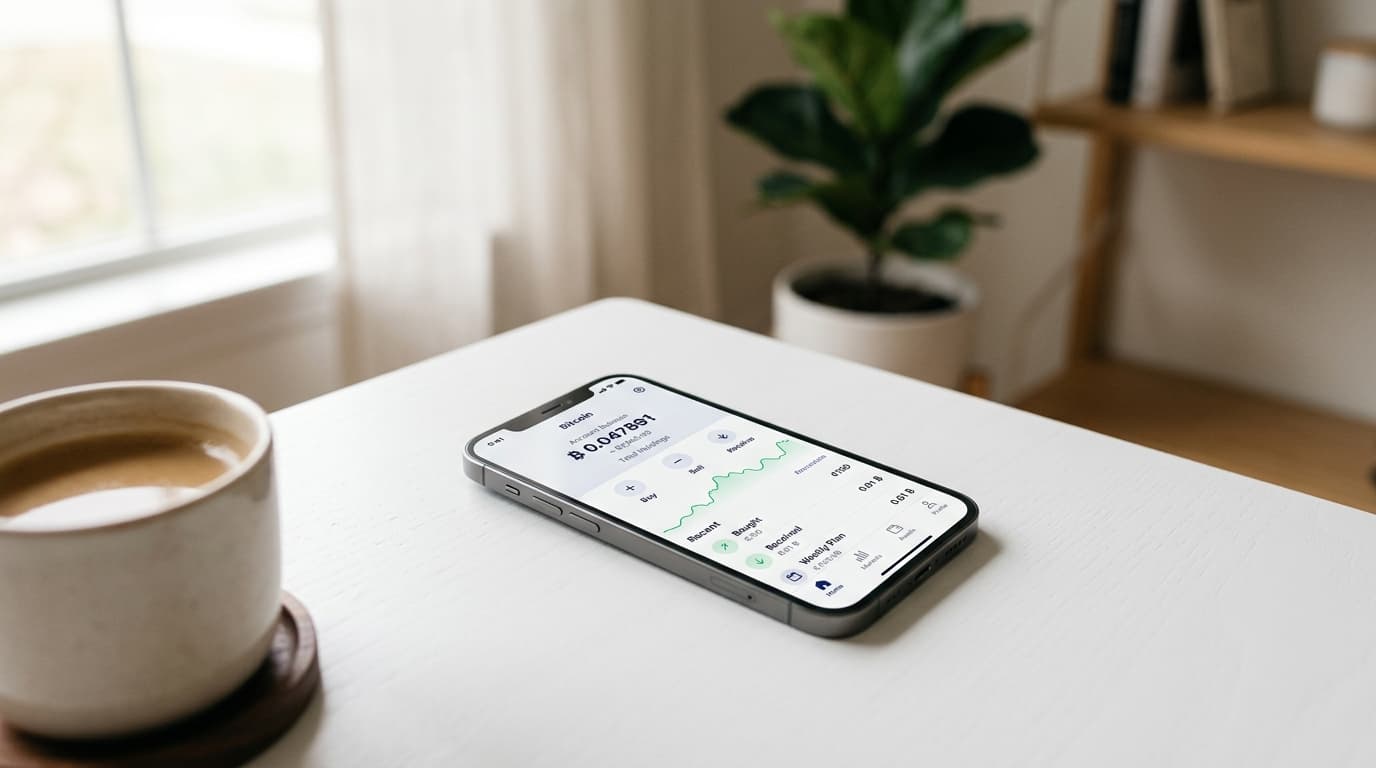
How to Set Up Automated DCA with Relai App and Self-Custody Delivery
Step-by-step guide to configuring recurring Bitcoin purchases on Relai with automatic delivery to your self-custodial wallet, SEPA setup, and fee tips.
Most people who want to accumulate bitcoin over time face an annoying choice: use an exchange with complicated interfaces and custodial risk, or manually buy and withdraw on a schedule you'll inevitably forget to follow. Relai App exists to eliminate that friction for European users, combining automated recurring purchases with direct delivery to a wallet you actually control.
Here's how to set it up properly, including the bank configuration that trips up many beginners.
What Makes Relai Different from Exchange DCA
Relai is a Swiss, Bitcoin-only mobile app that pairs a built-in non-custodial wallet with automated purchase plans. The key distinction from platforms like Coinbase or Bitpanda is where your bitcoin ends up: rather than sitting on the company's balance sheet until you manually withdraw, purchased coins go straight to a wallet secured by your own recovery phrase.
This shifts counterparty risk away from the platform, but it also shifts responsibility onto you. Your seed phrase is the only way to recover funds if you lose your phone. Relai cannot freeze, reverse, or restore access to your wallet because they never hold your keys.
The app supports users across 20+ European countries including Germany, France, Netherlands, Spain, and Switzerland, with SEPA transfers as the primary funding method.
Step-by-Step Auto-Invest Setup
1. Install and Create Your Wallet
Download Relai from the App Store or Google Play. During setup, the app generates a recovery phrase (typically 12 or 24 words) that you must write down and store securely offline. This is not optional advice; it's the only backup that exists for your bitcoin.
Skip this step carelessly and you risk permanent loss of funds with no recourse.
2. Configure Your Recurring Purchase Plan
Once your wallet is active, tap the "+" button, select "Buy," and enter your desired purchase amount in EUR or CHF. The minimum for recurring buys is around €10, though most users targeting meaningful accumulation start at €25-50 per week or month.
Select your frequency: weekly auto-invest or monthly auto-invest. Weekly purchases provide more granular dollar-cost averaging, spreading your buys across more price points. Monthly purchases simplify bank setup and reduce the total number of on-chain transactions.
3. Choose Your Funding Method
Relai supports several payment rails:
- SEPA bank transfer (requires setting up a standing order at your bank)
- Debit/credit cards (Visa, Mastercard)
- Apple Pay / Google Pay
- SEPA Direct Debit (expanding availability)
Card and mobile wallet payments offer fully automated execution since Relai charges your payment method directly. Bank transfers require an extra step on your end but often carry lower fees.
4. Set Up Your Bank Standing Order (Critical for SEPA Users)
If you're using SEPA transfers, Relai assigns you a personal IBAN. You then create a standing order from your own bank account that matches:
- The exact amount you configured in the app
- The same currency (EUR or CHF)
- The same frequency (weekly or monthly)
Relai's system automatically matches incoming transfers to your auto-invest plan without requiring payment references. This reduces friction but creates a dependency: if your bank transfer amount or frequency doesn't match your Relai plan, the purchase won't execute as expected.
One common mistake is changing your auto-invest settings in the app without updating the bank standing order. The two must stay synchronized.
5. Apply a Referral Code for Fee Reduction
During setup, you can add a referral code to reduce standard fees from approximately 1% to around 0.9% per transaction. Small percentage, but it compounds over years of regular buying.
Relai also offers one zero-fee monthly purchase up to €100/100 CHF when executed as part of an auto-invest plan, which is worth capturing if you're doing monthly DCA at that level or below.
Maintaining Your DCA Setup Over Time
Automation doesn't mean "set and forget forever." A few maintenance tasks keep your system running smoothly:
Watch for IBAN changes. In February 2026, Relai announced backend banking changes including new EU IBANs for users. If you're running standing orders, transitions like this require updating your bank instructions.
Review your seed phrase backup. At least once a year, verify you still have access to your recovery phrase and that it's stored somewhere secure and fireproof.
Consider hardware wallet migration. Relai's mobile wallet works fine for accumulation, but many users move larger balances to hardware wallets (Ledger, Trezor, Coldcard) once their stack reaches a size they'd be devastated to lose. Relai supports direct delivery to external wallet addresses, so you can eventually configure purchases to go straight to cold storage rather than the app wallet.
The Trade-offs You're Accepting
Relai's model works well for a specific user: someone who wants behavioral discipline (automatic, recurring buys) without custodial risk (you hold keys). But this creates real responsibilities:
- Seed phrase loss means permanent fund loss. Relai cannot help you.
- On-chain fees apply. Your bitcoin arrives via actual blockchain transactions, so network fee variability affects your effective cost.
- No advanced trading tools. This is deliberately a savings app, not a trading platform. No charts, no limit orders, no leverage.
- UTXO management becomes your problem. Over time, many small purchases create many small unspent transaction outputs, which can be expensive to spend later if fees spike. Some users periodically consolidate.
For someone who wants simple, long-term bitcoin accumulation with real ownership, these trade-offs are worth accepting. For active traders or people who want exchange support to recover forgotten credentials, a custodial platform might be more appropriate.
Who This Setup Works Best For
Relai's automated DCA with self-custody delivery fits European residents who want the simplest path from bank account to bitcoin they actually own. If exchange interfaces, order books, and manual withdrawal procedures have stopped you from stacking consistently, this removes most of that friction.
The sweet spot is someone willing to take seed phrase security seriously in exchange for not trusting a third party with their savings. That's a real responsibility, but it's also the point of holding bitcoin in the first place.
Set up your recurring plan once, configure your bank correctly, back up your seed phrase, and the system runs in the background while you focus on other things. Check in occasionally to verify everything's working, move larger balances to cold storage when appropriate, and let time and consistency do the heavy lifting.