
Satscard Review After Six Months of Research and Real-World User Feedback
An honest assessment of Satscard's strengths and limitations for gifting Bitcoin, based on documentation, user reports, and community feedback.
Ten reusable slots, a credit-card form factor, and the promise of handing someone Bitcoin the way you'd hand them a twenty-dollar bill. That's the pitch behind Satscard, Coinkite's NFC-enabled bearer card that has been circulating in the Bitcoin community for several years now. But does the cash-like experience actually hold up when real people try to use it for gifts, tips, and peer-to-peer trades?
After reviewing extensive user feedback, documentation updates through 2025, and third-party tutorials, a clear picture emerges: Satscard excels in a narrow but genuine niche, yet carries tradeoffs that matter.
What Satscard Actually Does
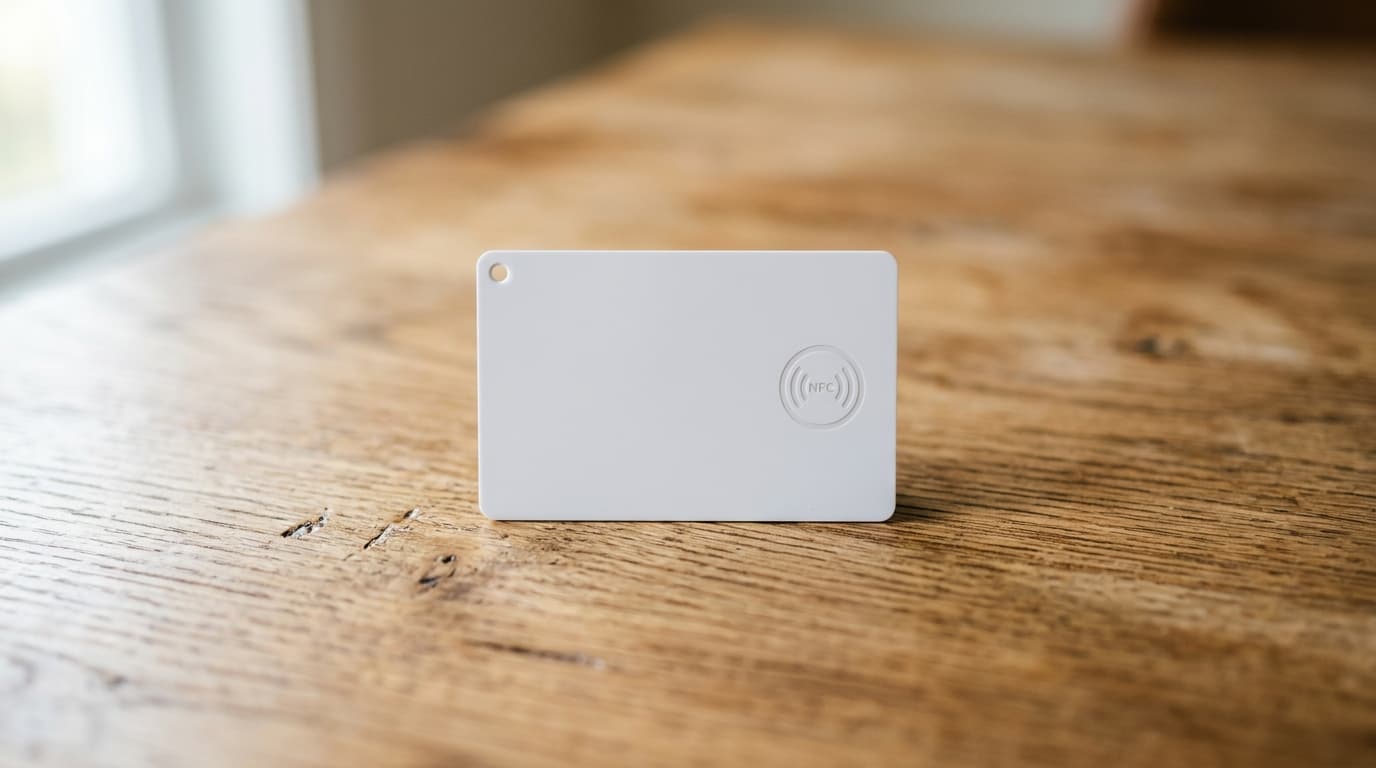
Satscard is a Bitcoin-only NFC smart card that generates and stores private keys on an EAL6+ secure element chip. The keys never leave the device. When you want to load it, you tap the card with an NFC-enabled phone to reveal a Bitcoin address, then send funds from any wallet. When you want to transfer ownership, you simply hand over the card. The new holder can verify the balance by tapping or scanning the printed QR code on the back.
This bearer model means possession equals control. There's no account, no password reset, no seed phrase backup. If you lose the card before sweeping the funds, they're gone.
Each card supports up to 10 independent slots. Once you unseal a slot to spend from it, that slot is done; you move on to the next. At roughly $7 to $18 per card depending on design (based on pricing documented through late 2024), the cost per use can be under a dollar if you actually cycle through all ten slots. In practice, many users report using only one or two before the card gets lost in a drawer.
The Cash-Like Experience, in Practice
The core appeal is real. Satscard does eliminate the friction of coordinating an on-chain transaction during an in-person exchange. You don't need the recipient to have a wallet installed at the moment of transfer. You don't wait for confirmations. You hand them a card, and now it's their Bitcoin.
User reports from forums and community discussions consistently praise Satscard for gifting scenarios: birthday presents, conference giveaways, tips at Bitcoin meetups. The physical handoff creates a memorable experience that a text message with a Lightning invoice simply doesn't match.
But "cash-like" comes with asterisks.
First, the recipient eventually needs to sweep those funds to a wallet they control. That requires installing a compatible app. As of late 2025, Nunchuk remains the de facto standard for Satscard interactions on mobile. Many popular wallets still don't support Coinkite's NFC protocol. This creates an awkward onboarding step: you're asking someone to download a niche wallet just to claim a gift. For Bitcoin newcomers, this friction can undercut the simplicity that Satscard is supposed to provide.
Second, the sealed versus unsealed slot concept takes some explaining. Several how-to guides from 2024 and 2025 explicitly describe the user experience as "a bit complex" for complete newcomers. The workflow isn't hard once you understand it, but it's not as intuitive as handing someone physical cash.
NFC Reliability and the RF Sleeve Question
NFC tap-to-verify is central to Satscard's design, but user feedback on reliability is mixed. Some Android users in forum discussions describe NFC interactions as finicky, requiring precise card placement or multiple taps. This may be a handset-specific issue rather than a Satscard flaw, but it matters in retail-like situations where speed and predictability count.
Satscard ships with an RF-blocking sleeve to prevent drive-by NFC scans. Even though an attacker would still need the 6-digit card verification code (CVC) to unseal and spend, leaked metadata or interaction attempts could create privacy or social-engineering risks. Security-focused reviewers like WalletScrutiny have noted that the sleeve must fully cover the card; even a corner sticking out can allow detection. Users who treat the sleeve as optional are taking on more risk than they might realize.
Security Model and Supply Chain Trust
Satscard's security design is thoughtful within its scope. The secure element generates keys on-device, communication with companion apps uses ECDH encryption, and each card ships with a factory-signed certificate chain that software can verify to confirm authenticity.
For the first slot, the keypair is factory-generated. For slots one through nine, users can provide their own entropy during initialization, reducing reliance on Coinkite for key generation. This addresses part of the supply-chain trust concern that hardware wallet critics often raise.
That said, Satscard is not a general-purpose hardware wallet aimed at adversarial threat models. WalletScrutiny and similar reviewers note that while Coinkite's tooling leans on open-source libraries, Satscard itself is closer to a specialized appliance than a fully open, auditable stack like Coldcard's firmware. For its intended use case (small-value gifts and trades), this is probably fine. For serious cold storage, it's not the right tool.
What Satscard Does Not Do
Satscard supports only Bitcoin's base layer. No Lightning Network integration, no other chains. If your use case involves microtransactions, rapid change outputs, or dynamic balances, you'll find Satscard limiting compared to a Lightning wallet.
The bearer nature also creates a single point of physical failure. There is no seed phrase, no recovery mechanism. If the card is lost, stolen, or damaged before you sweep the funds, those sats are unrecoverable. Critics in community discussions argue that for users who already maintain a secure wallet, sending a regular Bitcoin transaction may offer a better security-convenience tradeoff than relying on a physical bearer card.
Who Should Actually Consider Satscard
Satscard makes sense for specific scenarios:
Gifting Bitcoin to friends or family where the physical handoff adds meaning and the amounts are modest enough that loss wouldn't be devastating.
Demonstrations and education at meetups, conferences, or in cash-heavy economies where people are comfortable exchanging physical objects of value but wary of fully digital wallets.
Over-the-counter trades where both parties understand the bearer model and want to avoid on-chain fees and confirmation delays for small amounts.
It does not make sense for long-term cold storage, substantial holdings, or situations where the recipient cannot be expected to install a compatible wallet.
The Bottom Line
Satscard delivers on its core promise: it turns a small Bitcoin balance into a physical bearer instrument you can hand to someone. For gifting and in-person trades, that's genuinely useful. The 10-slot design improves on the single-use Opendime model, and the security measures are appropriate for the intended scope.
The limitations are real, though. Narrow wallet support, NFC variability across handsets, and the irreversible risk of physical loss mean Satscard remains a niche tool rather than a mainstream solution. It's best understood as a bridge product for specific social and educational contexts, not a replacement for conventional Bitcoin wallets.
If you're looking for a way to give someone their first Bitcoin in a memorable, tangible form, Satscard can do that well. Just go in with clear expectations about what "cash-like" actually means in practice.