
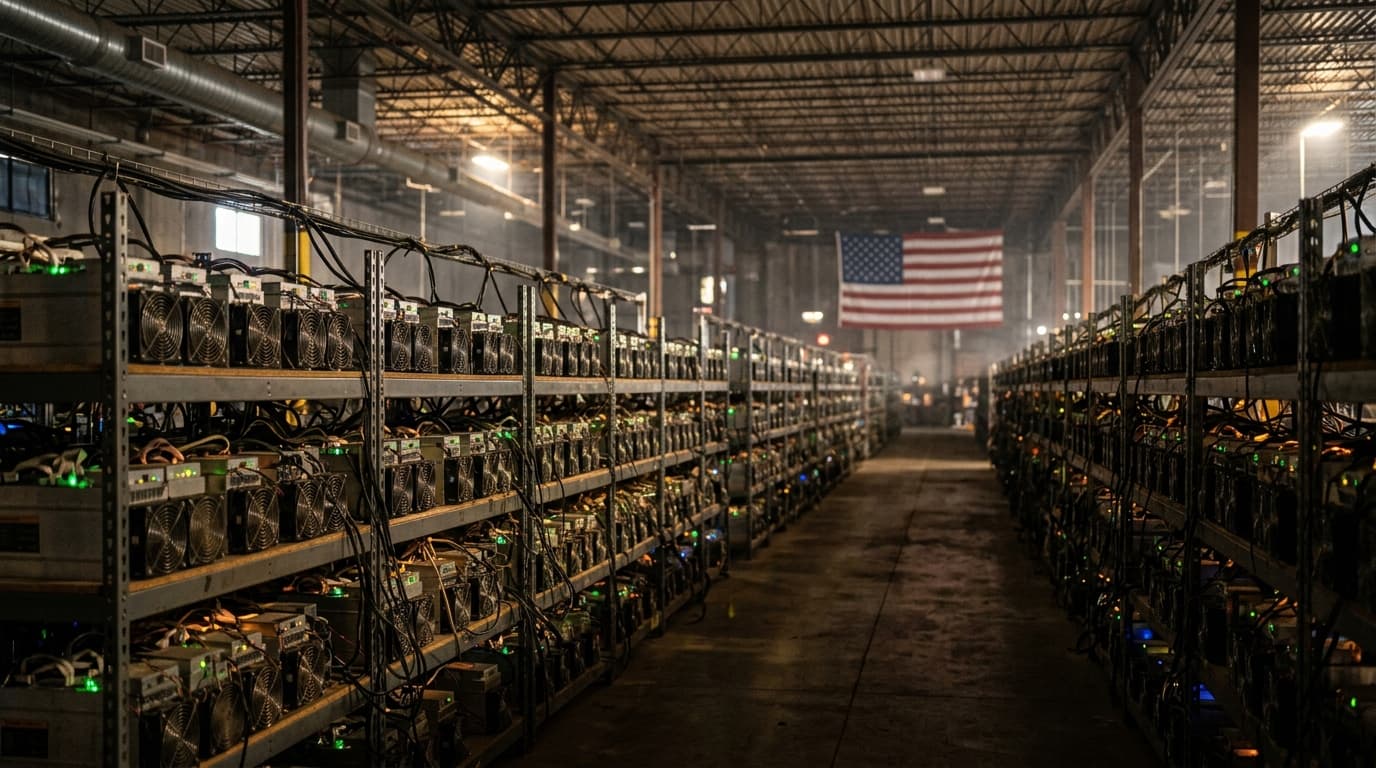
How the White House Strategic Bitcoin Reserve Could Reshape American Mining Infrastructure
The U.S. Strategic Bitcoin Reserve is driving new legislation and industry proposals that could dramatically expand domestic mining infrastructure.
The United States now treats bitcoin as a strategic reserve asset, and the ripple effects are reaching far beyond Treasury vaults. Since President Trump signed the executive order establishing the Strategic Bitcoin Reserve in March 2025, policymakers and industry advocates have been wrestling with a practical question: if the government wants more bitcoin without spending taxpayer dollars, where will it come from?
One answer gaining traction involves building out American mining infrastructure at an unprecedented scale.
From Custody to Acquisition
The March 2025 executive order did two significant things. First, it prohibited the government from selling its existing bitcoin holdings, estimated at over 200,000 BTC from criminal and civil forfeitures. Second, it tasked the Treasury and Commerce departments with developing "budget-neutral strategies" to acquire additional bitcoin.
That second directive has opened a policy debate that could transform the domestic mining landscape.
At the 2025 Bitcoin Conference, Marathon Digital's Fred Thiel, Bitcoin Policy Institute's Matt Pines, and VanEck's Matthew Sigal argued that government-run bitcoin mining represents one viable path. Their reasoning: the federal government controls substantial energy assets, including hydroelectric facilities, natural gas resources, and renewable installations overseen by military and civilian agencies. Mining could monetize stranded or underutilized energy while filling the reserve without appropriating funds.
Legislative Momentum
In March 2026, Senators Bill Cassidy and Cynthia Lummis introduced legislation that explicitly connects the Strategic Bitcoin Reserve to domestic mining capacity. The bill aims to codify the reserve while simultaneously boosting U.S. digital asset mining, framing both objectives as essential to making America "the digital asset capital of the world."
This represents a notable policy evolution. The reserve is no longer conceived as passive custody of seized coins but as an active infrastructure strategy requiring purpose-built facilities, specialized hardware, and grid integration.
Marathon Digital's February 2026 analysis outlined several budget-neutral funding mechanisms under discussion: repurposing portions of Treasury's Exchange Stabilization Fund, allocating tariff revenues, and directing federal energy royalties toward bitcoin acquisition. Government mining sits alongside these options as a long-term accumulation strategy.
Infrastructure Implications
If policymakers pursue mining as an acquisition mechanism, the infrastructure requirements would be substantial. Industry advocates describe bitcoin mining as fundamentally a digital infrastructure business combining energy access, specialized ASIC hardware, data-center-grade cooling systems, and advanced grid-integration technologies.
A May 2026 policy discussion titled "Why America Must Lead the Global Race for Digital Infrastructure" framed mining alongside AI data centers as central to American economic competitiveness. The argument: whoever controls the most efficient compute and energy-backed infrastructure gains significant economic and security advantages.
Even without direct government mining operations, the Strategic Bitcoin Reserve's existence could expand private mining infrastructure. The policy signals regulatory stability, potential government partnerships through energy off-take or demand-response programs, and long-term price support from sovereign holdings that cannot be sold.
The Decentralization Question
Government involvement in mining raises legitimate concerns. Critics argue that state-backed mining could distort private markets, politicize infrastructure allocation, and concentrate hashpower in ways that undermine bitcoin's decentralized architecture.
This is where organizations like 256 Foundation become particularly relevant. The nonprofit advances open-source Bitcoin mining hardware, firmware, and education specifically to decentralize hashpower. As government interest in mining grows, parallel efforts to ensure mining technology remains accessible and non-proprietary take on added importance.
256 Foundation supports developers building open-source alternatives to commercial mining equipment, including hashboards, control boards, and mining pool infrastructure. If sovereign mining becomes reality, having robust open-source options could help maintain competitive balance in the ecosystem.
Unresolved Questions
As of mid-2026, no detailed national plan specifies how much mining capacity the government intends to deploy. A January 2026 White House advisor acknowledged that "obscure" legal issues remain under review, including procurement rules for hardware, cybersecurity standards for mining operations, and classification of mined bitcoin as government assets.
Treasury's position has shifted. In August 2025, Secretary Scott Bessent initially said the department would not purchase additional bitcoin and would rely solely on confiscated assets. He reversed course the next day, stating Treasury is exploring budget-neutral acquisition methods.
The July 2025 crypto policy roadmap offered no new operational details on the reserve, with officials saying only that infrastructure is "well underway."
What This Means Going Forward
The Strategic Bitcoin Reserve represents a genuine policy experiment. The United States has long maintained strategic reserves of physical commodities like gold and petroleum. Extending that logic to a digital asset raises novel questions about custody, volatility, and operational complexity that policymakers are still working through.
For the mining industry, the implications are potentially significant. Government demand for mining infrastructure, whether operated directly or through partnerships, would add to existing private-sector growth. The Cassidy-Lummis legislation explicitly ties reserve policy to mining capacity, suggesting lawmakers see the two as linked.
For advocates of decentralized mining, the moment calls for attention. Government participation in mining need not centralize hashpower if open-source hardware and diverse operators remain viable alternatives. The policy direction is set; the implementation details will determine whether American mining infrastructure grows in ways that strengthen or complicate bitcoin's decentralized foundations.