
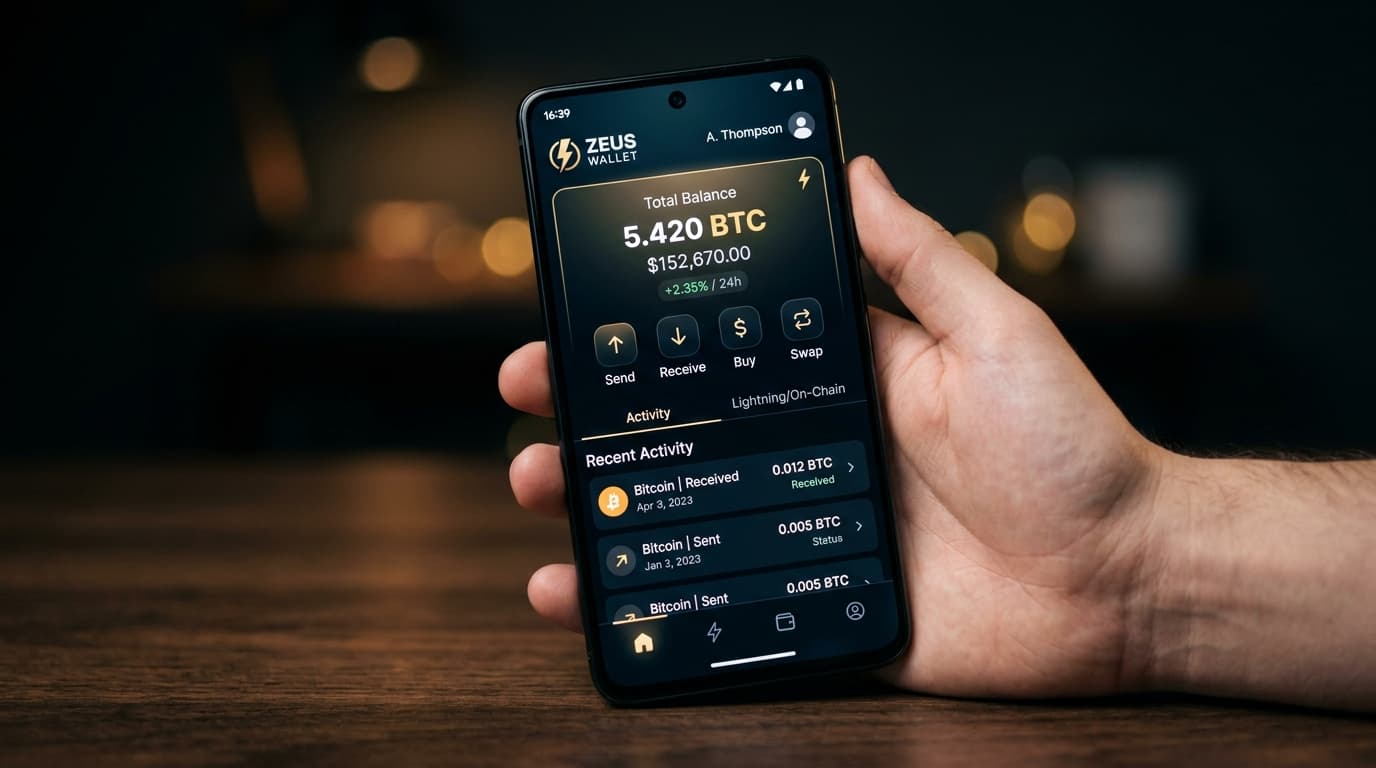
Zeus Wallet Review After Two Years of Lightning Node Management
A research-based review of Zeus wallet for Lightning node management, covering channel control, mobile limitations, and real-world tradeoffs.
Running a Lightning node from your pocket sounds like a pipe dream until you actually try it. Zeus has spent years turning that idea into reality, evolving from a simple remote node interface into a full-featured self-custodial Lightning wallet with an embedded node option. The question for anyone considering long-term use: does mobile node management actually work, or is it a compromise too far?
Based on user reports, third-party reviews, and the wallet's documented feature set, Zeus has earned its reputation as one of the most capable Lightning wallets available in 2026. But capability and convenience aren't the same thing, and the tradeoffs matter.
What Zeus Actually Offers
Zeus operates in two distinct modes that serve different users. The Embedded Node option provides a one-click setup that syncs in 5-10 minutes using the Neutrino protocol, a lightweight block filtering approach that doesn't require downloading the entire blockchain. For users who want more control, Remote Node mode connects to external LND or Core Lightning nodes, effectively turning your phone into a mobile command center for home infrastructure.
The Olympus LSP (Lightning Service Provider) handles channel opening with instant 0-conf channels, meaning you don't wait for on-chain confirmations before receiving payments. The fee structure is tiered: 50% on amounts under 20 sats, 10% under 2,500 sats, or a flat 250 sats for larger amounts. Whether that pricing works for you depends entirely on your payment patterns.
ZEUS Pay addresses (@zeuspay.com) provide self-custodial Lightning addresses with zero receiving fees as of December 2024. This matters for merchants and content creators who want a static address for tips or payments without running always-on infrastructure.
The Mobile Node Reality Check
User feedback over extended periods reveals a consistent pattern: Zeus works remarkably well for what it is, but mobile nodes have inherent limitations that no software can fully overcome.
The positive side is substantial. Privacy gets serious attention through Neutrino filters and client-side path finding, meaning the wallet doesn't leak payment information to external servers. Simple Taproot Channels reduce closing fees and improve privacy. Full channel control lets you manage liquidity, select peers, and handle the details that matter for reliable payments.
The complications emerge with sustained use. Initial sync requires keeping the app in the foreground, which catches new users off guard (though rescanning fixes most quirks). Battery drain is real when running a mobile node. And the core limitation remains: phones aren't designed to be always-on infrastructure.
For routing node operators expecting to earn meaningful fees, Zeus isn't the right tool. Dedicated hardware (whether a home server or cloud instance) handles that role better. Zeus excels as a spending wallet and mobile management interface, not as primary routing infrastructure.
Channel Management and the Learning Curve
Lightning channel management confuses newcomers regardless of which wallet they use. Zeus doesn't hide this complexity but does provide tools to navigate it.
Opening channels requires understanding inbound vs. outbound liquidity, deciding on peer selection, and accepting that some Bitcoin will be locked in channels rather than available on-chain. The Olympus LSP simplifies initial setup, but users who want custom channel sizes or specific peers need to learn the underlying concepts.
Fee optimization involves monitoring channel states and understanding how routing fees work. Zeus exposes these controls rather than abstracting them away, which power users appreciate but newcomers find overwhelming. The documentation and community resources help, though there's no substitute for experimenting with small amounts.
Compared to Alternatives
Zeus occupies a specific niche: maximum sovereignty with mobile convenience. Custodial Lightning wallets like Wallet of Satoshi offer simpler experiences but require trusting a third party with your funds. Non-custodial alternatives like Phoenix automate channel management but with less granular control.
For users who already run home nodes on Umbrel, StartOS, or similar platforms, Zeus provides remote access that other wallets can't match. The ability to manage channels, monitor routing, and make payments from anywhere while your node runs at home fills a gap that few competitors address.
The 4.6/5 App Store rating (as of 2024) reflects genuine user satisfaction, though ratings always skew toward people motivated enough to leave reviews.
Who Should Use Zeus
Zeus makes the most sense for specific use cases. Daily payments and receiving Lightning tips work well with the embedded node or ZEUS Pay addresses. Managing home node infrastructure from mobile fits the remote node mode perfectly. Merchants benefit from the built-in point-of-sale mode without server infrastructure.
Large holdings should live elsewhere. Hardware wallets with proper multisig setups handle cold storage better than any mobile wallet. Zeus works best as a spending layer, not a vault.
Privacy-conscious users appreciate Tor support, duress PIN functionality (showing a decoy wallet under pressure), and the lurker mode that hides balances. The Nostr integration for contact importing appeals to users active in that ecosystem.
The Regulatory Context
The 2024 wave of custodial wallet shutdowns made self-custody more urgent. Zeus founder Evan Kaloudis committed publicly to non-custodial operations regardless of regulatory pressure, which matters for users thinking about long-term reliability.
Self-custodial infrastructure can't be shut down by a company decision or regulatory order. The tradeoff is complexity and personal responsibility, but for users who value sovereignty, that's a feature rather than a bug.
The Bottom Line
Zeus has matured into a capable Lightning wallet that takes mobile node management seriously. The embedded node provides genuine self-custody without requiring a home server. Remote node support extends that capability to existing infrastructure.
The limitations are real: battery drain, sync quirks, and the fundamental mismatch between phones and always-on nodes. For routing operations or holding significant value, dedicated hardware remains superior.
But for daily Lightning payments, mobile node management, and maintaining sovereignty without a complex home setup, Zeus delivers what it promises. The learning curve exists but the documentation and feature set support users willing to invest the time.
If mobile Lightning with real self-custody matters to you, Zeus belongs on your shortlist. Just pair it with appropriate hardware storage for amounts you'd worry about losing.