
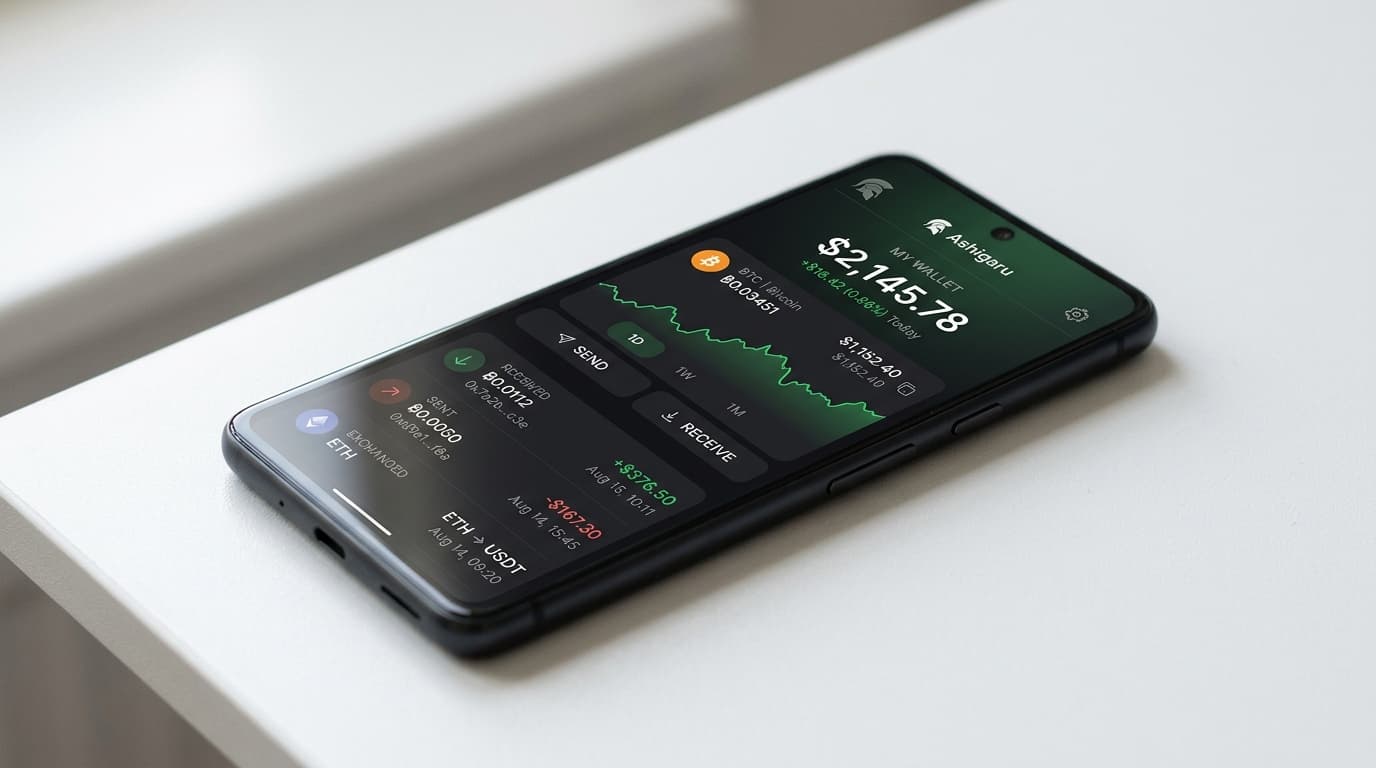
Ashigaru Review as the Samourai Wallet Successor Privacy Advocates Actually Need
Ashigaru emerges as Samourai Wallet's privacy-focused successor with Whirlpool CoinJoin restored. Our research-based review examines if it's ready for daily use.
When federal agents arrested Samourai Wallet's founders in April 2024 and seized the project's infrastructure, Bitcoin's most vocal privacy advocates suddenly lost their primary tool. Servers went dark. Whirlpool CoinJoin mixing stopped working. For over a year, users who had built their privacy practices around Samourai were left stranded.
Then Ashigaru appeared, built by an anonymous team with a simple premise: rebuild everything Samourai offered, but eliminate the single points of failure that made it vulnerable in the first place.
Two years after Samourai's collapse and nearly a year since Ashigaru relaunched Whirlpool in June 2025, the question isn't whether Ashigaru works. It's whether the architectural changes that make it legally resilient also make it practical for everyday privacy-conscious Bitcoin users.
What Ashigaru Actually Is
Ashigaru launched as an open-source fork in September 2024, inheriting Samourai's codebase but fundamentally restructuring how the wallet connects to Bitcoin's network. The name itself, Japanese for "foot soldier," signals the project's philosophical shift: decentralized, expendable nodes rather than centralized command structures.
The core privacy features carry over intact. Whirlpool CoinJoin provides what the Zerolink protocol describes as 100% entropy mixing, breaking deterministic links between transaction inputs and outputs. PayNyms offer BIP-47 reusable payment codes, letting you receive payments without reusing addresses. Cahoots enables collaborative transactions like Stowaway (a form of PayJoin) and StonewallX2 for breaking common spending assumptions.
Coin control remains granular, with mandatory labeling that helps users avoid accidentally linking mixed UTXOs back to their original sources. Stealth mode hides the wallet behind a secret code, keeping casual phone access from revealing you use a privacy wallet at all.
The technical specifications match what power users expect: support for Legacy, Nested SegWit, Native SegWit, and Taproot address formats. Fee management includes both Replace-by-Fee and Child-Pays-for-Parent options. It's Bitcoin-only, Android-only, completely free, and requires no KYC.
The Architectural Difference That Matters
Samourai's downfall wasn't primarily about the mixing technology itself. Prosecutors focused on the centralized infrastructure: servers the team controlled, coordination services they operated, and the apparent ability to monitor user activity through their systems.
Ashigaru's response addresses each vulnerability systematically.
First, mandatory self-hosted nodes. Where Samourai allowed (and defaulted to) connections through their infrastructure, Ashigaru requires users to connect through their own Bitcoin nodes. This eliminates the centralized server dependency that gave law enforcement a clear target.
Second, Tor-only hosting. The project's code repositories and documentation live exclusively on Tor-based servers rather than GitHub or traditional hosting. A single court order can't force a mainstream platform to remove the software.
Third, and perhaps most significant for Whirlpool users, the backend now runs through Electrum servers rather than Dojo nodes. According to the development team, this architectural choice means they cannot access users' master public keys (xpubs). The coordinator can facilitate mixing without having visibility into participants' broader wallet activity.
All Whirlpool coordinator connections operate exclusively through Tor, adding network-level privacy to the transaction-level privacy the mixing provides.
The Migration Reality
For former Samourai users, moving to Ashigaru involves more than installing a new app. The requirement to run your own node represents a meaningful barrier, both technically and financially.
Running a full Bitcoin node requires either dedicated hardware (a Raspberry Pi setup with sufficient storage, or a purpose-built device like Umbrel or Start9) or a cloud server with hundreds of gigabytes of storage. The initial blockchain sync can take days. Maintaining the node requires keeping it online and updated.
This isn't insurmountable for technically inclined users, but it does exclude the casual privacy seeker who just wanted to download an app and mix some coins. Samourai's centralized infrastructure, whatever its legal vulnerabilities, lowered the barrier to entry.
The wallet documentation and community guides have improved significantly since launch, with resources like the November 2025 mobile guide from Byakugan providing step-by-step operational guidance. But there's no avoiding the fundamental trade-off: greater resilience requires greater user responsibility.
Feature Gaps and Limitations
Despite inheriting Samourai's codebase, Ashigaru in 2026 doesn't offer perfect feature parity with pre-arrest Samourai.
The mobile-only approach means desktop users need alternative solutions. Wasabi Wallet remains the primary desktop option for CoinJoin, though it operates under its own regulatory pressures following zkSNACKs' June 2024 decision to discontinue its coordination service.
Some users report that Whirlpool liquidity, while functional since the June 2025 relaunch, hasn't fully recovered to pre-arrest levels. Mixing times can be longer, and optimal fee selection requires more attention. This isn't necessarily a flaw in Ashigaru's implementation so much as a consequence of a smaller user base rebuilding after a year-plus disruption.
The anonymous development team, while protecting the project from targeted prosecution, also means users can't verify the credentials or track record of who maintains their privacy wallet. For some, this anonymity is a feature. For others, it's a trust concern that centralized projects with known developers don't carry.
The Regulatory Context
Understanding Ashigaru requires understanding what happened to Samourai. The November 2025 sentencing of founders Keonne Rodriguez and William Lonergan Hill followed August 2025 guilty pleas to money laundering conspiracy and operating an unlicensed money transmission business. Prosecutors claimed the wallet had facilitated $100 million in laundering from Silk Road and other illegal markets.
The founders' aggressive public positioning likely didn't help their legal position. A 2022 tweet welcoming Russian oligarchs during sanctions and the CTO's confrontational statements to Europol created a paper trail suggesting awareness of illicit use.
Ashigaru's anonymous structure and decentralized architecture represent a direct response to these vulnerabilities. Whether this approach would survive similar legal scrutiny remains untested. The project's design philosophy assumes that eliminating centralized control points makes prosecution impractical, not necessarily that the underlying technology is legal.
Users should understand they're operating in uncertain legal territory. The precedent set by Samourai's prosecution suggests that mixing services with centralized components face significant legal risk. Ashigaru's decentralized design may or may not provide meaningful protection for users, depending on how future cases interpret facilitation and participation.
Who Should Consider Ashigaru
Ashigaru makes sense for Bitcoin users who meet several criteria.
You should already be running (or willing to run) your own Bitcoin node. If setting up and maintaining infrastructure feels prohibitive, the mandatory self-hosting requirement will frustrate you.
You should understand why transaction privacy matters to you specifically. Using Whirlpool effectively requires understanding UTXO management, spending hygiene, and the ways privacy can be degraded through careless post-mix behavior. The wallet provides tools, not guarantees.
You should be comfortable with the legal ambiguity. Privacy isn't illegal, but mixing services operate in contested regulatory space. The Samourai prosecution demonstrated that U.S. authorities view certain implementations as criminal. Your jurisdiction and circumstances matter.
You should have realistic expectations about liquidity and timing. Mixing isn't instant, and smaller pools mean longer waits. If you need privacy for a transaction happening in the next hour, Whirlpool probably isn't your solution.
The Verdict Based on Available Evidence
Based on documentation, third-party analysis, and user reports, Ashigaru appears to deliver what it promises: a technically resilient successor to Samourai Wallet that restores Whirlpool CoinJoin functionality while eliminating the centralized vulnerabilities that enabled prosecution.
The trade-offs are real and worth acknowledging. Higher technical barriers exclude casual users. Anonymous development requires trust without verification. Legal protection remains theoretical until tested. Liquidity lags behind pre-arrest levels.
But for privacy-focused Bitcoiners willing to invest in proper setup and ongoing maintenance, Ashigaru currently represents the most feature-complete mobile option for transaction privacy. The January 2026 rankings from multiple privacy wallet comparisons place it alongside Wasabi and Electrum as a leading self-custody option.
The project's existence also matters symbolically. When Samourai went down, some speculated that Bitcoin privacy tools would simply disappear under regulatory pressure. Ashigaru demonstrates that open-source code and decentralized architecture can persist even when original developers face prosecution.
Whether that persistence ultimately matters depends on what you're trying to accomplish. For users who understand the tools, accept the trade-offs, and commit to the operational requirements, Ashigaru offers privacy capabilities that few alternatives match. For everyone else, the barriers to entry may be higher than the benefits justify.
Privacy is a spectrum, not a binary. Ashigaru sits at the high-effort, high-capability end. Knowing where you need to be on that spectrum is the first step in deciding whether it belongs in your toolkit.