
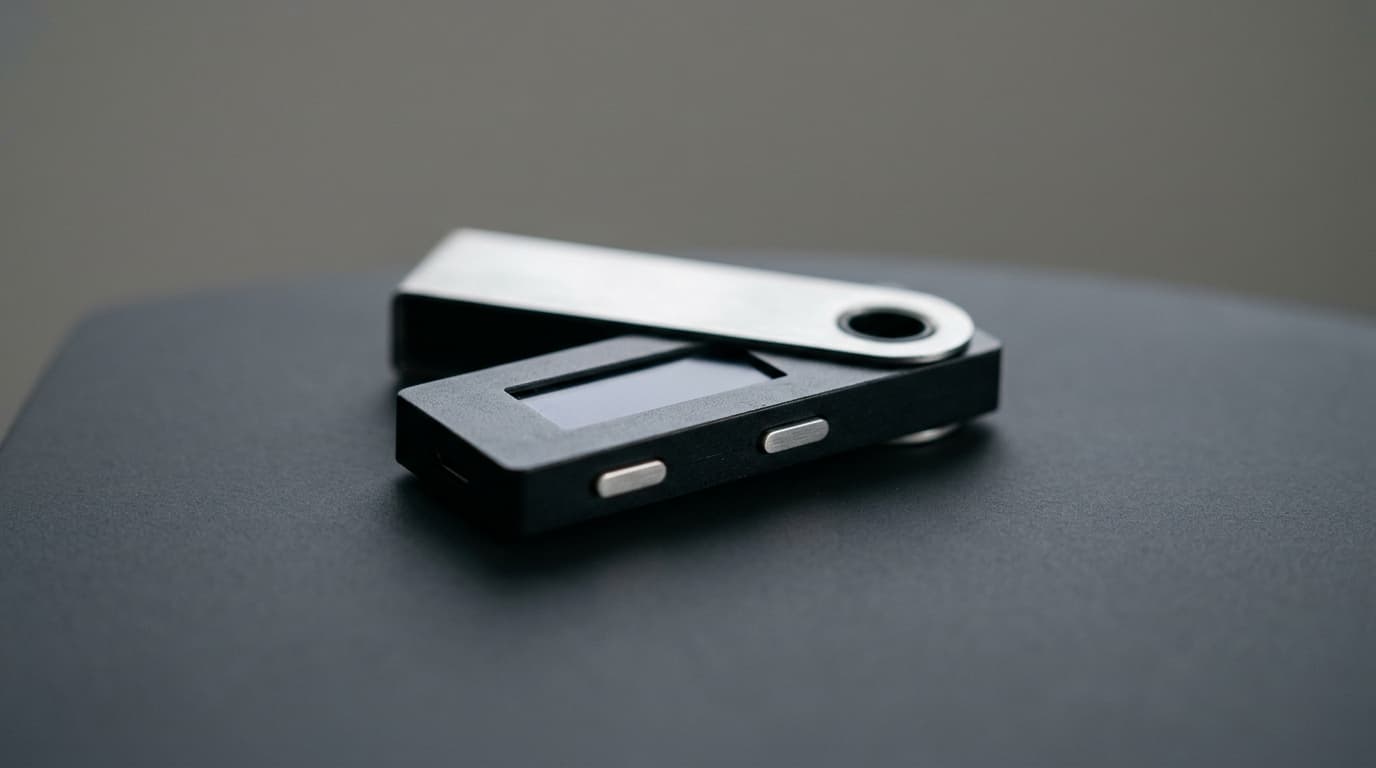
Bitcoin at $82,000 Changes Hardware Wallet Math for New HODLers
At $82,000 per Bitcoin, a hardware wallet costing $50-$200 becomes a tiny fraction of what you're protecting. Here's why the security math now favors cold storage.
A hardware wallet that costs $79 represents less than 0.1% of a single Bitcoin at $82,000. That ratio would have seemed absurd to someone buying their first Bitcoin at $5,000 in 2019, when the same device represented nearly 1.6% of their holdings. The math has changed dramatically, and it's reshaping how new investors should think about security.
For years, the standard advice was that hardware wallets made sense once you had "enough" crypto to justify the expense and learning curve. That threshold was fuzzy, often pegged somewhere between $500 and $2,000 in holdings. But at current price levels, even modest Bitcoin positions make the security premium look like a rounding error.
The Numbers Tell a Clear Story
Take a popular mid-range device like the Trezor Safe 3, which runs about $59-$79 as of June 2026. At $82,000 per Bitcoin, that's roughly 0.07-0.1% of one coin. The premium Trezor Safe 7, at around $249, still comes in under 0.31%. The Swiss-made BitBox, known for its beginner-friendly setup and microSD backup system, falls in a similar range.
Compare this to holding $82,000 in a checking account with no insurance beyond the FDIC limit, or keeping physical gold worth the same amount without a safe. The proportional cost of securing that value would be far higher.
The hardware wallet market reflects this shift. Mordor Intelligence estimated the sector at $0.72 billion in 2026, up from $0.54 billion in 2025, with projections reaching $2.25 billion by 2031. Retail buyers accounted for 71.43% of sales in 2025, though institutional demand is growing faster.
Exchange Risk Hasn't Gone Away
The 2022 crypto winter, which wiped out more than $2 trillion in value, taught painful lessons about custody. A 2026 study commissioned by Tangem found that 88% of U.S. crypto users still store assets on centralized exchanges, even though 46% fear major exchange breaches and 66% consider self-custody important.
That gap between belief and behavior reveals something important: most people know they should control their own keys, but haven't acted on it. Security.org's 2026 survey found that 16% of crypto owners had experienced access issues, including forgotten passwords, lost private keys, exchange outages, or frozen accounts.
The friction is real. Seed-phrase backup, firmware updates, and address verification remain intimidating for newcomers. Mordor Intelligence flagged user-experience barriers as a significant restraint on adoption, even as the market grows.
Who Actually Uses Cold Storage
One surprising finding from the 2026 Tangem research: cold wallet users were 1.83 times more likely to be active traders than passive holders. This challenges the old assumption that hardware wallets are mostly for people who buy and forget.
It suggests that experienced users, the ones who trade frequently and understand the risks, are the most likely to take custody seriously. Meanwhile, newer investors often leave coins on exchanges out of convenience or uncertainty about the setup process.
Security.org found that 30% of U.S. adults owned cryptocurrency in 2026, roughly 70.4 million people. Of those, 74% held Bitcoin specifically. That's a substantial base of people for whom the hardware wallet decision is now relevant, even if they don't realize it.
The Counterargument
Not everyone needs a hardware wallet immediately. Someone with $500 in Bitcoin might reasonably decide the learning curve isn't worth it yet. Exchanges have improved their security over the years, and reputable platforms offer insurance and multi-factor authentication.
The 59% of Americans who told Security.org they lack confidence in cryptocurrency security aren't necessarily wrong to be cautious. Cyber-attack risks, unstable value, and lack of government protection are legitimate concerns that a hardware wallet doesn't fully address.
And there's the human factor: a hardware wallet shifts responsibility entirely to the user. Lose your seed phrase, and no customer support line can recover your funds. For some people, that tradeoff feels riskier than trusting an exchange.
When the Math Tips
The decision point comes down to a simple question: at what dollar amount does the cost and effort of self-custody become obviously worthwhile?
At $82,000 per Bitcoin, the answer for most people is "less than you might think." A BitBox or similar device, with its straightforward setup and support for advanced features like multisig and Tor, costs roughly what you might spend on a nice dinner. If you're holding even a quarter of a Bitcoin, that's $20,500 protected by a device that costs around $100-$150.
The 2026 data suggests the market is slowly catching up to this logic. Cold storage commanded 63.19% of hardware wallet revenue in 2025, and the sector is growing at nearly 26% annually. But with 88% of users still keeping assets on exchanges, there's a significant gap between the security best practices and actual behavior.
Looking Forward
Bitcoin's price trajectory has made the security math clearer, but it hasn't eliminated the friction. New HODLers face a choice: accept the inconvenience of learning self-custody now, or accept the risk of leaving increasingly valuable assets in someone else's hands.
The historical context matters here. U.S. crypto ownership peaked at 33% in 2022 before the crash, fell to 30% in 2023, and has recovered to the same 30% in 2026. The user base hasn't broken decisively above early-cycle levels, which means the next wave of adoption will bring millions of new holders who need to make this decision for the first time.
At $82,000, the hardware wallet doesn't feel like an expensive luxury anymore. It feels like reasonable insurance. Whether enough new HODLers act on that logic will depend on how much the industry can reduce the friction that still keeps 88% of crypto on exchanges.