
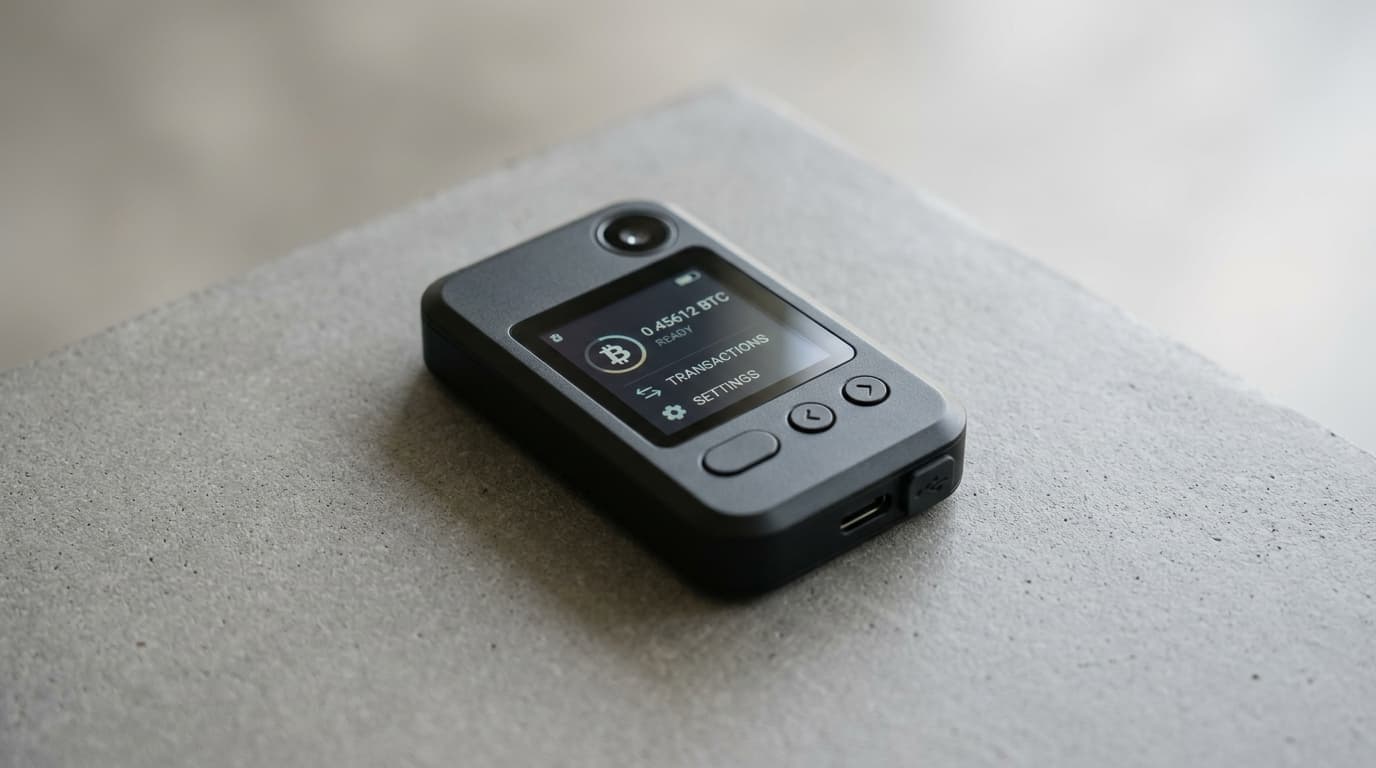
Blockstream Jade Plus Review After Six Months of Daily Use
A research-based review of the Blockstream Jade Plus after six months on the market. Is the larger screen and premium build worth it?
The Blockstream Jade Plus has been on the market for six months now, and the verdict from daily users is taking shape. Launched on Bitcoin Genesis Day (January 3, 2025) at $149 for the plastic model and $169 for metal variants, this air-gapped Bitcoin wallet positioned itself as a premium evolution of the original Blockstream Jade rather than a replacement. The question users keep asking: does a 66% larger screen and upgraded internals justify the price jump?
Based on extensive user reports, technical reviews, and community discussions from early 2025 through mid-2026, the answer depends entirely on how you plan to use it.
What's Actually Different About the Jade Plus
The Jade Plus brings three meaningful upgrades over its predecessor. First, the display grows from 1.14 inches to 1.9 inches, making transaction verification and QR code scanning significantly more practical. Second, the ESP32-S3 microcontroller replaces the original ESP32, delivering faster animations, smoother QR processing, and better support for air-gapped workflows. Third, the improved camera makes QR-based signing noticeably more reliable, especially for larger transactions.
These aren't security upgrades. Reddit discussions from mid-2025 consistently emphasize that "the security feature set is essentially the same" between both devices. The Blind Oracle architecture, Genuine Check verification, anti-exfil protections, and fully open-source firmware all carry over unchanged. What you're paying for is build quality and daily usability.
The metal variants (Lunar Silver and Genesis Grey) add perceived durability for everyday carry. Users in July 2025 described the Jade Plus as "a fantastic device" whose premium primarily comes from the case, camera, and display rather than fundamentally new security capabilities.
Air-Gapped Operations and Real-World Friction
Blockstream markets the Jade Plus heavily on its air-gapped capabilities, and the hardware delivers. The device supports four connection paths: USB-C, Bluetooth, QR codes, and air-gapped USB storage workflows. The improved camera makes QR-based transaction signing smoother than the original Jade, and firmware updates can be installed via USB-C storage without connecting directly to an internet-linked host.
However, early adopters hit a frustrating snag. A February 2025 user complaint revealed that the Blockstream Green companion app didn't fully support air-gapped QR workflows with Jade Plus at launch, forcing users toward Bluetooth or USB connections despite marketing claims. This gap between hardware capability and software implementation appears to have improved since, but it's a reminder that Jade Plus's experience depends heavily on companion app development.
For users running multisig setups with Sparrow or Electrum, the Jade Plus integrates well. The device supports Miniscript, BIP39 passphrases, BIP85 derived seeds, and native multisig workflows. Power users building sophisticated cold storage configurations will find genuine value here.
The Secure Element Debate
The most substantive criticism of both Jade devices concerns their lack of a dedicated secure element. Unlike many hardware wallets that store secrets in tamper-resistant chips, Jade uses a standard microcontroller combined with Blockstream's Blind Oracle architecture. This design splits encryption keys so that stealing the physical device alone isn't enough to extract usable private keys.
Security analysts in August 2025 raised concerns that sophisticated physical attacks could theoretically pose greater risk without a secure element, even with Blind Oracle mitigations. A March 2026 review characterized Jade Plus as "effectively a hot wallet" in the sense that secrets pass through a general-purpose microcontroller, making firmware hygiene and careful companion-app choices critical.
Blockstream's counter-argument rests on transparency. The fully open-source hardware and firmware enable community scrutiny that closed secure elements don't allow. By mid-2026, no major security breaches have been reported affecting Jade devices, though absence of past exploits doesn't guarantee future safety.
Which approach you prefer depends on your threat model. If you trust open-source code review more than proprietary secure elements, Jade's architecture makes sense. If you want traditional hardware isolation regardless of software transparency, you might prefer alternatives.
Bitcoin-First, Not Bitcoin-Only
The Jade Plus focuses on Bitcoin and Liquid Network assets rather than trying to support hundreds of cryptocurrencies. Lightning functionality routes through Blockstream Green via L-BTC conversions requiring device approval, making Jade Plus a bridge to Lightning rather than a dedicated Lightning wallet.
This focused approach appeals to users who find altcoin support unnecessary bloat. The tradeoff is genuine limitation for anyone holding diverse crypto portfolios.
User Experience Reports After Six Months
Community feedback through mid-2026 clusters around predictable themes. The larger screen draws consistent praise for transaction verification and navigation. The metal build feels substantially more premium than budget hardware wallets. Battery life with the 240mAh cell requires more frequent charging than some users expected.
Customer support responsiveness appears as a recurring friction point in both Trustpilot reviews and community discussions. Users report difficulty reaching live support and slower response times, though Blockstream maintains extensive written documentation. At least one June 2025 Trustpilot review criticized Jade Plus as offering "primitive functionality" for roughly $160, though this represents a minority view against generally positive technical assessments.
The most balanced take comes from a March 2026 review arguing that Jade Plus "earns its place as a Bitcoin-only cold storage device" while suggesting large, long-term holdings might warrant even more isolated setups. Jade Plus works best as a frequently-accessed signing device rather than a set-and-forget vault.
Is the Premium Worth It?
For users who interact with their Bitcoin regularly, whether for payments, multisig coordination, or portfolio management, the Jade Plus's usability improvements translate to genuine daily convenience. The larger screen reduces transaction verification errors. The faster camera means less frustration with QR workflows. The metal case survives pocket carry better.
For users who set up cold storage once and rarely touch it, the original Jade provides identical security at a lower price point. Blockstream continues supporting both devices with firmware updates.
The $169.99 current price (up from the $149-169 launch range) positions Jade Plus in competitive territory against devices with dedicated secure elements. Whether you value open-source transparency over hardware isolation depends on your personal security philosophy rather than objective superiority of either approach.
Users who prioritize verified code, Bitcoin-specific focus, and air-gapped signing flexibility will find Jade Plus compelling. Users who want plug-and-play simplicity with minimal learning curve might find the documentation requirements and companion-app dependencies more than they want to manage.
Six months in, the Jade Plus has established itself as a legitimate daily-driver hardware wallet for engaged Bitcoin users. It hasn't revolutionized hardware wallet security, but it has made the existing Jade architecture meaningfully more pleasant to use every day.