
Bitcoin Keeper Review 2026 and Why This Multisig Vault Beats Single-Key Storage
Bitcoin Keeper offers free multisig vaults, inheritance planning, and hardware wallet support. Here's why serious holders choose it over single-key wallets.
Lose your seed phrase, lose your Bitcoin. That's the unforgiving math of single-key storage. But what if your security model could survive the loss of one key, or even a compromised device? That's the core promise of multisig, and Bitcoin Keeper has emerged as one of the more accessible ways to set it up without an engineering degree.
As of March 2026, Bitcoin Keeper's latest release (v2.5.9) has made all features fully free, including inheritance planning tools that previously required paid tiers. For anyone holding a meaningful stack, this changes the calculus on whether multisig is worth the complexity.
What Bitcoin Keeper Actually Does
Bitcoin Keeper is an open-source, Bitcoin-only mobile app that lets you create hot wallets and customizable multisig vaults. The key feature is flexibility: you can configure setups like 2-of-3 or 3-of-5, meaning you need two of three keys (or three of five) to move funds. Store one key on your phone, another on a hardware wallet like Coldcard or Tapsigner, and a third in a secure backup location.
The app serves as the coordination layer. It doesn't hold your keys for you; it helps you manage a distributed security setup where no single point of failure can drain your funds.
Other notable features include UTXO management for privacy-conscious users, Tor integration, BIP 85 hot wallet support, and the ability to connect your own node. For estate planning, there are time-locked keys via Miniscript that can automatically unlock after specified periods, a feature that addresses one of the hardest problems in Bitcoin self-custody.
Why Multisig Beats Single-Key Storage
Single-key wallets work fine for small amounts. But the moment your holdings become life-changing money, single-key storage starts looking like a liability.
The failure modes are brutal: a house fire destroys your seed phrase backup. A sophisticated phishing attack captures your signing device. A family member finds your metal seed plate. In any of these scenarios, you lose everything.
Multisig changes the threat model fundamentally. With a 2-of-3 setup, an attacker would need to compromise two separate keys, likely stored in different locations and on different devices. You could lose your phone, have one hardware wallet stolen, and still recover your funds with the remaining keys.
This isn't theoretical. Hardware wallet thefts and phishing attacks remain common attack vectors. Multisig doesn't eliminate risk, but it raises the bar significantly.
The Inheritance Problem, Solved
Single-key storage creates a grim tradeoff for long-term holders: make your Bitcoin accessible enough for family to inherit, and you've potentially created a security hole. Make it truly secure, and your heirs may never find or access it.
Bitcoin Keeper's inheritance features attempt to thread this needle. Collaborative custody allows trusted contacts (spouses, business partners, estate attorneys) to participate in multi-signature setups without any single party having unilateral control. Time-locked keys can be configured to become active after specified periods, giving family members a recovery path without compromising your security while you're alive.
These tools require some planning and family coordination, but they address a real gap. Traditional estate planning mostly ignores Bitcoin, and most Bitcoin custody solutions mostly ignore estates.
Hardware Wallet Integration
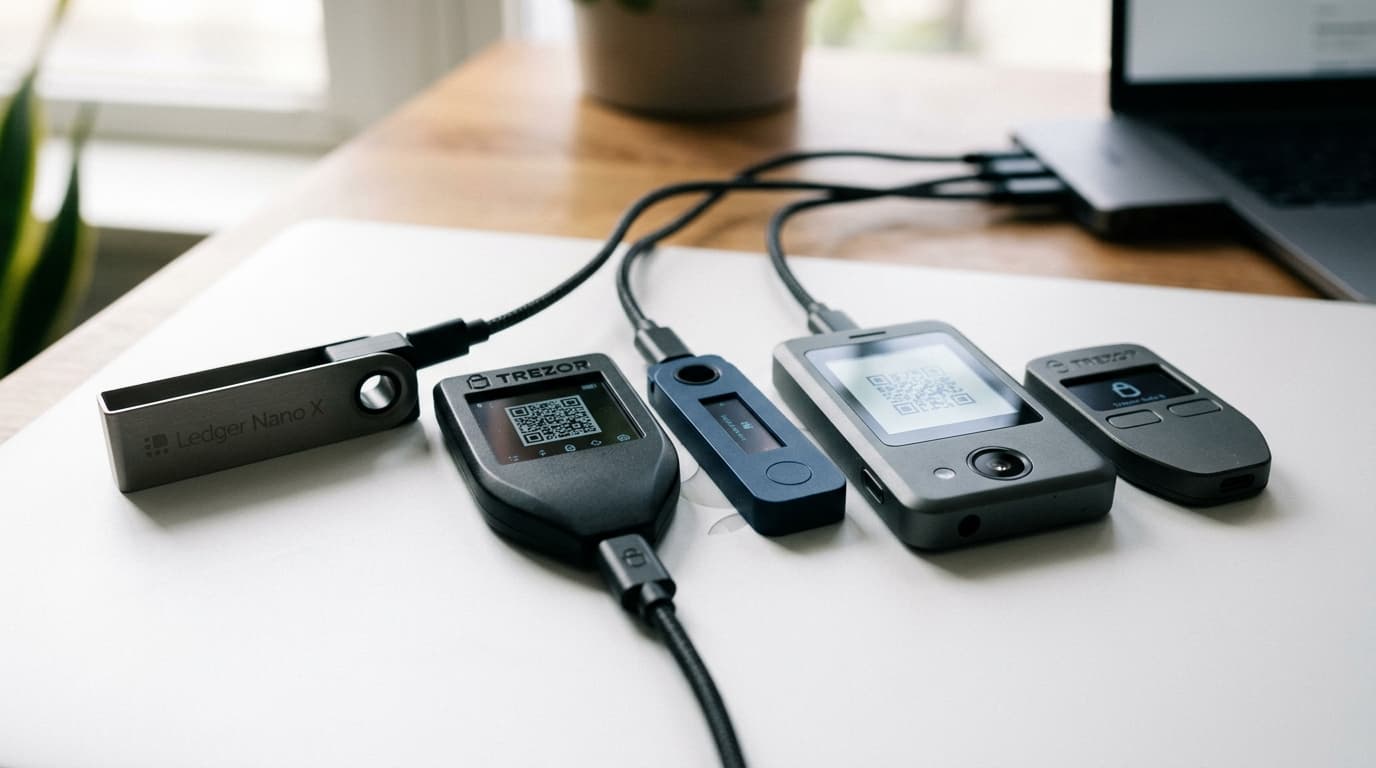
Bitcoin Keeper supports major hardware wallets including Coldcard and Tapsigner. The idea is that your hardware wallet handles the actual signing (ideally air-gapped), while Keeper coordinates the multisig transaction construction.
This is a meaningful distinction from all-in-one solutions. Your keys never touch the mobile app; they stay on devices specifically designed for secure key storage. Keeper just makes it easier to manage the complexity of multiple signing devices.
For users already invested in hardware wallet infrastructure, this integration model makes sense. For complete beginners, it adds another layer of complexity that may or may not be worth it depending on holdings and risk tolerance.
The Tradeoffs to Consider
Multisig isn't free. The complexity cost is real.
You're managing multiple keys across multiple devices and locations. Each signing session requires more steps than a single-key wallet. If you lose too many keys (more than your threshold allows), you've locked yourself out permanently.
Bitcoin Keeper doesn't hold your keys or provide recovery services. If you mess up your backup strategy, there's no customer support line that can help. This is a feature, not a bug, for the self-custody-minded. But it's a genuine downside compared to custodial solutions or simpler single-key setups.
App Store and Google Play reviews from 2025 and 2026 generally praise the intuitive interface for a multisig tool, but "intuitive for multisig" is still more complex than a standard single-key wallet. Users report that the learning curve exists, even if it's gentler than setting up multisig from scratch.
Who Should Use Bitcoin Keeper
Bitcoin Keeper makes the most sense for long-term holders with meaningful stacks who want robust self-custody without relying on a single key or device. The target user has already decided they want true self-custody, understands the responsibilities involved, and has holdings worth the added complexity.
Families and estate planners benefit from the inheritance tools, which solve a problem most wallets ignore entirely. Hardware wallet users who want a coordination layer for multisig setups will find the integrations useful.
For someone just starting with Bitcoin, holding a small amount, or not yet comfortable with the responsibilities of self-custody, simpler solutions probably make more sense as a starting point. Keeper's tiered approach does let beginners start with simple hot wallets before graduating to multisig, which is a reasonable on-ramp.
The Security Record
No major security incidents have been reported for Bitcoin Keeper through early 2026. The app is open-source, which means the code is publicly auditable. This doesn't guarantee security, but it does mean independent researchers can (and do) examine the implementation.
Wallet Scrutiny and other independent reviewers have analyzed the app favorably for transparency and reproducibility. Community developers continue to maintain the codebase on GitHub, with the March 2026 release showing active development.
The Bottom Line
Bitcoin Keeper represents a maturing approach to multisig self-custody. The decision to make all features free in 2025 removed the paywall barrier that previously limited access to inheritance planning tools. For serious holders who've accepted that single-key storage carries unacceptable risk, it's a well-regarded option.
The question isn't whether multisig is more secure than single-key storage. Mathematically, eliminating single points of failure is simply better. The question is whether you're willing to accept the complexity tradeoff. If you're holding Bitcoin you expect to keep for years or decades, and you're thinking about not just security today but succession planning for the future, that complexity starts looking like a reasonable price to pay.