
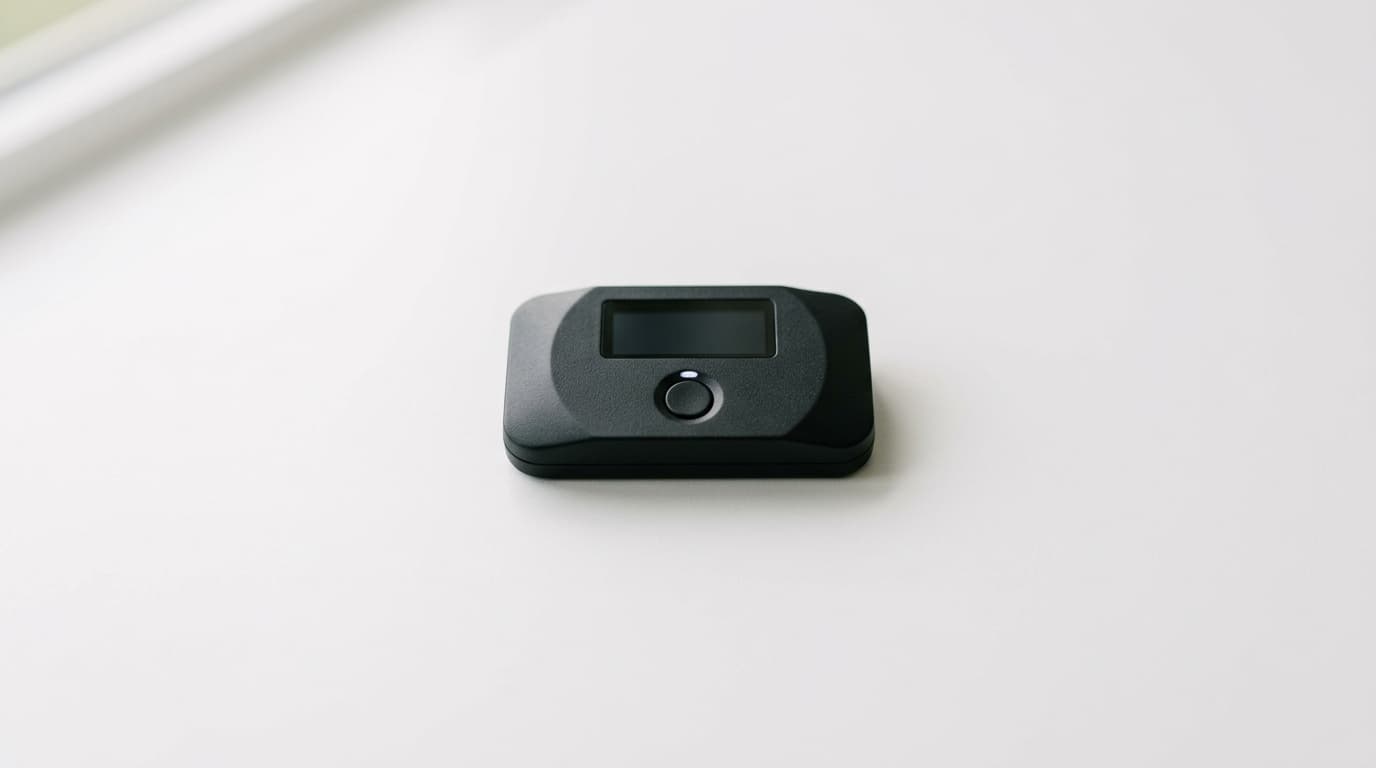
Bitkey Review After Six Months of Real-World Use
A research-based Bitkey review examining user feedback, security tradeoffs, and how this seedless Bitcoin wallet performs for self-custody beginners.
Six months with a Bitcoin wallet reveals what a weekend of testing never could. That's why the steady stream of user feedback on Bitkey, Block's collaborative custody wallet, offers something more valuable than any spec sheet: a picture of how this seedless approach to self-custody actually holds up in daily life.
Based on user reports, app store reviews, and community discussions through early 2026, Bitkey delivers on its core promise of making self-custody approachable. But it comes with tradeoffs that matter more to some users than others.
What Users Actually Experience
The setup story is remarkably consistent across reviews. Users report getting from unboxing to secured Bitcoin in under five minutes, with no seed phrases to write down, laminate, or hide in a fireproof safe. For people who have been keeping Bitcoin on Coinbase or Cash App specifically because traditional hardware wallets felt intimidating, this removes the primary barrier.
App ratings average between 4.3 and 4.4 out of 5 from over 200 reviews as of March 2026. The praise centers on the user interface ("beautiful UI" appears repeatedly) and what one Reddit user called the "genius backup" system. Biometric access on the phone app means daily checking feels seamless.
Long-term holders on Reddit report positive experiences keeping their stacks on Bitkey for months at a time. The 2-of-3 multisig model, where keys live on your phone app, the NFC hardware device, and Block's server, creates genuine security without the all-or-nothing anxiety of a single seed phrase.
The Friction Points
Real-world use surfaces issues that don't appear in product descriptions. Users report occasional phone recognition problems with the NFC hardware device, balance sync errors requiring app restarts, and connectivity hiccups that temporarily freeze the interface.
The low daily send limits (some users report $200) frustrate those who want to move larger amounts quickly, though this is arguably a security feature for the target audience. More substantively, early versions of the hardware device had no screen for transaction verification, requiring users to trust what the phone app displayed.
Block addressed this concern directly in April 2026 with a redesigned hardware wallet featuring a secure touchscreen for independent transaction verification. This represents a meaningful security improvement for users who worried about compromised phone apps.
The Privacy and Trust Calculation
Here's where Bitkey asks users to make a philosophical choice. One of your three keys lives on Block's servers. This means Block can see your transactions and could theoretically be compelled to act on that information. The company can also push app updates every few weeks, which some users view as ongoing dependency.
For someone moving from an exchange where a company already holds all their keys and all their data, this represents a significant improvement in control. For someone who already self-custodies with a Coldcard and runs their own node, it looks like an uncomfortable compromise.
Neither view is wrong. They reflect different threat models and different priorities.
The Inheritance Angle
Bitkey's inheritance feature deserves specific attention because it solves a problem most Bitcoin wallets ignore entirely. You can designate another Bitkey owner to inherit your funds, with a built-in 6-month security delay before the beneficiary gains access. If you're still alive and someone triggers the inheritance process fraudulently, you have half a year to cancel it.
This isn't perfect estate planning, but it's vastly better than hoping your heirs can find and decode your seed phrase backup.
Who Should Consider Bitkey
Bitkey makes the most sense for Bitcoin holders who currently keep funds on exchanges and want to transition to self-custody without the anxiety of managing a seed phrase. The tight integrations with popular exchanges simplify the process of viewing prices, purchasing Bitcoin, and transferring directly into your multisig wallet.
Families planning for inheritance will find the built-in workflows genuinely useful. The recovery system handles common scenarios like losing your phone, hardware device, or both without requiring you to safeguard a paper backup.
More experienced users might find value in Bitkey as a secondary wallet or as a way to onboard family members who would never touch a traditional hardware wallet.
The Bottom Line
After six months of accumulated user feedback, Bitkey emerges as a well-executed product for a specific audience. The collaborative security model offers protection against single points of failure while maintaining user control, making it suitable for long-term savings that you want protected by hardware-grade security with a safety net.
The tradeoffs, primarily server dependency and privacy limitations, are real but clearly communicated. Users who understand what they're accepting report satisfaction; users who expected fully sovereign custody feel misled.
If you've been putting off taking control of your own keys because traditional hardware wallets feel intimidating or unforgiving, Bitkey provides a middle path. Whether that middle path is right for you depends entirely on what you're trying to protect against.