
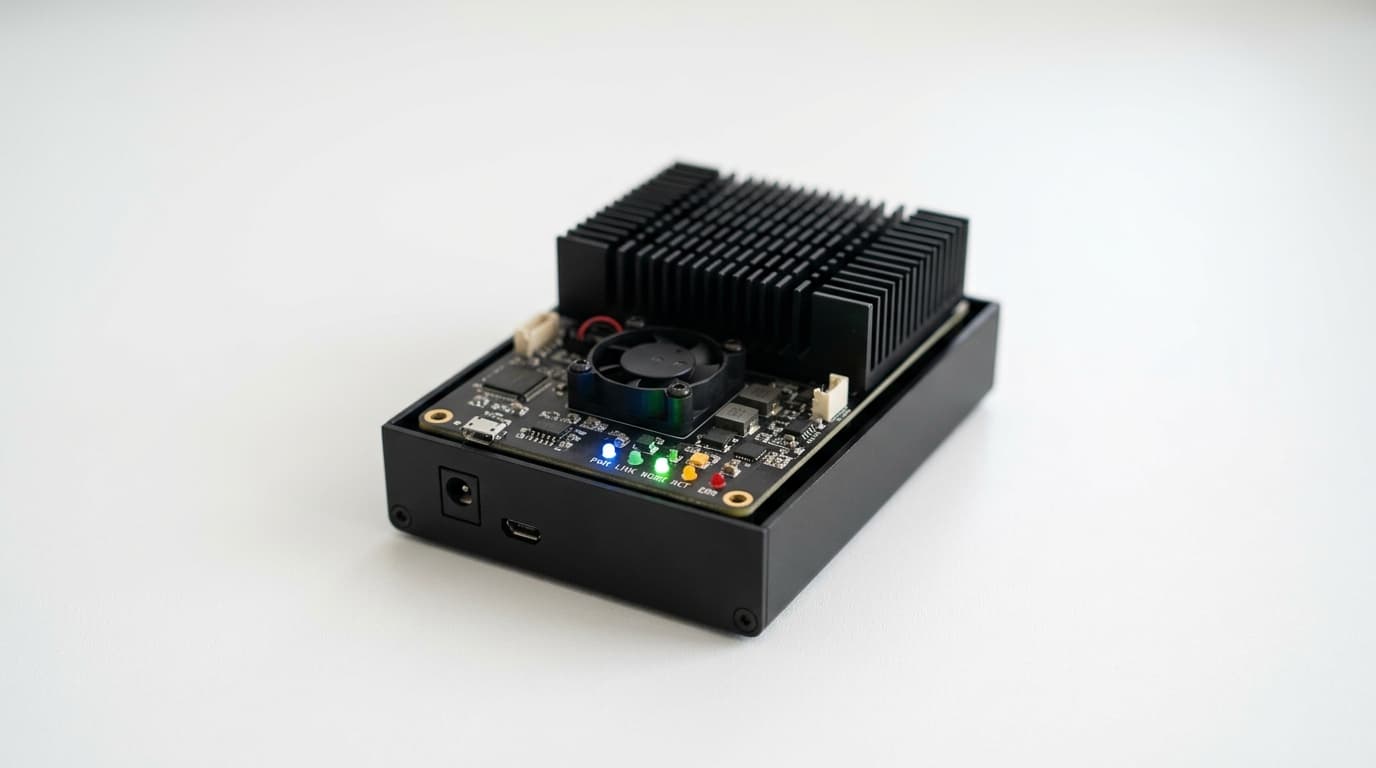
CryptoCloaks BitAxe Gamma After Six Months of Home Solo Mining
A research-based review of the CryptoCloaks BitAxe Gamma 601 after six months of home Bitcoin mining, covering power costs, performance, and lottery odds.
A solo Bitcoin miner found block #937,218 in February 2026 using a single BitAxe unit, taking home approximately 3.143 BTC worth around $213,000. The device that pulled off this feat costs about $105 and runs on less electricity than a standard light bulb.
That kind of outcome is statistically improbable for any individual miner. But it's precisely this lottery-ticket dynamic that has made the CryptoCloaks BitAxe Gamma 601 a compelling device for home Bitcoiners who care more about sovereignty and education than steady income.
What the BitAxe Gamma Actually Delivers
The BitAxe Gamma 601 runs the BM1370 ASIC chip (derived from the Antminer S21 Pro) and produces around 1.2 TH/s of hashrate at 17 watts. That translates to an efficiency of roughly 14-15 J/TH, which is respectable for a device designed to sit on your desk.
CryptoCloaks sells the unit for $104.99 bundled with an upgraded cooler, a custom 3D-printed stand, and a 6A power supply. Setup takes under 10 minutes: connect to Wi-Fi, configure AxeOS, and point it at a solo mining pool like CKPool or public-pool.io.
The device runs nearly silent at approximately 25 dB and stays below 65°C with proper airflow. Users report reliable 24/7 operation across six or more months with minimal intervention. One Reddit user shared their complete six-month mining record on the Gamma in December 2025, documenting consistent uptime throughout.
The Real Economics of Home Solo Mining
Let's be direct about the numbers. At current network difficulty, the BitAxe Gamma generates roughly $0.05-0.06 per day in expected value before electricity costs. Running at 17W around the clock costs about $0.02-0.04 daily at typical residential rates ($0.10-0.15/kWh), leaving you with maybe $2 of theoretical monthly profit.
This is not a path to supplemental income. The ROI on pooled mining alone would take over 40 years. Anyone approaching the BitAxe as an investment should understand this upfront.
But that calculation misses the point for most buyers. The appeal isn't steady income; it's the shot at a 3.125 BTC block reward (currently worth over $300,000) for about $2 per month in electricity. The odds for a single unit hitting a block sit around 1 in 6-7 million on any given day.
Documented Block Wins Prove It's Possible
The improbable keeps happening. At least six BitAxe units have successfully mined solo blocks over the past 12 months as of February 2026. Block #889,975 was found in March 2025, yielding 3.149 BTC. Block #924,569 followed in November 2025. The February 2026 win at block #937,218 is the most recent confirmed example.
These aren't flukes in the sense that they defy probability; someone with lottery-ticket odds will eventually win if enough tickets are purchased. The BitAxe community has grown large enough that these statistical outliers now occur with some regularity.
Six-Month Maintenance Reality
Long-term users report that the BitAxe requires minimal attention. The primary maintenance tasks include occasional dust cleaning, thermal paste replacement if temperatures drift upward, and periodic firmware updates through AxeOS.
No widespread hardware failures have surfaced in user reports across 2025 and into 2026. The open-source design (available on GitHub) means the community has documented common issues and fixes, and the device can be overclocked to 1.8-2 TH/s by users comfortable with voiding warranties and managing additional heat.
CryptoCloaks carries a 4.97 out of 5 star rating across 31 reviews, with customers highlighting build quality, US-based shipping speed, and the thoughtful accessories included with each unit.
Why Home Mining Matters Beyond Profit
The strongest argument for running a BitAxe isn't financial. It's about decentralization.
Every home miner running even modest hashrate contributes to Bitcoin's geographic and jurisdictional distribution. Industrial mining operations concentrate in areas with cheap power and favorable regulations. Home miners scatter hashrate across residential neighborhoods worldwide, making the network marginally more resilient to localized disruptions or regulatory action.
There's also educational value. Running a miner connects abstract concepts (difficulty adjustment, block rewards, variance) to tangible experience. Watching your device submit shares to a pool and tracking the network's response teaches more about Bitcoin's mechanics than any tutorial.
The Fleet Approach
Some users run multiple BitAxe units to improve their odds without dramatically increasing complexity. A fleet of 10 units produces roughly 12 TH/s at around $15 per month in electricity costs. The odds improve proportionally, though they remain long.
This approach makes more sense for hobbyists who enjoy the process than for anyone trying to build a business case. But for those who want to maximize their lottery participation while staying within residential power and noise constraints, it's a viable path.
Who Should Buy One
The BitAxe Gamma 601 from CryptoCloaks makes sense if you want to participate in Bitcoin mining for educational or ideological reasons, you're comfortable with the near-certainty of never hitting a block, and you have a few dollars per month to spend on what amounts to a very long-odds lottery ticket with a massive jackpot.
It doesn't make sense if you need predictable returns, can't afford to lose your initial investment entirely, or expect mining to generate meaningful income at this hashrate.
The device does exactly what it promises: quiet, efficient, reliable home mining with a shot at something extraordinary. Six months of community data suggest it holds up well over time. Whether that's worth $105 and a couple dollars monthly depends entirely on why you're mining in the first place.