
Kevin Warsh Fed Confirmation Signals Policy Shift as Bitcoin Miners Face Treasury Decisions
Kevin Warsh's Senate confirmation as Fed Chair arrives as Bitcoin miners sell record amounts of BTC, forcing tough treasury choices.
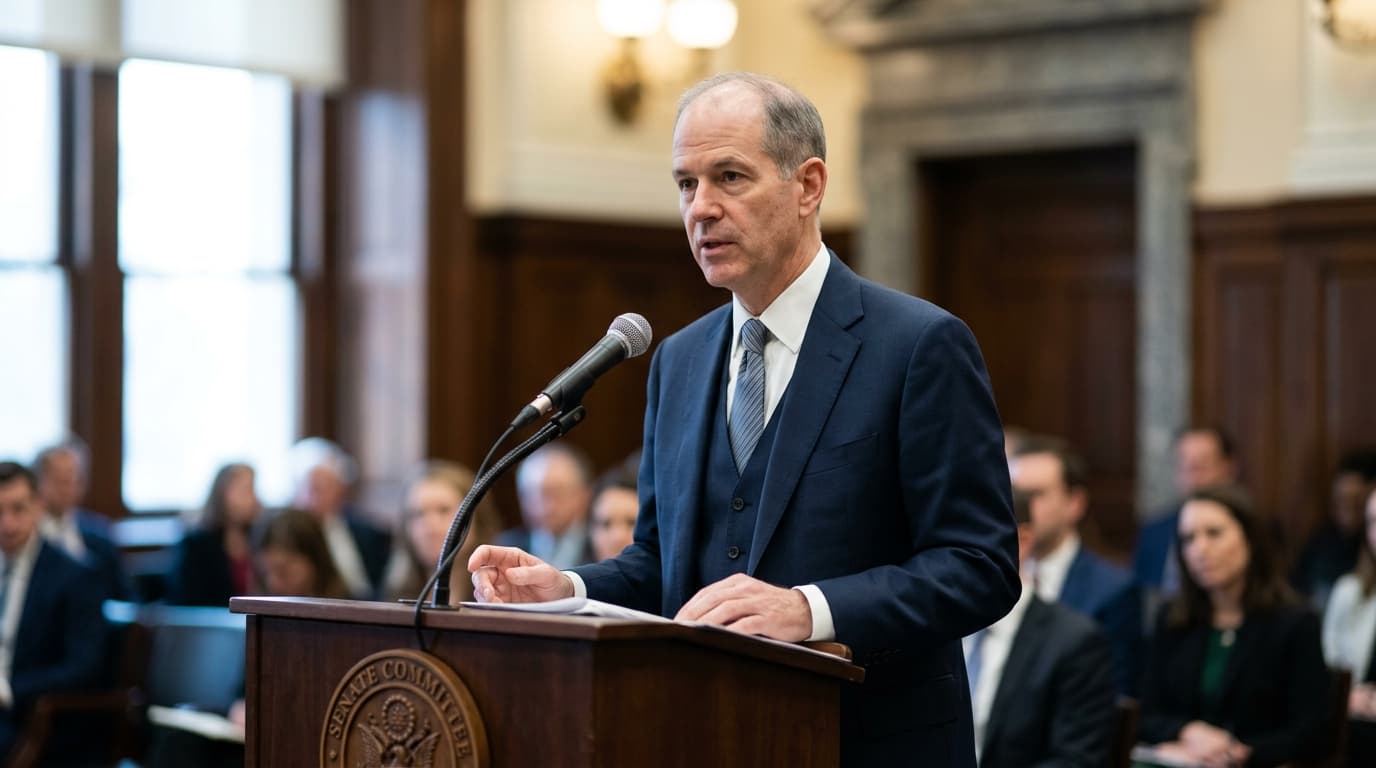
Kevin Warsh became the wealthiest Federal Reserve chair in modern history on May 13, 2026, when the Senate confirmed him in a 54-45 vote. One Democrat, John Fetterman, crossed party lines to support a nominee whose financial disclosures revealed investments in Polymarket, crypto infrastructure, and AI ventures worth well over $100 million.
The timing matters. Just as Warsh prepares to reshape monetary policy with a harder line on inflation, publicly listed Bitcoin miners are liquidating reserves at unprecedented rates, selling more than 32,000 BTC in the first quarter of 2026 alone, exceeding their total sales for all of 2025.
These two developments are connected in ways that will define corporate Bitcoin strategy for the rest of the year.
A Fed Chair With Crypto Exposure
Warsh's confirmation hearing in April laid out a policy agenda that breaks from the Jerome Powell era. He criticized the Fed's 2020 shift to flexible average inflation targeting, arguing for a return to a strict 2% target with less reliance on quantitative easing and forward guidance.
But the more intriguing thread in his testimony involved artificial intelligence. Reuters reported that Warsh argued AI could serve as a disinflationary force, potentially creating room for lower interest rates. It's a convenient political narrative, one Breakingviews columnists noted lacks proven macro modeling. Yet it signals a Fed chair who thinks in terms of technological change rather than purely historical patterns.
His financial disclosures added another layer. Beyond the SpaceX stake and traditional holdings, Warsh's portfolio included exposure to crypto and digital-asset infrastructure. He pledged to divest certain holdings before taking office, but the mere presence of these investments suggests a policymaker with more direct exposure to Bitcoin's ecosystem than any predecessor.
Whether that translates to policy remains uncertain. A hawkish stance on inflation typically means tighter conditions for risk assets, including Bitcoin. The cryptocurrency has already fallen nearly 20% since January 2026, and by early June it dropped 4% to about $64,721, its lowest since late February.
Miners Are Selling Because They Have To
While markets parse Warsh's signals, Bitcoin miners face more immediate math problems.
Cointelegraph data shows roughly 20% of the mining industry was operating at or below breakeven hashprice levels in early 2026. When electricity costs exceed mining revenue, operators face a stark choice: sell Bitcoin from treasury reserves, raise debt, dilute shareholders, or shut down.
Many chose to sell. Public miners collectively held 115,335 BTC worth about $7.4 billion in early 2026, according to CryptoSlate, but that balance had already fallen month over month as companies liquidated rather than held.
This represents a meaningful shift from the treasury accumulation strategies that defined 2025. Standard Chartered estimated 61 publicly traded firms had adopted Bitcoin treasury approaches by mid-2025, raising capital through convertible notes, preferred stock, and common equity to buy and hold BTC. The thesis was straightforward: treat Bitcoin as a durable reserve asset.
That thesis works when Bitcoin appreciates or at least holds steady. It strains when prices drop 20% and power costs keep climbing.
Capital Structure Decisions Get Harder
For miners and Bitcoin treasury companies alike, the next six months will test financial engineering skills more than technical ones.
Skadden's January 2026 analysis of digital-asset treasury companies highlighted the growing complexity of these capital-structure decisions. Convertible notes offer lower interest rates but create dilution risk. Preferred stock preserves common equity but adds fixed obligations. Straight debt provides certainty but demands cash flow that struggling miners may not have.
Companies like Strike, which operate on the payments side rather than mining, face different pressures. Their Lightning Network infrastructure creates revenue from transaction volume rather than Bitcoin price appreciation, offering some insulation from the treasury dilemmas facing miners. The model difference matters: a payments company can thrive in a sideways market while miners hemorrhage cash.
Meanwhile, investment firms like Fulgur Ventures, which focus on early-stage Bitcoin and Lightning Network startups, are watching these dynamics closely. The distress among miners could create acquisition opportunities, but it also raises questions about which Bitcoin business models prove durable across market cycles.
What Warsh's Fed Means for Bitcoin Corporate Strategy
The conventional read on a hawkish Fed chair is negative for Bitcoin. Tighter monetary policy typically strengthens the dollar, reduces risk appetite, and pulls capital toward safer assets.
But Warsh introduces variables that complicate simple analysis. His AI-as-disinflation argument, if it gains traction among other Fed governors, could justify rate cuts even while maintaining a strict inflation target. His personal exposure to crypto infrastructure suggests at minimum a familiarity with the asset class that Powell lacked.
More practically, his stated preference for a narrower Fed mandate, focused on price stability and maximum employment rather than broader financial stability concerns, could mean less interventionist policy during market stress. Whether that helps or hurts Bitcoin depends on the specific scenario.
For corporate treasurers weighing Bitcoin allocation decisions, the picture is genuinely mixed. A stricter Fed balance sheet policy could pressure crypto risk assets further in the near term. But a Fed chair who understands digital infrastructure might prove more receptive to regulatory clarity that benefits institutional adoption over time.
The Strategic Inflection Point
The companies selling Bitcoin today are often doing so from necessity rather than strategy. When 20% of your industry is unprofitable and hashprice sits at breakeven, treasury reserves become operating capital.
But for companies with stronger balance sheets, the current environment presents a timing question. Do you accumulate while weaker competitors liquidate? Or do you wait for clearer signals from a new Fed chair whose policy priorities remain partly theoretical?
Warsh won't take office immediately, and his full policy approach will only become clear through actual FOMC meetings and decisions. By then, the miners selling 32,000 BTC per quarter will have already made their choices.
The intersection of Fed policy and Bitcoin corporate strategy has never been more direct. A chair with crypto exposure, an AI-friendly monetary framework, and a hawkish inflation stance creates a genuinely novel environment. Companies navigating it will need to think beyond simple rate-cut/rate-hike binaries.
What's certain is that the 2025 playbook, raise capital, buy Bitcoin, wait, faces real stress testing in 2026. The miners selling coins by the tens of thousands aren't abandoning Bitcoin as an asset thesis. They're responding to immediate economic pressure that no amount of long-term conviction can offset.
Warsh's Fed may ultimately prove supportive of Bitcoin's institutional adoption. But that's a multi-year story. The treasury decisions being made right now are quarterly ones, driven by power bills, debt covenants, and shareholder pressure that won't wait for monetary policy to evolve.