
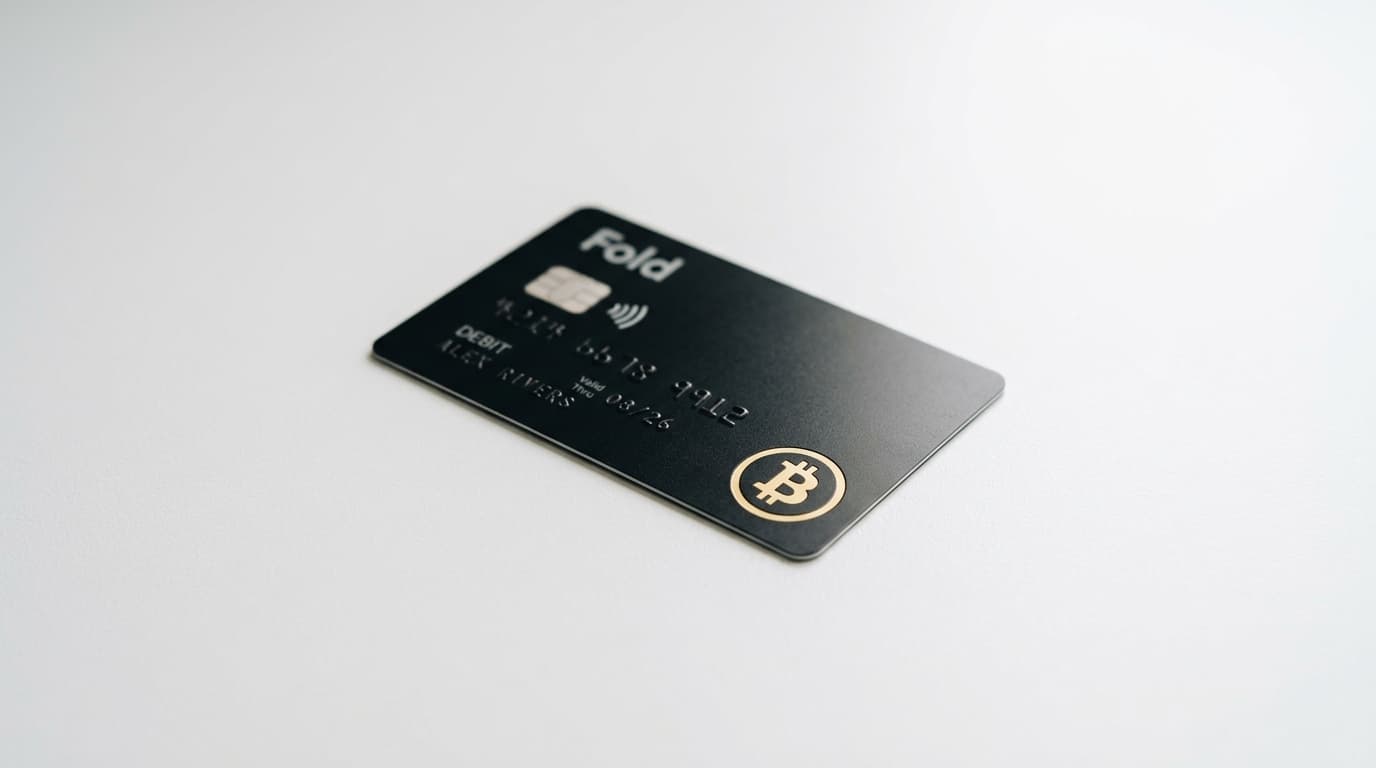
How to Maximize Bitcoin Rewards Using Fold Card for Daily Spending
Practical strategies for earning more Bitcoin on everyday purchases with Fold Card through gift cards, Auto-Stack, and bill pay features.
The math on Bitcoin rewards can add up faster than most people realize. With Fold's credit card rollout in 2026, users can now earn up to 4% back in Bitcoin on their first $2,000 in monthly spending, with no subscription fees required. That's a meaningful accumulation rate for anyone already planning to spend money on groceries, gas, and bills.
But the base reward rate is just the starting point. The real optimization comes from understanding how Fold's layered reward system works and which spending strategies compound your sats most effectively.
Understanding Fold's Reward Structure
Fold offers both debit and credit card options, each with slightly different mechanics. The credit card, which began rolling out to waitlist users in March 2026, provides a base 1.5% Bitcoin back on all qualifying purchases with no cap. That rate can climb to 4% total through two additional boosts:
- +0.5% by paying your balance with Bitcoin
- +up to 2% bonus on your first $2,000 monthly spend via Auto-Stack or Direct to Bitcoin features
The debit card operates differently, enabling Bitcoin rewards on everyday spending, bill pay via ACH, and gift card purchases. Both cards pair with Fold's daily Spinwheel, which offers chances at additional sats (though the odds have been adjusted over time from early reports of 6-9% effective returns).
One significant change in 2026: Fold eliminated its $100/year subscription fee for premium features. Previously, Fold+ membership cost $10/month or $100 annually. Now those benefits come free with the new metal credit card.
Gift Cards Remain the Highest-Yield Strategy
The most consistent way to boost your effective reward rate is through Fold's gift card marketplace. While your base card earns 1.5-4%, gift cards for specific merchants can yield 5-10% or higher in Bitcoin back.
For example, in October 2025, Fold+ members earned 2.5% BTC back on Apple gift cards. Merchants like Home Depot and Amazon frequently offer boosted rates well above the standard card percentage.
The strategy is straightforward: before making a purchase at a supported retailer, buy a gift card through Fold first, then use that card to complete your transaction. You're spending the same money but capturing a higher reward tier.
This approach works best for planned purchases at major retailers. It's less practical for spontaneous spending or merchants without gift card availability, so most users employ a hybrid approach: gift cards for predictable expenses, standard card swipes for everything else.
Automating Your Bitcoin Accumulation
Fold's automation features turn passive spending into consistent Bitcoin acquisition without requiring daily attention:
Auto-Stack converts a set percentage of your spending into additional Bitcoin purchases automatically. Combined with the credit card's bonus structure, this feature unlocks the full 4% reward potential on qualifying spend.
Round-Ups sweep the spare change from each transaction into Bitcoin. A $4.37 coffee becomes a $5.00 purchase, with the $0.63 difference converted to sats.
Direct Deposit Splitting allows paychecks to automatically convert a chosen percentage into Bitcoin. This isn't technically a reward, but it complements the rewards strategy by maintaining consistent dollar-cost averaging.
Bill Pay as a Rewards Multiplier
One underutilized feature is Fold's bill pay functionality. Recurring expenses like rent, mortgage payments, utilities, and even credit card bills from other issuers can be routed through Fold's ACH system.
This matters because most people's largest monthly expenses don't typically earn rewards. Your landlord doesn't accept Visa. Your mortgage servicer might charge a fee for card payments. Fold's bill pay sidesteps these limitations, turning fixed costs into Bitcoin accumulation opportunities.
Users on forums report this as one of the highest-impact strategies simply because the dollar amounts are large. Earning even 1.5% on a $1,500 rent payment generates more Bitcoin than 4% on a $50 grocery run.
The Daily Spin, Realistically
Fold's Spinwheel offers free daily chances at Bitcoin rewards, with theoretical returns up to 25%. It's genuinely free, so there's no reason to skip it.
That said, set realistic expectations. Early users in 2019 reported impressive returns from the gamified feature, but the odds have been adjusted over time. Treat the Spinwheel as a small bonus rather than a core accumulation strategy. The reliable money comes from your actual spending.
Important Tradeoffs to Consider
Bitcoin rewards aren't identical to cash back, and the differences matter:
Volatility cuts both ways. Your 1.5% reward could be worth more or less by the time you withdraw it, depending on Bitcoin's price movement. This is a feature for believers, a risk for others.
Tax implications exist. Bitcoin received as rewards is taxable income at fair market value when received. You'll also owe capital gains taxes if you later sell at a higher price. This isn't unique to Fold, but it's worth tracking from the start.
Withdrawal timing matters. Rewards become withdrawable 30 days after posting, and Fold imposes a $10,000 BTC balance limit that requires withdrawal. Funds are not FDIC or SIPC insured.
Paying your balance with Bitcoin to unlock the additional 0.5% means selling Bitcoin to pay for purchases. Some users prefer keeping their sats and accepting the lower rate.
A Practical Weekly Routine
For those looking to implement these strategies systematically:
- Set Fold as your default payment card for daily spending
- Before major purchases at supported retailers, check Fold's gift card rates and buy cards for any offering elevated rewards
- Enable Auto-Stack and Round-Ups if you want automated accumulation
- Route recurring bills through Fold's bill pay feature
- Spin the wheel daily (it takes seconds)
- Review your rewards monthly and withdraw any balance approaching the $10,000 limit
The goal isn't to change your spending behavior, just to route existing purchases through channels that generate Bitcoin. If you're going to buy groceries anyway, you might as well stack sats doing it.
Who This Works Best For
Fold's system rewards consistency more than any single optimization. Users who benefit most are those who:
- Already spend predictably at major retailers with gift card availability
- Have significant recurring bills (rent, mortgage, utilities)
- Want passive Bitcoin accumulation without active trading
- Are comfortable with Bitcoin's volatility and tax obligations
For someone spending $3,000 monthly through Fold (including bills), the combination of base rewards, gift card boosts, and automation features could realistically generate $50-100+ in Bitcoin per month. Over years of normal spending, that compounds into meaningful accumulation without changing your lifestyle.
The rewards won't make anyone rich overnight. But for Bitcoin enthusiasts who plan to hold long-term anyway, converting everyday expenses into sats represents one of the lowest-friction accumulation strategies available.