
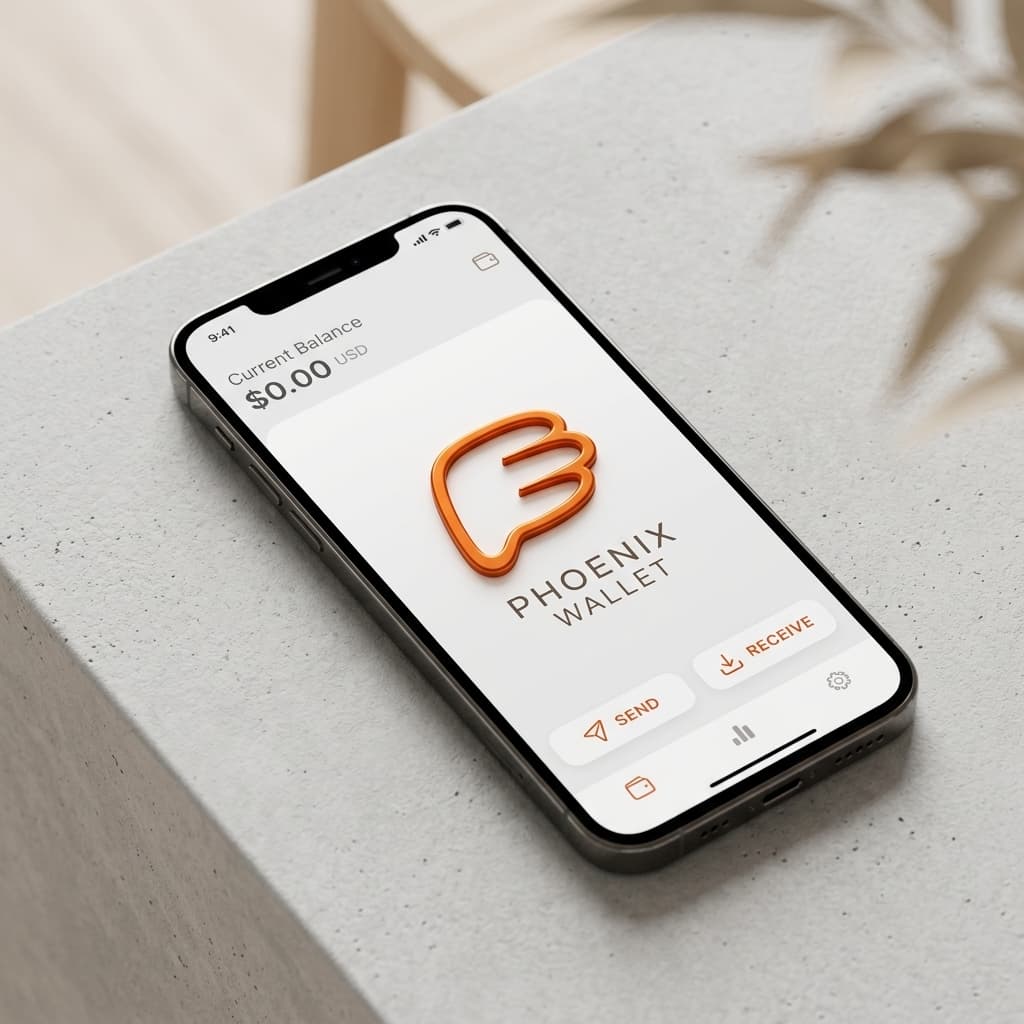
Phoenix Wallet Review 2026, Lightning Made Simple but Not Without Tradeoffs
Phoenix Wallet automates Lightning channels and earned a 4.2/5 rating, but variable fees and ACINQ dependence reveal important tradeoffs worth understanding.
A 20% reduction in on-chain fees sounds like marketing speak until you understand how Phoenix achieved it. The October 2025 release of version 2.7.0 brought full Taproot channel support, making the already-simplified Lightning experience measurably cheaper. But whether Phoenix deserves its reputation as the Lightning wallet that "just works" depends entirely on what you're trying to accomplish.
Developed by ACINQ, Phoenix has carved out a specific niche: making Lightning Network payments accessible to people who don't want to manage channels, worry about inbound liquidity, or understand routing. The wallet handles all of that automatically through splicing technology. You receive Bitcoin, and Phoenix opens or expands channels as needed. You spend Bitcoin, and the wallet routes payments without requiring your input.
This approach has earned Phoenix a 4.2 out of 5 rating on app stores as of late 2025, with users consistently praising its straightforward interface. The question isn't whether Phoenix simplifies Lightning. It clearly does. The question is what you give up for that simplicity.
How Automatic Channel Management Actually Works
Traditional Lightning wallets require users to manually open channels, choose channel partners, and maintain sufficient inbound liquidity to receive payments. Phoenix eliminates this entirely by connecting users to ACINQ's Lightning node and handling channel operations in the background.
When you receive a payment that exceeds your current channel capacity, Phoenix automatically performs a splice-in operation, expanding your channel on-chain. When you want to send funds to a regular Bitcoin address, it performs a splice-out. The 2025 Taproot upgrade made these operations cheaper by reducing the on-chain footprint of channel transactions.
Recent updates have added practical features that make daily use more convenient. The July 2025 release (v2.6.2) introduced a fiat currency converter, NFC tag support for tap-to-pay scenarios, and a separate spending PIN. May through July 2025 also brought BOLT12 stateless offers for reusable payment requests, custom channel closing feerates, and improved scanner functionality.
The Fee Structure Deserves Scrutiny
Phoenix's fee model is where opinions diverge sharply. Lightning payments themselves cost 0.4% plus 4 satoshis, which is competitive. But channel operations, the automatic splicing that makes everything seamless, incur mining fees that vary with Bitcoin network congestion.
During periods of high on-chain fees, opening or expanding a channel can cost significantly more than expected. Users in 2025 reviews consistently flag this unpredictability as their primary complaint. If you receive a payment during a fee spike, you might pay substantially more than you would with a wallet that lets you time your channel operations manually.
For small, frequent transactions, this rarely matters. The convenience outweighs occasional fee surprises. For larger amounts or users who want predictable costs, the automatic approach can feel like a hidden tax.
The ACINQ Dependency Question
Phoenix is non-custodial; you control your private keys and can recover funds with your seed phrase even if ACINQ disappears. But it isn't trustless. Your Lightning channels connect exclusively to ACINQ's node, meaning you depend on their infrastructure for routing, uptime, and channel management.
This creates a practical tradeoff. You get reliability and simplicity because ACINQ runs professional infrastructure. You lose the censorship resistance that comes from connecting to multiple independent nodes. For most users making everyday purchases, this tradeoff makes sense. For those prioritizing maximum decentralization, it's a meaningful compromise.
The 2024 regulatory situation highlighted this dependency. Phoenix withdrew from US app stores that year due to regulatory concerns, though it returned by April 2025 and remained accessible throughout via sideloading. The episode demonstrated that while your funds remain in your control, your access to the wallet's full functionality depends on factors outside the Bitcoin protocol itself.
Privacy Compared to Alternatives
Some analysts have noted that Phoenix's privacy characteristics resemble custodial wallets more than fully sovereign setups. Because all your channels connect to a single counterparty (ACINQ), that counterparty has visibility into your payment patterns. They can see how much you receive, when you receive it, and the general shape of your spending.
This isn't unique to Phoenix; any single-channel Lightning setup has similar characteristics. But it's worth understanding if you've chosen Lightning partly for privacy reasons. Running your own node with multiple channel partners offers more privacy at the cost of significant complexity.
Where Phoenix Excels
For everyday spending at Lightning-enabled merchants, receiving tips or small payments, and generally using Bitcoin as money rather than just a store of value, Phoenix hits a compelling sweet spot. The automatic channel management means you can receive a payment five minutes after installing the app, something impossible with most Lightning wallets.
The multi-wallet support added in the October 2025 Taproot update allows separate wallets with independent seed phrases, useful for keeping personal and business funds distinct. The splice-out feature lets you send directly to on-chain addresses when needed, paying only mining fees rather than exchange fees.
Power users will appreciate BOLT12 offers for reusable payment requests and the ability to set custom mining fees for on-chain transactions. The wallet strikes a balance between simplicity for newcomers and flexibility for experienced users.
Where Phoenix Falls Short
Phoenix is not a storage solution. The variable fees, single-node dependency, and mobile-only design make it poorly suited for holding significant amounts. Think of it as a spending wallet, a place to keep funds you plan to use soon, not your life savings.
It's also Bitcoin-only, which is a feature or limitation depending on your perspective. And while Tor support exists via external VPN, the default configuration prioritizes convenience over network-level privacy.
The Verdict
Phoenix delivers on its core promise: Lightning payments that don't require expertise. The automatic channel management works as advertised, the recent Taproot upgrade genuinely reduced fees, and the 4.2/5 rating reflects real user satisfaction.
But "simple" isn't the same as "no tradeoffs." You're trusting ACINQ's infrastructure, accepting variable fees you can't fully control, and giving up some privacy compared to more complex setups. For small daily transactions, those tradeoffs make sense. For large holdings or maximum sovereignty, look elsewhere.
The hype around Phoenix isn't unearned; it's just incomplete. It's an excellent tool for a specific job: making Lightning accessible without a learning curve. Understanding what job it's designed for helps you decide whether it belongs in your Bitcoin toolkit.