
Speed Wallet Review for Cross-Border Payments and Rewards
A research-based review of Speed Wallet for Lightning payments, cross-border remittances, and sats-back rewards in 2026.
Sending $200 to a family member abroad through traditional banking typically costs $6 to $20 in fees and takes two to five business days. The same transfer through a Lightning Network wallet can settle in seconds for less than a penny. That gap explains why Speed Wallet has attracted over a million users and processed $1.5 billion in payment volume as of 2025.
But impressive numbers don't tell the whole story. Mixed user reviews, custodial concerns, and at least one viral scam allegation raise questions worth examining. Here's what the research reveals about Speed Wallet's strengths, limitations, and who it actually serves well.
What Speed Wallet Does
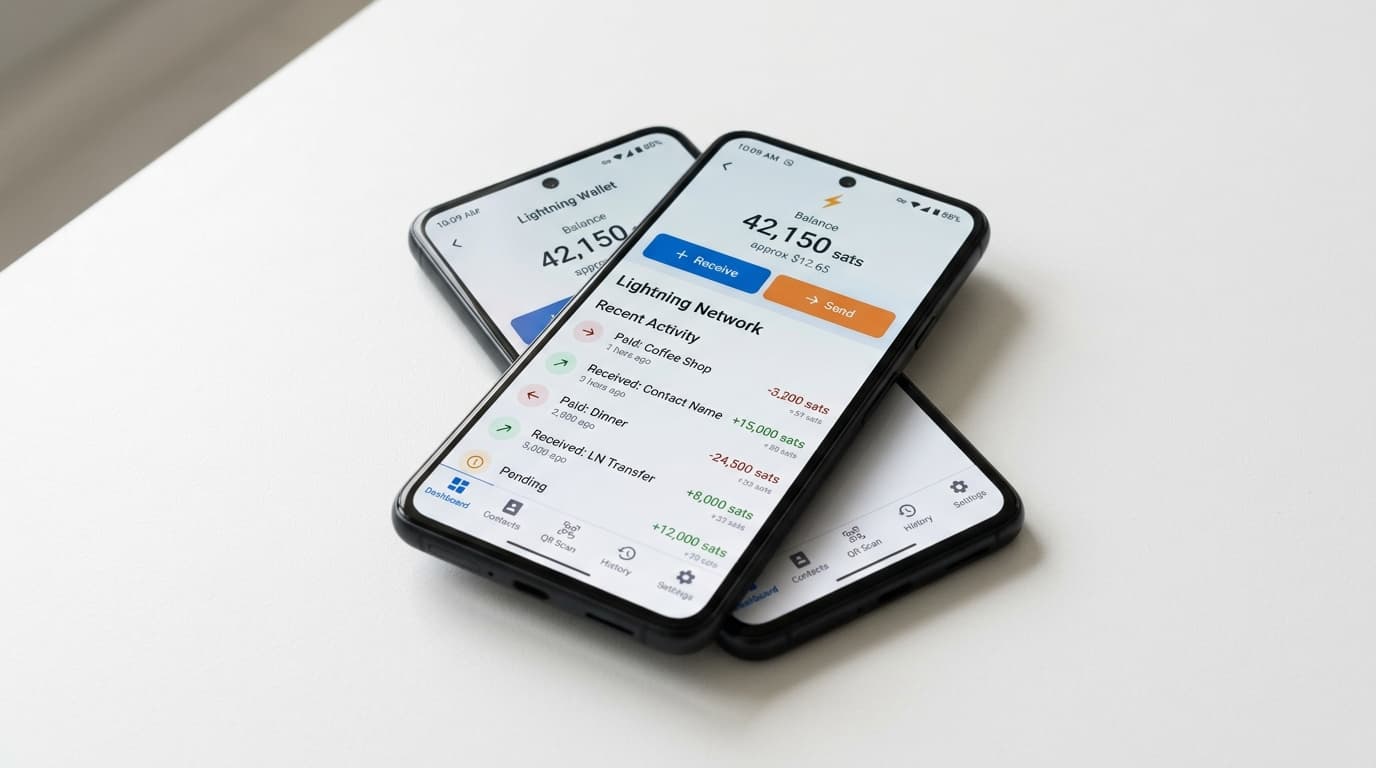
Speed Wallet is a custodial Bitcoin wallet built on the Lightning Network. It supports BTC, plus stablecoins like USDT, USDC, and USDT-L (Lightning-native Tether). The core pitch is simple: send money anywhere in the world, instantly, with minimal fees.
The wallet handles the technical complexity of Lightning channels behind the scenes. Users don't need to manage liquidity, open channels, or run nodes. This makes it accessible to people who want Bitcoin's benefits without the learning curve of self-custody solutions.
Beyond basic transfers, Speed Wallet has evolved into something closer to a financial super-app. Recent updates have added Mini Apps, token swaps, recurring buys, and biometric security. It's available on iOS, Android, and web, with a Chrome extension for desktop access.
Cross-Border Payments in Practice
The cross-border use case is where Speed Wallet genuinely shines compared to legacy systems.
Traditional remittance services typically charge 3% to 10% of the transfer amount. SWIFT transfers involve intermediary banks that each take a cut and can delay settlement for days. Speed Wallet's Lightning transactions cost fractions of a cent and finalize in seconds, 24/7, regardless of holidays or banking hours.
For someone sending regular payments to family overseas, or for merchants receiving international payments, this efficiency matters. The stablecoin support adds another dimension: users in countries with volatile local currencies can hold dollar-denominated assets without maintaining a U.S. bank account, then convert to Bitcoin or local currency as needed.
In December 2025, Tether led an $8 million funding round to expand Speed Wallet's Lightning infrastructure and push into European and Asian markets. That investment signals confidence in the cross-border payments thesis, though it also means the company is still building toward profitability rather than operating from established revenue.
The Rewards Program
Speed Wallet's sats-back rewards program offers tiered cashback on spending. The structure as documented:
- Welcome tier: 1 sat per 1,000 sats spent
- Bronze: 2 sats (requires >0.1 BTC monthly volume)
- Silver: 3 sats (>0.4 BTC)
- Gold: 4 sats (>0.6 BTC)
- Platinum: 5 sats (>1 BTC)
Rewards are redeemable for Bitcoin. For context, at a Bitcoin price around $60,000, the Platinum tier's 0.5% effective cashback rate competes with typical credit card rewards, except you're accumulating Bitcoin rather than airline miles.
The tiered structure incentivizes heavy usage. Casual users won't climb far up the ladder, while frequent spenders or merchants processing significant volume can accumulate meaningful sats over time. The rewards launched in 2024 and appear to remain a core feature of the platform's retention strategy.
User Feedback and Concerns
User reviews present a mixed picture that's worth parsing carefully.
On Apple's App Store and Google Play, Speed Wallet averages approximately 4.7 out of 5 stars, with users praising the speed (naturally), low fees, and clean interface. These platforms tend to capture users satisfied enough to leave positive reviews.
Trustpilot tells a different story, with ratings around 2.8 out of 5. Complaints center on fees being higher than expected in certain scenarios and frustration with the custodial model limiting control.
One particularly alarming claim surfaced on Reddit in January 2025, where a user alleged losing 95% of their funds to fees, describing it as a scam. This specific claim hasn't been independently verified, and Speed Wallet's documented platform fees run 1% to 1.5%, which doesn't match the extreme loss described. It's possible the user encountered exchange rate slippage, misunderstood the fee structure, or experienced something unusual. It's also possible the complaint was exaggerated or fabricated.
The broader pattern suggests that most users find the experience positive, but some encounter unexpected costs or friction points. For any custodial wallet, understanding the fee structure before large transactions is essential.
The Custodial Trade-off
Speed Wallet is custodial, meaning the company holds the keys to user funds. This is the source of both its accessibility and its primary risk.
The benefits are real: no channel management, no seed phrase backup complexity, instant usability. For users sending small remittances or spending moderate amounts on gift cards, the convenience outweighs theoretical risks.
But "not your keys, not your coins" remains a valid concern. If Speed Wallet's systems were compromised, or if the company faced regulatory action or insolvency, users could lose access to funds. The December 2025 funding suggests the company is financially healthy, but custodial risk never fully disappears.
Users holding substantial Bitcoin for long-term savings would generally be better served by self-custody solutions. Speed Wallet is designed for spending and transacting, not cold storage.
Who Speed Wallet Works For
Based on the available documentation and user feedback, Speed Wallet appears well-suited for:
- Remittance senders who regularly move money across borders and want to minimize fees and delays
- Merchants accepting international payments who don't want to deal with currency conversion delays
- Stablecoin users in regions with unstable local currencies who want easy dollar exposure with optional Bitcoin conversion
- Rewards optimizers who spend enough to reach higher tiers and want passive Bitcoin accumulation
- Super-app seekers who prefer one interface for payments, swaps, gift cards, and games over juggling multiple wallets
It's less ideal for:
- Self-custody advocates unwilling to trust any custodian
- Traders seeking broad multi-chain portfolio management
- Large holders looking for long-term Bitcoin storage
The Bigger Picture
Speed Wallet represents a particular philosophy about Bitcoin adoption: meet users where they are, handle complexity behind the scenes, and make the experience comparable to traditional fintech apps.
This approach sacrifices some Bitcoin principles (decentralization, self-sovereignty) for accessibility. Whether that trade-off makes sense depends entirely on what you're trying to accomplish.
For cross-border payments specifically, the Lightning Network advantage is substantial. Moving money internationally in seconds for near-zero fees solves a genuine problem that traditional finance handles poorly. Speed Wallet packages that capability in a form factor mainstream users can actually navigate.
The rewards program adds a reasonable incentive layer, though the tiers require significant volume to maximize. Mixed reviews warrant caution, particularly around understanding fees before large transactions.
If you're evaluating Speed Wallet for remittances or everyday spending, the research suggests it delivers on its core promises for most users. Just don't store your life savings there, and verify the fee structure for your specific use case before committing significant funds.