
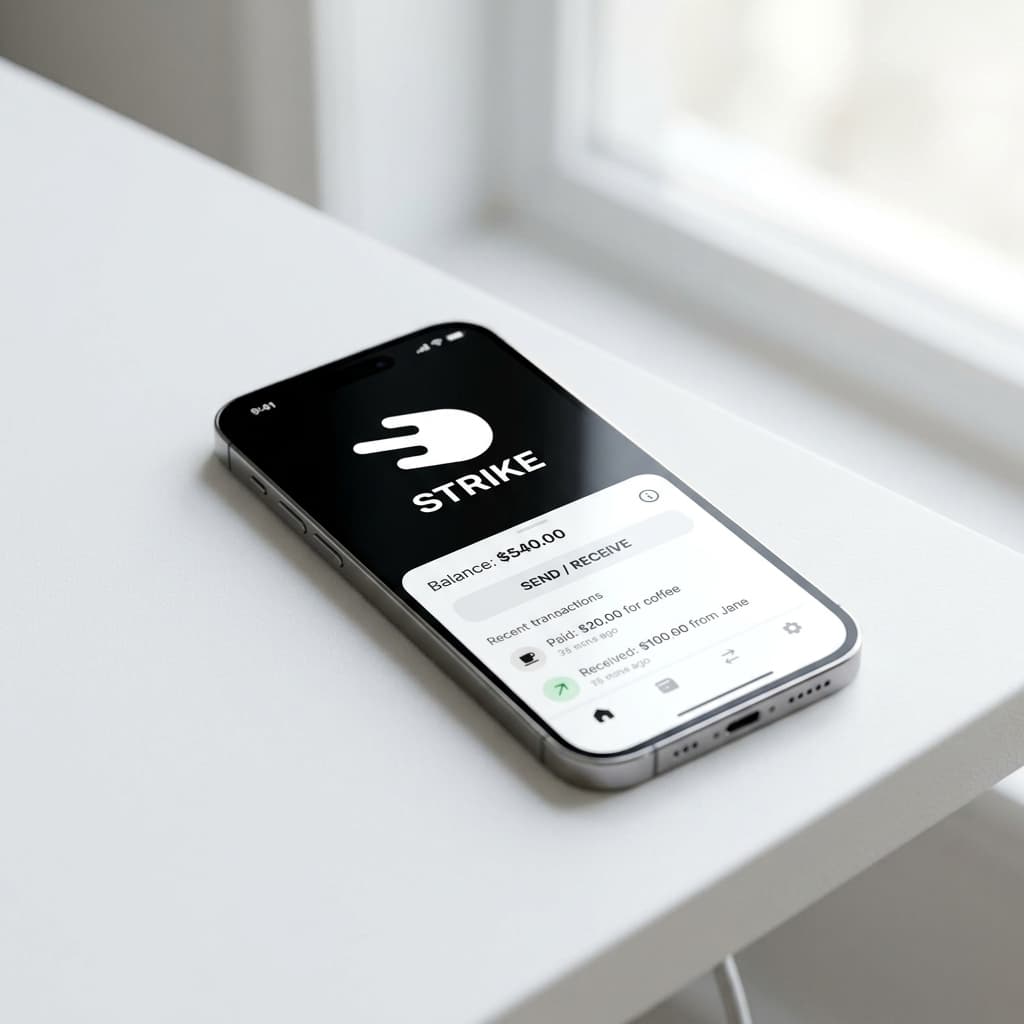
Strike Review 2026, Lightning Payments Meet Venmo Simplicity
Strike brings Lightning Network payments to a Venmo-style app. Our research-based review covers fees, features, and where the app excels or falls short.
In 2024, Strike processed over $6 billion in payments volume, a 600% increase from the prior year. That kind of growth doesn't happen by accident. The app has carved out a clear niche: making Bitcoin's Lightning Network accessible to people who just want to send money without thinking about payment channels or node management.
But impressive growth numbers don't tell the whole story. Strike's pitch as a "Venmo for Bitcoin" holds up in some contexts and breaks down in others. Here's what the research reveals about where Strike delivers and where it doesn't.
What Strike Actually Does
Strike functions as a mobile-first payment app built on Bitcoin's Lightning Network. The basic mechanics are familiar to anyone who's used Venmo or Cash App: download the app, link a bank account, send money to friends using a Lightning address or QR code.
The difference is the infrastructure underneath. Instead of routing payments through traditional banking rails, Strike uses Lightning Network to settle transactions in seconds with minimal fees. The app supports micropayments down to a single satoshi (a hundred-millionth of a bitcoin), which opens use cases that traditional payment apps can't touch.
For recipients who don't use Bitcoin, Strike can convert payments to local currency and deposit them directly to bank accounts or mobile money services. This makes the app particularly useful for remittances to countries like Mexico, the Philippines, and Kenya, where recipients don't need to understand anything about Bitcoin to receive funds.
The Venmo Comparison Actually Holds Up
Strike's user interface genuinely resembles what you'd expect from a mainstream fintech app. Lightning addresses work like Venmo usernames. Bill pay integration lets users pay household bills through the app. Recurring bitcoin purchases simplify dollar-cost averaging for people building long-term positions.
The simplicity matters because Lightning Network has historically had a steep learning curve. Running your own Lightning node requires technical knowledge most people don't have. Strike abstracts all of that away, handling channel management and liquidity behind the scenes.
For merchants who want to accept Lightning payments without infrastructure headaches, Strike provides invoice handling that bridges the gap between wanting Lightning functionality and lacking the technical expertise to operate it directly.
Where the App Falls Short
User reviews from 2024 and 2025 paint a more complicated picture than Strike's growth numbers suggest. Common criticisms include:
Withdrawal fees: While Strike advertises low fees for sending money, some users report unexpected costs when moving funds out of the app. The fee structure isn't always transparent upfront.
Customer support: Multiple reviewers across Trustpilot and App Store cite slow or unhelpful responses when problems arise. For an app handling significant money, support quality matters.
Limited advanced features: Power users accustomed to full-featured exchanges may find Strike's streamlined approach frustrating. The app prioritizes simplicity over configurability, which is a deliberate tradeoff but won't suit everyone.
These aren't fatal flaws, but they're worth knowing before committing to Strike as your primary payment or bitcoin-buying app.
Bitcoin-Backed Loans and Corporate Treasury
In 2025, Strike expanded beyond payments with bitcoin-backed loans. The product offers tiered APR starting at 9.5%, with minimums from $10,000 and no maximum. Users can maintain up to three active loans simultaneously.
The company also holds approximately 1,500 BTC in corporate treasury as of May 2025, signaling confidence in Bitcoin's long-term trajectory. CEO Jack Mallers has publicly emphasized this position, framing it as alignment between Strike's product and its balance sheet.
Whether bitcoin-backed loans represent a compelling product depends on individual circumstances. Borrowing against bitcoin means avoiding taxable sales, but it also introduces liquidation risk if prices drop significantly. The 9.5% floor rate sits above some competitors in the bitcoin lending space.
Enterprise Adoption and Lightning Network Growth
Strike's growth coincides with broader Lightning Network adoption. In 2025, enterprise users reported cutting payment processing fees by up to 50% compared to traditional card networks. For businesses with tight margins, that kind of savings gets attention.
Strike has positioned itself as a leader in this space, though competition from other Lightning-focused companies continues to intensify. The app's consumer-friendly approach differentiates it from more technical solutions, but enterprise needs often differ from consumer preferences.
Who Strike Works Best For
Based on the available evidence, Strike fits well for:
- Remittance senders who need to move money internationally quickly and cheaply
- Bitcoin beginners who find exchanges like Coinbase or Kraken overwhelming
- Dollar-cost averagers who want automated recurring purchases
- Lightning enthusiasts who don't want to run their own infrastructure
The app works less well for:
- Advanced traders who need detailed order types and charting
- Privacy-focused users who prefer non-custodial solutions
- Anyone needing responsive customer support for complex issues
The Bottom Line
Strike delivers on its core promise: making Lightning Network payments as easy as sending a Venmo payment. The app's 2024 growth to $6 billion in volume demonstrates real traction, not just marketing.
But ease of use comes with tradeoffs. The simplified interface means fewer options. Custodial architecture means trusting Strike with your funds. And mixed user reviews suggest the experience isn't uniformly positive.
For users whose priorities align with Strike's strengths (simple bitcoin buying, fast remittances, Lightning payments without technical complexity), the app remains a compelling option. For users who need features beyond that scope, other solutions may fit better.
The Lightning Network continues maturing, and Strike's bet on consumer simplicity has paid off so far. Whether that advantage holds as competition increases will depend on how well the company addresses its current weaknesses, particularly around support quality and fee transparency.