
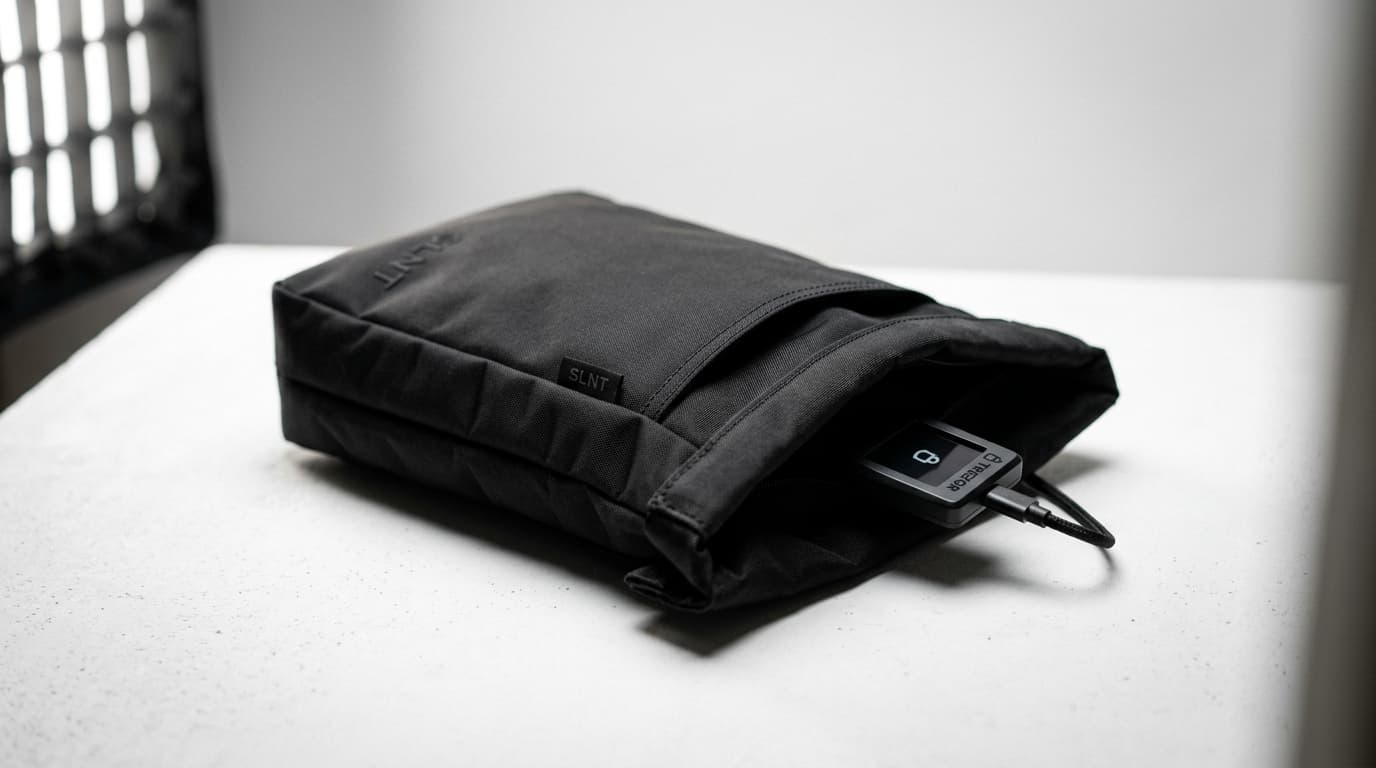
How to Protect Your Hardware Wallet During Travel Using SLNT Faraday Bags
A step-by-step guide to using military-grade Faraday bags for hardware wallet security when crossing borders or attending Bitcoin conferences.
Your hardware wallet's private keys never touch the internet, but that doesn't mean your device is immune to wireless threats. In crowded airports, conference halls, and border crossings, your wallet's NFC and Bluetooth capabilities create potential attack surfaces that bad actors can probe without ever touching your device.
While no confirmed cases of wireless attacks successfully extracting private keys from hardware wallets have been documented, the theoretical risks are real enough that security-conscious Bitcoiners increasingly turn to Faraday bags as a simple precaution. Here's how to use them effectively.
Understanding the Threat Model
Hardware wallets with NFC functionality face specific risks in travel scenarios. Relay attacks can intercept and amplify wireless signals from your device. Proximity attacks allow unauthorized scanning without physical contact. In crowded environments like airport security lines or Bitcoin conference floors, you're surrounded by unknown devices and people with varying intentions.
The good news: hardware wallets require physical confirmation for transactions, making remote key extraction extremely difficult. The bad news: determined attackers with sophisticated equipment could potentially gather metadata, track your movements, or probe for vulnerabilities in your device's wireless stack.
Faraday bags address this by creating a simple physical barrier that blocks all radio frequencies. No software vulnerabilities to patch, no settings to configure, just physics.
Why SLNT Bags Specifically
SLNT manufactures Faraday products using patented Multishield material that meets MIL-STD-188-125-2 military standards and exceeds IEEE 299-2006 specifications. Their bags block Bluetooth, Wi-Fi, 5G, RFID, NFC, GPS, and EMF radiation.
The product line includes options at various price points. Dry bags start around $54.95 and provide waterproof protection alongside signal blocking. Sling bags at $99.95 and up work as everyday carry while offering instant signal isolation. Tech organizers include RFID-protected pockets for passports and cards alongside the main Faraday compartment.
Notably, SLNT bags allow you to charge devices inside using a portable battery while maintaining the signal block, useful for extended travel where you want devices powered but isolated.
Step-by-Step Protection Protocol
Before You Travel
- Test your SLNT bag's seal with your phone. Place the phone inside, close the bag completely, and try calling it from another device. If it rings, you have a gap.
- Verify your hardware wallet's firmware is current. Update it at home where you control the environment, not in a hotel room.
- Confirm you have your seed phrase backup stored separately from your hardware wallet. Never travel with both in the same bag.
At the Airport
- Before entering the security line, place your hardware wallet fully inside the Faraday bag. Seal it firmly with no gaps or folds that could leak signal.
- Keep the bag in your carry-on, not checked luggage. You want physical custody at all times.
- If TSA or customs asks about the device, you can explain it's a cryptocurrency hardware wallet. The Faraday bag itself shouldn't raise concerns since it's just fabric.
At Conferences and Meetups
- Keep your hardware wallet in the Faraday bag unless you're actively using it for a demonstration or transaction.
- When you do take it out, minimize the time it's exposed. Complete your business and return it to the bag.
- Be aware of your surroundings. The person standing unusually close might just be awkward, or they might be probing.
Crossing Borders
- Know your destination's regulations regarding cryptocurrency devices. Some countries have specific reporting requirements.
- The Faraday bag prevents remote interrogation of your device, but border agents can still physically examine it if they choose.
- Consider whether you need to travel with a loaded hardware wallet at all. A freshly initialized device with no keys is much simpler to explain.
Putting This in Perspective
Security experts generally rank Faraday bags as a lower priority than fundamentals like multisig setups and proper seed backups. If you're traveling with a single-signature wallet and your seed phrase written on a sticky note in the same bag, a fancy Faraday enclosure isn't solving your real problem.
That said, for NFC-enabled wallets or travel through areas where sophisticated electronic threats are plausible, Faraday protection offers genuine value for minimal effort and cost. It's hardware-level security that doesn't depend on software working correctly.
The contrarian view deserves acknowledgment: for most users, the risk of RF attacks on hardware wallets remains theoretical. Private keys require physical confirmation to move, and no attacker has publicly demonstrated extracting keys wirelessly from a modern hardware wallet. You might be spending $55 to $100 on peace of mind rather than measurable risk reduction.
But peace of mind has value, particularly when you're carrying significant Bitcoin through unfamiliar territory. A Faraday bag is cheap insurance against threats that are difficult to detect and potentially devastating if they materialize.
Making the Decision
If you're attending major Bitcoin conferences, traveling internationally with hardware wallets, or operating in environments where you might be specifically targeted, SLNT Faraday protection is worth the investment. The products are well-reviewed, the technology is straightforward, and the execution requires no technical expertise.
If you're making a domestic trip to visit family and your hardware wallet holds a modest amount, the threat model probably doesn't justify the expense. Reasonable people can disagree about where that line falls.
What matters most is making a conscious decision based on your specific situation rather than either ignoring wireless threats entirely or succumbing to security theater. Know what you're protecting, understand the realistic risks, and choose your tools accordingly.