
Sazmining Review (2026): Fees, Custody & the Honest ROI Math
You own the rig, the keys, and the Bitcoin, and Sazmining only earns when you mine. An honest look at the revenue-share fees, the uncapped service cost, and the ROI reality.
Most companies that will "mine Bitcoin for you" are running a variation of the same trick: you send money, they credit a dashboard number, and you never own a machine or touch a coin until they decide to let you. That model has produced a graveyard of cloud-mining scams. Sazmining is built the other way around, and that inversion is the whole reason it's worth a serious look. You buy the actual ASIC, it's registered to you by serial number, and the Bitcoin it mines routes straight from the pool to your wallet. In the company's own words, "we never hold (or even touch) your rewards."
That structure is Sazmining's strongest legitimacy signal, and it's real. It also isn't the end of the story. This is a small operator, its service fee is explicitly uncapped, it doesn't publish its exit terms, and a recurring theme in customer reviews is returns landing well below the sales page's projections. None of that is fraud. All of it is the honest cost of the model.
Sazmining is not a Bitcoin Products partner and there's no affiliate link on this page, so this review has no reason to sell it to you. Here's the straight accounting of what you get, how you pay, and where it will bite.
Five things to know before you buy a rig:
- You actually own it. The rig, the keys, and the Bitcoin are yours. Payouts are non-custodial, routed from the mining pool (Luxor or OCEAN) directly to your wallet. This is the line that separates Sazmining from cloud-mining contracts, and it's the single most important thing about the company.
- They're paid by revenue share, not a flat rate. Sazmining takes a percentage of the Bitcoin your rig mines, 15% at most sites and 20% in Norway, split at the pool before you ever see it. It's their "only source of revenue," so they earn only when you do, and they charge nothing while a machine is down.
- The service fee is uncapped. On top of the revenue share, you pay a monthly service fee for electricity and maintenance based on actual energy use. Sazmining publishes an estimate as a planning benchmark, but the fee itself is not capped, so the energy-cost risk sits with you.
- There's no uptime SLA. What Sazmining offers is a 90–95% annual "rig performance guarantee," which is a different and softer thing than a contractual uptime commitment. Read the distinction below before you weigh it.
- The ROI is real but not promised. Renewable, low-cost power helps, but multiple customers report returns well under the projections they were shown. Mining in 2026 is a bet on price and difficulty, and that bet is yours.
At a glance: Sazmining (2026)
| What it is | Mining-as-a-service: you own the ASIC, Sazmining hosts it on renewable power |
| Who runs it | Sazmining, Inc. Co-founders Kent Halliburton (CEO) and Will Szamosszegi (President) |
| Pricing model | Rig sold "at cost," then a revenue share of the BTC you mine + a monthly service fee |
| Revenue share | 15% at most sites; 20% in Norway. Taken at the pool before payout |
| Service fee | Monthly, for energy + maintenance, based on actual use. Not capped (an estimate is provided) |
| Disclosed energy cost | ~$0.055/kWh Paraguay, ~$0.056 Ethiopia, ~$0.062 West Texas |
| Uptime | No SLA. A 90–95% annual rig performance guarantee (90% Paraguay, 95% elsewhere) |
| Custody | Non-custodial. You own the rig, keys, and BTC; payouts route pool → your wallet |
| Facilities | Paraguay, Norway, Ethiopia, West Texas, South Dakota (renewable/hydro-first, four continents) |
| Minimum order | One rig. Bulk (20+) gets dedicated support |
| Reputation | Trustpilot ~4.6/5 (~60 reviews); no fraud or regulatory findings |
| Best for | Bitcoiners who want to own mined coins on renewable power and value incentive alignment |
| Not for | Anyone needing capped costs, a hard uptime SLA, or published exit terms |
What Sazmining actually is
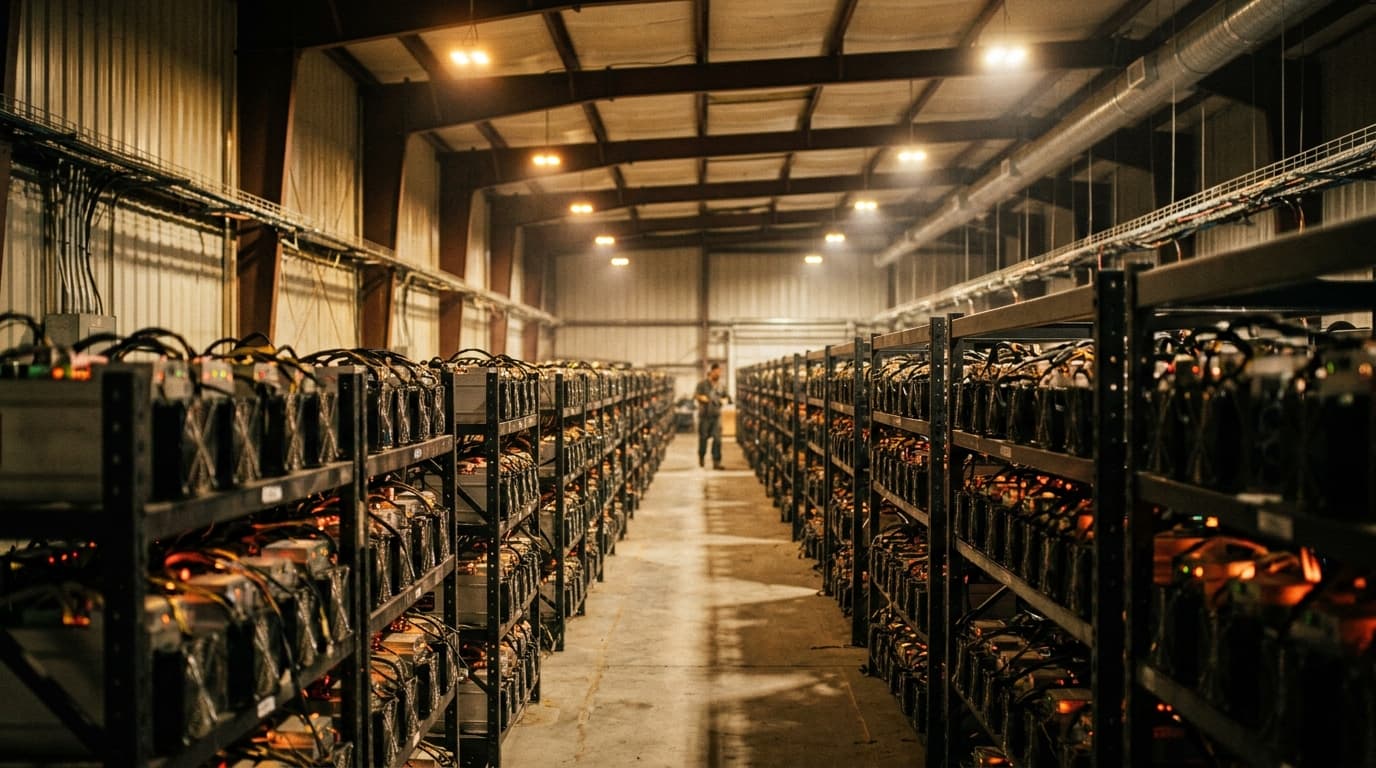
Sazmining sells mining-as-a-service, and the emphasis is on service, not contract. You buy a current-generation ASIC through them, they deploy it at one of their renewable-energy sites, and they run, power, and maintain it while you watch a dashboard. The tagline is blunt about the pitch: "Mine Bitcoin. Own Your Rigs. Ditch the Exchanges."
The ownership is the substance behind the slogan. Each machine is registered to you by serial number. You pick the pool between Luxor and OCEAN, and the Bitcoin it earns is paid out from that pool straight to a wallet you control, weekly by default and adjustable. Sazmining states plainly that "you own your hardware, your keys, and your Bitcoin," and that it never custodies the rewards. On the spectrum of this industry, that places Sazmining at the good end: you hold a physical asset and self-custody the output, rather than holding a claim on a pooled dashboard balance you can't withdraw.
That's the model working in your favor. The rest of this review is about the parts that ask something of you in return.
How you actually pay
Sazmining's pricing is the most misunderstood thing about it, because it isn't a flat hosting rate. There are two components.
The first is a revenue share: Sazmining keeps a percentage of the Bitcoin your rig mines, taken at the pool level before the payout reaches you. It runs 15% at most sites and 20% in Norway. Sazmining describes this as its "only source of revenue," and the design has a genuinely good property: because the company earns a slice of what you produce rather than a fixed spread, it profits only when you do, and it charges nothing during downtime. Incentives are aligned in a way flat-rate hosting isn't.
The second is a monthly service fee covering electricity and maintenance, billed on your rig's actual energy use. Here's the catch worth saying out loud: that fee is not capped. Sazmining gives you an estimate as a planning benchmark, but the real number tracks power draw and can run higher, especially with overclocking. The underlying site energy costs are disclosed and genuinely low, around $0.055/kWh in Paraguay, $0.056 in Ethiopia, and $0.062 in West Texas, which is the point of siting on hydro and wind. But because the fee floats and isn't capped, the energy-cost risk lands on you, not on Sazmining.
Net it out: the revenue share aligns Sazmining with your success, and the uncapped service fee shifts energy risk to you. Both are true at once, and any honest read of the economics has to hold them together.
Custody: why "you own it" is the whole pitch
It's worth dwelling on custody, because it's the axis that actually separates the legitimate operators from the scams in this category. When Sazmining says the Bitcoin moves "directly from the mining pool to your wallet, so we never hold (or even touch) your rewards," that sentence is doing real work. It means there's no company treasury sitting between you and your coins, no withdrawal button to be frozen, no pooled balance to be rehypothecated. If Sazmining vanished tomorrow, you would still own a physical machine and every satoshi already paid out to your wallet.
That does not make the arrangement risk-free, and it's important to be precise about which risks it removes and which it doesn't. It removes custody risk, the big one. It does not remove counterparty risk: your rig physically sits in someone else's building (sometimes a third party's, like Soluna's site in Texas), and you've prepaid for a machine you're depending on a small company to run for a three-to-five-year life. Ownership protects your coins. It doesn't protect your uptime, your service fee, or your ability to get the hardware back if a site fails.
Uptime, or rather the "rig performance guarantee"
Read this before you compare Sazmining's uptime to anyone's, because the wording matters and it's easy to get wrong.
Sazmining does not offer a contractual uptime SLA. What it offers is an "annual rig performance guarantee," set at 90% in Paraguay and 95% at its other sites. That is a softer instrument than it sounds. A performance guarantee measured against nameplate hashrate over a year is not the same as a promise that your machine is running at any given moment, and it comes with the remedies Sazmining chooses to define, not a penalty you can enforce. Reviews describe uptime as strong in practice, but there's no independent, audited uptime figure to lean on.
This isn't unique to Sazmining. Nobody in retail hosting offers a real, enforceable uptime SLA, and the one company that advertised "100% uptime" got sued by the federal government over it. The honest framing is that "90–95% annual rig performance" is a reasonable, and reasonably candid, expectation to set, as long as you don't misread it as a guarantee that your rig never stops.
The honest ROI math
This is the section that decides whether Sazmining is right for you, and it's the one the sales page won't dwell on.
Mining profitability in 2026 is genuinely hard, and it has nothing to do with Sazmining specifically. Post-halving, the daily block subsidy is small, difficulty grinds upward, and even efficient current-generation machines are competing harder for fewer coins. The result shows up directly in Sazmining's own reviews: alongside genuine praise for support and transparency, a recurring complaint is that real returns landed well below the projections customers were shown, with some reporting payback timelines stretching past two years rather than the shorter windows a sales page might imply.
Sazmining frames the pitch as "energy-cost averaging," the idea that you're accumulating Bitcoin at a cost basis set by cheap renewable power rather than by the market price. That's a fair way to think about mining, and if your reason for doing it is to own freshly mined, non-KYC Bitcoin on renewable energy, the model delivers exactly that. But if your reason is pure return, be honest with yourself: for most people, dollar-cost averaging into spot Bitcoin produces a better risk-adjusted outcome than buying a depreciating machine and betting on difficulty. Mine because you want to own the production, not because you've been promised a yield. Nobody can promise you that yield, and Sazmining, to its credit, mostly doesn't.
What to know before you commit
The honest cons, stated plainly:
- The service fee is uncapped. Covered above, and it's the sharpest economic caveat. Budget for the estimate to be a floor, not a ceiling.
- Exit terms aren't public. Sazmining doesn't publish its minimum term, cancellation policy, or what happens to your physical rig if you want out or a site shuts down. This is the single biggest gap in the public information, and it's the thing to nail down in writing before you pay.
- It's a small operator. Roughly three dozen employees managing several thousand machines. That's a real, apparently profitable business, not a fly-by-night, but it's a small company you're trusting with hardware for years.
- ROI is not guaranteed, and reviews reflect it. The "returns below projection" complaints are the most common negative theme. Run your own conservative numbers.
- Some claims are self-reported. "100% carbon-free," "at cost," and "no markup" are Sazmining's own descriptions, largely credible but not independently audited.
- Jurisdiction and site risk. Facilities in Paraguay and Ethiopia, and rigs hosted at third-party sites, add fragility that a domestic, self-owned facility wouldn't.
Sazmining vs the alternatives
Where Sazmining sits against the other hosts a retail buyer actually weighs. This is the short version; for the full head-to-head, see the TFTC comparison of Bitcoin mining hosting companies.
| Host | Model | You pay | Custody / ownership | The catch |
|---|---|---|---|---|
| Sazmining | MaaS, revenue share | 15–20% of mined BTC + uncapped service fee | Own rig, keys, and BTC (non-custodial) | Uncapped fee, exit terms not published |
| Simple Mining | Owns its sites, flat hosting | All-in ~$0.07–0.08/kWh | Own rig, self-custody payouts | Not cheapest; no hard SLA (a soft 95% avg) |
| Compass | Marketplace + hosting | Can run cheaper (~$0.06–0.07) | Own the machine | 2022 BitRiver sanction stranded customer rigs |
| Bitdeer | Cloud contract | Contract + variable power fee | Own nothing at term end | It's a cloud contract, not ownership |
The honest calls. Simple Mining is the closest apples-to-apples alternative and the other genuinely clean operator here; it trades Sazmining's renewable, revenue-share model for a flat all-in rate on data centers it owns outright, with more predictable costs but its own soft-uptime caveat. If predictable pricing matters more to you than the renewable/revenue-share story, read the Simple Mining review. Compass is cheaper with more hardware selection and the category's worst counterparty history. Bitdeer is the reminder of why owning a machine beats renting hashrate: at the end of a cloud contract you have nothing. Sazmining's edge over all of them is custody and incentive alignment; its weakness is the uncapped fee and the undisclosed exit.
What you might be looking for instead
- Comparing every host side by side? That's the full TFTC mining-hosting comparison, built to weigh all of them at once.
- Want a flat, predictable rate instead of a revenue share? Read the Simple Mining review.
- Just want to understand hosted mining generally? Start at the mining hub.
- Not sure mining beats just buying? It often doesn't, for pure returns. If accumulation is the goal, spot DCA is the simpler tool.
Who Sazmining is for
| If you are… | Sazmining is… |
|---|---|
| A Bitcoiner who wants to own mined coins on renewable power | A strong fit, and one of the cleaner ways to do it |
| Someone who values incentive alignment (they earn only when you mine) | Well-matched to the revenue-share model |
| Mining for the philosophy: virgin coins, self-custody, renewables | Exactly the buyer this is built for |
| Chasing the best pure financial return | Probably better served by DCA; the ROI here isn't promised |
| Someone who needs capped, predictable monthly costs | A poor fit, because the service fee is uncapped |
| Someone who wants published exit and cancellation terms | Not yet; you'll have to request the agreement and read it |
What to do this week
If you're seriously considering it: verify the current numbers on `sazmining.com` yourself, because the revenue-share percentage and site energy costs vary by location and change over time. The figures here are Sazmining's disclosures as of 2026, not a permanent rate card.
Before you pay for anything: ask Sazmining for the customer agreement and read the exit terms. The minimum commitment, cancellation policy, and what happens to your physical rig aren't on the public site, and that's exactly the fine print that matters when you're prepaying for a multi-year arrangement.
Run the ROI conservatively: assume difficulty keeps rising, treat the service-fee estimate as a floor, and don't build your plan around the sales-page projection. If the numbers only work in the optimistic case, they don't work.
And decide honestly why you're doing it. If the answer is "to own freshly mined Bitcoin on renewable energy without touching a custodian," Sazmining is a legitimate, well-structured way to get there. If the answer is "to make the most money," compare it squarely against just buying Bitcoin first.
Frequently asked questions
Is Sazmining legit?▾
Yes, by the checks that matter. The model is non-custodial: you own the physical rig, you hold the keys, and mined Bitcoin routes from the pool directly to your wallet, so Sazmining never controls your coins. It has a Trustpilot rating around 4.6, no regulatory actions or fraud findings, and a real, apparently profitable operating footprint across several countries. The residual risk is economic, not custodial: an uncapped service fee, undisclosed exit terms, and ROI that depends on price and difficulty.
How does Sazmining make money?▾
Through a revenue share. Sazmining keeps a percentage of the Bitcoin your rig mines, 15% at most sites and 20% in Norway, taken at the pool level before your payout. It calls this its "only source of revenue," and it means the company earns only when your machine is producing, and charges nothing during downtime. Separately, you pay a monthly service fee for electricity and maintenance based on actual energy use.
Do I own the Bitcoin I mine?▾
Yes. You own the ASIC (registered to you by serial number), you choose the pool, and the Bitcoin pays out directly to your own wallet. Sazmining is non-custodial and states it never holds or touches your rewards. This is the core feature that separates it from cloud-mining contracts, where you own nothing.
Does Sazmining guarantee uptime?▾
Not with a contractual SLA. It offers an annual "rig performance guarantee" of 90% in Paraguay and 95% at its other sites, measured against nameplate hashrate. That's a softer commitment than an enforceable uptime figure, and there's no independent audited uptime data, so treat 90–95% as a candid expectation rather than a hard promise.
What are Sazmining's fees?▾
Three parts. You buy the rig up front (Sazmining says at cost). Then a revenue share of 15–20% of the Bitcoin you mine goes to Sazmining at the pool. Then a monthly service fee covers energy and maintenance based on actual use, and that fee is not capped, though an estimate is provided. Disclosed site energy runs roughly $0.055–0.062/kWh.
Is Sazmining profitable? What's the ROI?▾
There's no guaranteed return, and this is the most important caveat. Profitability depends on Bitcoin's price and network difficulty, both outside anyone's control, and several customers report real returns below the projections they were shown, with payback sometimes stretching past two years. Think of it as a way to accumulate Bitcoin at a renewable-energy cost basis, not as a fixed yield.
Where are Sazmining's facilities?▾
Across four continents: Paraguay (hydro), Norway (Arctic-Circle hydro), Ethiopia (hydro, opened late 2025), West Texas (wind, via Soluna), and South Dakota. The siting is renewable- and hydro-first, which is what makes the disclosed energy costs low.
Is there a minimum order?▾
No. You can start with a single rig, and bulk buyers of roughly 20 or more machines get dedicated support. That makes it workable for a first-time retail buyer as well as a larger allocator.
Can I cancel or get my rig back?▾
This is the honest gap. Sazmining doesn't publish its minimum term, cancellation policy, or rig-retrieval terms, so there's no public answer. Get these in writing from the customer agreement before you buy, because they're the terms that matter most if you want out or a site shuts down.