
Strike Review 2026, the Lightning Payments App That Actually Works for Normies
Strike makes Lightning Network payments feel like Venmo. Our research-based review covers fees, global reach, loans, and the privacy tradeoffs.
In April 2024, Strike reported processing over $6 billion in transaction volume with 600% year-over-year growth. By early 2026, the app had expanded to more than 100 countries. These numbers tell a story that most Lightning apps can't match: Strike has figured out how to make Bitcoin payments work for people who don't know what a Lightning channel is and don't want to learn.
The catch? It achieves this by embracing everything Bitcoin maximalists spent years railing against: full KYC, custodial control, and bank-like compliance. Whether that's a dealbreaker depends entirely on what you're trying to accomplish.
What Strike Actually Does
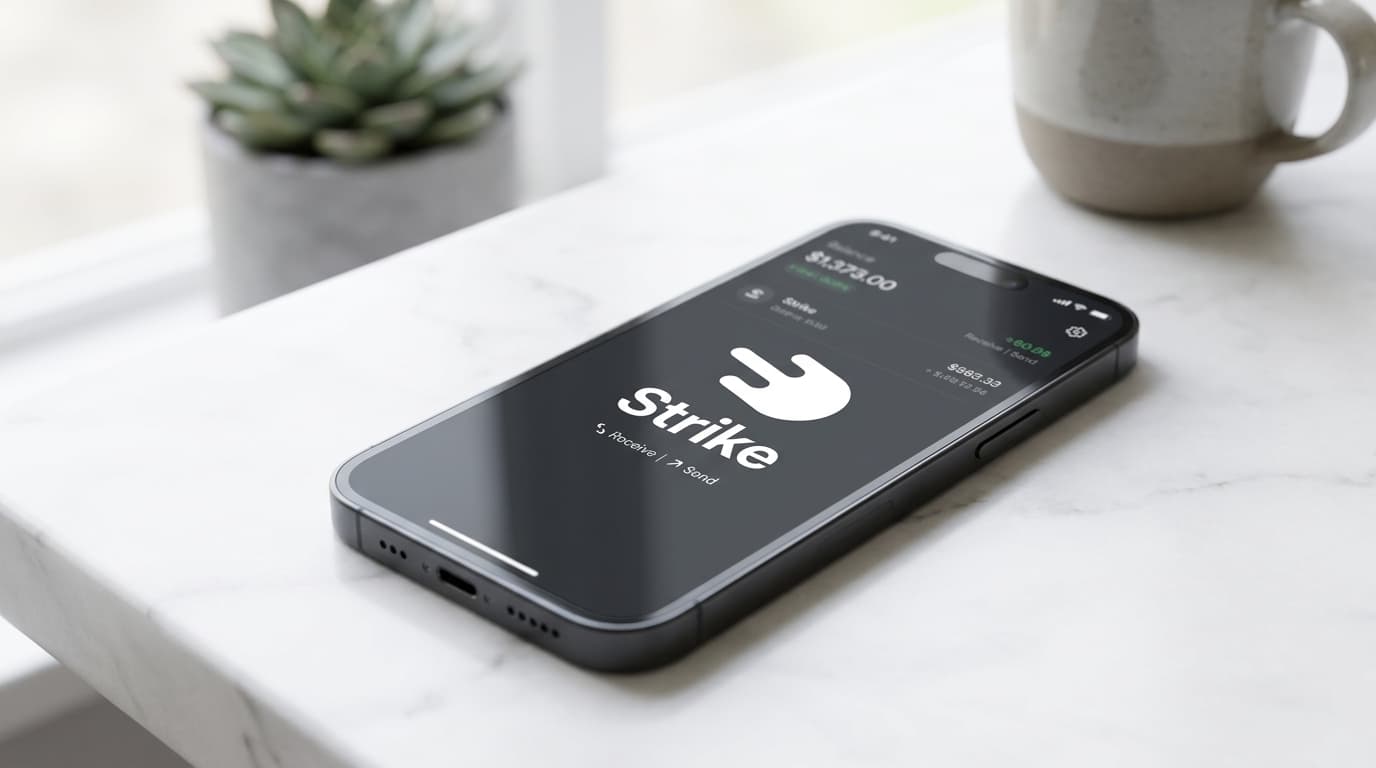
Strike is a Bitcoin-first payments app built on the Lightning Network. The pitch is simple: send money anywhere in the world, nearly instantly, for pennies. No Bitcoin knowledge required.
Users link a bank account, fund their balance in local currency, and send payments. On the backend, Strike converts to Bitcoin, routes through Lightning, and converts back to fiat on the receiving end. The recipient in Kenya or the Philippines gets local currency in their bank account or mobile money wallet. They never have to touch crypto.
For users who actually want Bitcoin, Strike supports buying, holding, and withdrawing to self-custody wallets. The app has evolved into something closer to a Bitcoin financial hub, with features like:
- Recurring purchases with effectively zero fees after an initial period
- Pay Me in Bitcoin for US users to direct-deposit salary into BTC
- Virtual USD accounts for international users (launched July 2025)
- Bitcoin-backed loans starting at roughly 9.5% APR in the US, 10.5% globally
- Send Globally for remittances to 100+ countries
The mobile app scores around 4.8 out of 5 on Apple's App Store (27,000+ ratings) and roughly 4.6 on Google Play. Users consistently describe the experience as feeling like Cash App, but with Lightning payments underneath.
Fee Structure After the 2024 Overhaul
Strike revamped its fees in February 2024, moving from an opaque spread model to explicit tiered trading fees:
| Monthly Volume | Fee |
|---|---|
| Under $250 | 0.99% |
| $250 - $15M | Declining tiers |
| Over $15M | 0.39% |
Recurring DCA purchases become fee-free after an initial week or purchase, making Strike competitive with River and Swan for accumulation strategies. The difference is that Strike layers in Lightning payments and global remittances as integrated features, while those competitors remain US-only.
Lightning payments between Strike users are free. External Lightning payments typically run about 0.15% plus roughly 1% spread when currency conversion is involved. For on-chain Bitcoin withdrawals, Strike covers network fees on their "Flexible" delivery option, making withdrawals to self-custody wallets effectively free.
The Global Remittance Play
Strike has leaned hard into international payments, particularly in Africa. The company reported rapid adoption in Nigeria, Kenya, and South Africa during 2024, driven by demand for alternatives to high-fee legacy banking and unstable local currencies.
Independent tests and user reports show Strike moving $200 remittances for roughly $2-3 in total cost. Traditional remittance services in African and Latin American corridors often charge double-digit percentages plus unfavorable exchange rates.
The April 2024 European launch (excluding the UK) positioned Strike as MiCA-ready, and by 2026 the app serves users across the Americas, Europe, Africa, Asia-Pacific, and the Middle East. For Bitcoin-focused users in emerging markets, Strike is one of the few regulated options available.
Bitcoin-Backed Loans
Strike launched bitcoin-backed loans in select US states in May 2025, expanding globally in July 2025 to markets including Argentina, Brazil, Costa Rica, El Salvador, South Korea, and New Zealand (for businesses).
The terms are relatively straightforward: post Bitcoin as collateral, borrow dollars without selling, repay with no origination or early-repayment fees. Starting APRs run about 9.5% in the US and 10.5% internationally.
The risk is obvious: if Bitcoin's price drops sharply, you face margin calls and potential liquidation. This isn't a savings account. It's leverage, with all the downside exposure that implies.
The Custodial Tradeoff
Here's where Strike gets complicated for the Bitcoin community.
The app is fully custodial. Strike manages Lightning channels and holds private keys on behalf of users. You only gain true control once you withdraw to a self-custody wallet. USD balances are held via Cross River Bank with FDIC insurance up to $250,000, but Bitcoin balances are not insured.
Strike emphasizes that customers are the "beneficial owners" of their Bitcoin, but legal precedent in a bankruptcy scenario hasn't been tested. The 2022-2023 crypto custodial failures (Celsius, Voyager, FTX) demonstrated how theoretical ownership claims can evaporate in insolvency proceedings.
For the privacy-conscious, Strike requires full KYC onboarding, uses Plaid for bank-account linking, and implements AML controls including travel-rule information sharing in Europe and the UK. Critics argue this recreates many surveillance and choke-point dynamics of traditional banking, just on Bitcoin rails.
The Support Problem
App store ratings tell one story. Trustpilot tells another.
As of early 2026, Strike has an average Trustpilot score around 2.5 out of 5 based on roughly 127 reviews. The negative feedback clusters around account closures, fund holds, and slow support responses.
Multiple user reports on Reddit and Trustpilot from 2024-2025 describe accounts being flagged as "high scam risk" or for "terms of service violations," with balances sometimes frozen for 60 days or more before eventual release. Some new users reported withdrawal delays of up to a week after their first bank transfer funding, particularly for initial moves to cold storage.
The pattern suggests a split experience: most users who stay within typical limits and avoid edge-case behaviors report frictionless service. A visible minority who trigger anti-fraud systems encounter opaque holds and sluggish resolution. This mirrors the traditional banking experience more than most Bitcoin products would prefer.
Security and Regulatory Standing
Strike operates as a registered Money Services Business in the US, regulated by FinCEN, with money-transmitter licenses in multiple states. No major security breaches have been publicly disclosed as of early 2026.
In June 2025, Strike added passkey-based two-factor authentication, hardware security key support, and "Protected Actions" requiring extra verification for sensitive operations like withdrawals. These are meaningful improvements for a custodial service.
The September 2025 JPMorgan decision to close Jack Mallers' personal banking accounts (reportedly citing "concerning activity") sparked debate about banks' treatment of crypto entrepreneurs but didn't directly impact Strike's operations.
Who Strike Is Actually For
Strike makes the most sense for three groups:
Remittance users who want to send money internationally faster and cheaper than Western Union or traditional bank wires. The recipient doesn't need to understand Bitcoin; they just receive local currency.
DCA accumulators who want a simple, low-fee way to stack sats regularly and occasionally withdraw to self-custody. The combination of free recurring buys and free on-chain withdrawals is genuinely competitive.
Lightning-curious users who want to use Bitcoin's payment layer without running infrastructure. Strike handles the complexity of channel management while letting you scan invoices and send payments instantly.
Strike is a poor fit for:
Privacy-focused Bitcoiners who want to avoid KYC and minimize their financial surveillance footprint. Strike requires identity verification and bank linking, period.
Desktop-first users who prefer managing Bitcoin from a computer. Strike remains mobile-only with no browser interface.
Users who need altcoin support. Strike is Bitcoin-only with USDT support in select regions. No Ethereum, no shitcoin casino.
The Honest Assessment
Strike has gotten closer than any competitor to making Lightning Network payments genuinely accessible to non-technical users. The app feels like Venmo, the fees are reasonable, the global reach is impressive, and the additional features (loans, virtual USD accounts, payroll integration) create a legitimate Bitcoin financial ecosystem.
The company reported profitability and 85% gross margins in 2024. The $80 million Series B raised in 2022 funded expansion without apparent desperation moves. Jack Mallers claims the company holds Bitcoin on its corporate treasury, aligning incentives with users.
But Strike works precisely because it embraces the tradeoffs that hardcore Bitcoiners reject. Full KYC. Custodial control. Aggressive fraud filtering that occasionally catches innocent users. Plaid integration that shares banking data with third parties.
If you want self-sovereignty and privacy, Strike isn't your tool. If you want your mom to be able to send money to your sister in Manila for a few dollars instead of forty, Strike is probably the best option available.
The emerging consensus among independent reviewers is accurate: Strike is the closest thing to a Lightning app for normies that actually works at scale. It achieves this by sacrificing self-custody, privacy, and some due-process clarity in exchange for mainstream-grade UX and regulatory compliance.
That's a legitimate product. It's just not the Bitcoin revolution some people imagined.