
How to Track Bitcoin Mining Hardware ROI Using Altair Tech's Profitability Calculator
Learn how to use Altair Tech's profitability calculator to assess home mining ROI, understand key variables, and make informed hardware decisions.
A Bitcoin miner running at 390 TH/s might generate $3 to $5 in daily net profit at $0.07 per kWh electricity rates. At typical residential rates above $0.12 per kWh, that same machine could be losing money every hour it runs. The difference between these scenarios is exactly why profitability calculators matter, and why understanding what goes into them is essential before buying any mining hardware.
Altair Tech, a US-based Bitcoin mining hardware supplier, offers both the equipment and the analytical tools to help miners navigate these calculations. Whether you're considering a 1-watt NerdMiner V2 as a learning project or a commercial-grade Sealminer A2 Pro for serious hashing, the underlying math follows the same principles.
What Goes Into a Mining Profitability Calculator
Every serious Bitcoin mining profitability calculator, whether from Altair Tech, Luxor, Bitmain, or CoinWarz, works from the same fundamental inputs:
Hashrate determines how much computational power your machine contributes to the network. This is measured in terahashes per second (TH/s) for industrial equipment or kilohashes per second (kH/s) for micro-miners.
Power consumption tells you how many watts your miner draws continuously. Modern efficient units run around 15-16 joules per terahash (J/TH).
Electricity cost is where most ROI calculations live or die. Industry analysis from late 2025 consistently shows that profitable mining requires all-in power costs around $0.06-$0.07 per kWh. At typical US residential rates, margins become razor-thin or negative.
Hardware cost establishes your initial capital outlay and determines how long you need to operate profitably before breaking even.
Network conditions, including difficulty and hashprice (revenue per petahash per day), fluctuate constantly and determine what your hashrate actually earns.
Using the Calculator Responsibly
The trap with any profitability calculator is treating its output as a prediction rather than a scenario. A snapshot showing $4.50 daily profit today tells you nothing about next month when difficulty could jump or Bitcoin's price could swing 20%.
Better practice involves running multiple scenarios. What happens if difficulty rises 10%? What if your electricity provider raises rates? What if Bitcoin drops to half its current price? The goal isn't to find the one "right" answer but to understand the range of possible outcomes.
Altair Tech's calculator, like other industry-standard tools, lets you adjust these variables to model different futures. The more realistic you are about your actual costs and the more conservative you are about network conditions, the less likely you are to be surprised.
Tracking ROI Over Time
A profitability calculator gets you started, but tracking actual ROI requires ongoing discipline. Best practice involves logging each miner as an asset with its purchase price, then tracking cumulative net mining revenue against that baseline.
Net revenue means block rewards plus transaction fees, minus pool fees, electricity costs, hosting expenses, and maintenance. You can verify your mining payouts and block rewards using a blockchain explorer like Blockstream.info to cross-reference what your pool reports.
ASIC hardware typically depreciates over 24 to 36 months as newer, more efficient machines make older models less competitive. Your realized ROI should account for this declining asset value, not just cash flows.
Expert guidance in 2026 increasingly emphasizes metrics beyond simple daily profit. Levelized Cost of Mining (LCOM) tells you what it costs you to mine one bitcoin across your hardware's lifetime. Internal rate of return (IRR) helps you compare mining against simply buying and holding Bitcoin. These aren't just academic exercises; they're how you determine whether mining makes sense for your situation.
Industrial Hardware vs. Lottery Mining
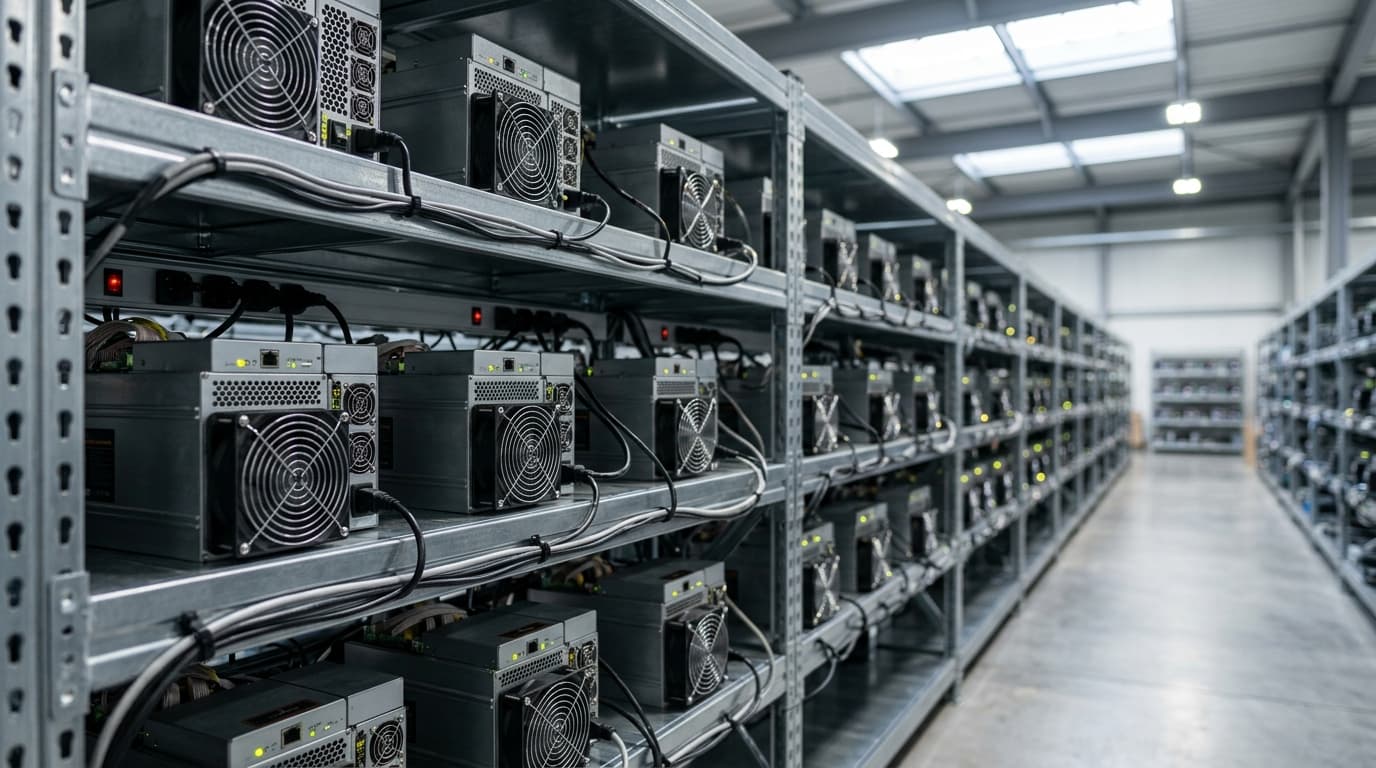
Altair Tech's catalog spans a wide range, from commercial units like the Bitdeer Sealminer A2 Pro and Bitmain Antminer S21 Pro to home-oriented devices like the Canaan Avalon Q and the NerdMiner V2.
For industrial hardware, ROI tracking is straightforward capital budgeting. Independent tests from 2025 show typical payback periods of 20 to 28 months for efficient miners at mid-tier power costs of $0.07-$0.09 per kWh. These are real investment decisions with real money at stake.
The NerdMiner V2 represents something fundamentally different. At roughly 1 watt and around 55 kH/s, it's what Altair describes as a "lottery miner." Most large mining pools won't even credit shares from devices below 1 TH/s, so these micro-miners typically run on solo or specialized pools like public-pool.io.
For these devices, the right mental model isn't expected cash yield but an option-like lottery payoff. The base case is a perpetual small loss equal to your electricity cost (trivial at 1 watt), with an extremely tiny probability of finding a block and earning the full reward. The NerdMiner V2 makes sense for education, for participating in the network on principle, or simply as a conversation piece. It doesn't make sense as a capital investment with expected returns.
When Home Mining Makes Financial Sense
The math is unforgiving. If you're paying more than about $0.10-$0.12 per kWh for electricity, home mining faces severe headwinds. That doesn't mean it's impossible, just that your margins will be thin and your payback period long.
Before purchasing any hardware, run realistic numbers through a profitability calculator. Use your actual electricity rate, not some optimistic assumption. Factor in cooling costs if your miner will heat up a room that you'd otherwise air condition. Consider noise and the domestic logistics of running industrial equipment.
Some home miners find creative solutions: using miner heat to warm their homes in winter, running equipment only during off-peak electricity hours, or locating hardware in spaces where noise isn't an issue. These approaches can shift the economics meaningfully.
Making Informed Decisions
Altair Tech's profitability calculator gives you a starting point, not an ending point. The value isn't in any single number it produces but in understanding how hashrate, power costs, difficulty, and Bitcoin price interact to determine your returns.
Monitor profitability regularly, not just at purchase time. Expert commentary consistently emphasizes that operators should be ready to power down or relocate hardware when hashprice falls below their levelized cost of mining. A miner that made sense six months ago might not make sense today.
For industrial operations, Altair's consulting services can help with farm design and ongoing maintenance, turning the company into a long-term partner rather than just a hardware vendor. For hobbyists, the combination of accessible micro-miners and honest profitability tools provides a genuine entry point into understanding how Bitcoin mining works, even if the expected financial returns are negligible.
The bottom line: calculators are tools, not oracles. Use them to understand scenarios, track your actual results over time, and adjust your strategy as conditions change. That's how you turn theoretical ROI projections into informed operational decisions.