
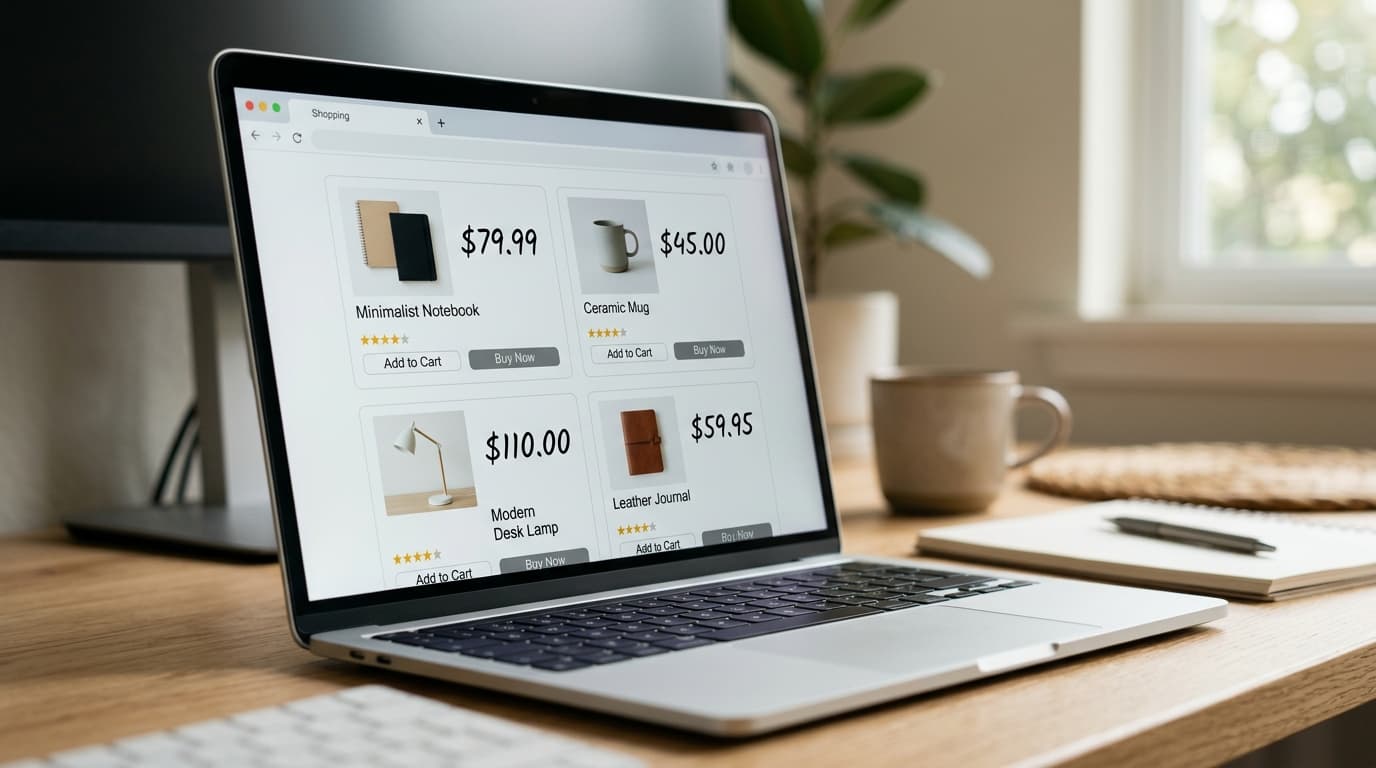
How to Train Your Bitcoin Spending Habits with the Opportunity Cost Extension
Learn how to build better spending discipline by converting every price you see online into sats using the Opportunity Cost browser extension.
A $50 impulse purchase feels different when you see it as 80,000 sats you could have stacked instead. That shift in perception, from abstract fiat numbers to tangible Bitcoin units, is the foundation of sound spending discipline. And it turns out there's a simple browser extension that makes this mental shift automatic.
The challenge facing Bitcoin holders in 2026 isn't just market volatility (we've seen Bitcoin swing from $82,000 to $126,000 in a five-month window). It's the psychological gap between knowing Bitcoin's value intellectually and feeling it viscerally when browsing Amazon at midnight.
Why Your Brain Treats Bitcoin Differently
Mental accounting research from the Federal Reserve Bank of St. Louis (March 2026) confirms what many Bitcoiners suspect: we categorize money by its source. Gift money and market gains feel psychologically "lighter" to spend than earned income, even when the funds are economically identical. This creates irrational spending patterns where we protect our paycheck while letting crypto gains slip through our fingers.
The FDIC found in 2024 that Bitcoin holders have a $0.09 marginal propensity to consume from crypto wealth gains, meaning for every dollar their holdings appreciate, they spend about nine cents more. That's significantly higher than the spending response to unrealized stock gains. Something about crypto wealth makes us more likely to spend.
Add Bitcoin's inherent volatility to these psychological quirks, and you get a recipe for poor spending decisions. A 2023 behavioral economics analysis in Bitcoin Magazine found that price swings trigger heuristic-driven decision-making, particularly loss aversion and anchoring. During price declines, holders become paralyzed. During rallies, the "house money effect" kicks in and spending feels painless.
Neither mental state leads to intentional spending aligned with your actual values and goals.
The Opportunity Cost Framework
The antidote to these biases is forcing yourself to confront opportunity cost in real-time. Every purchase has a Bitcoin cost, not just a dollar cost. That streaming subscription isn't $15 per month; it's roughly 24,000 sats at current prices. The question isn't whether you can afford it in fiat. The question is whether the service delivers more value than holding those sats.
Opportunity Cost is a free browser extension that automates this mental conversion. Once installed, it transforms every price you encounter online into Bitcoin or sats, making the opportunity cost of spending impossible to ignore.
The extension works across websites, from retail sites to news articles mentioning prices. You don't need to pull out a calculator or check an exchange rate. The conversion happens in place, replacing or supplementing the fiat price with its Bitcoin equivalent.
Setting Up Your Spending Discipline System
Installing the extension takes about thirty seconds. Visit the Chrome Web Store or your browser's equivalent extension marketplace, add Opportunity Cost, and you're immediately seeing prices in sats. The zero-friction setup means there's no excuse not to try it.
But installation is just the first step. To actually train better spending habits, you need to engage with what you're seeing.
The 24-Hour Sat Rule
When you encounter a non-essential purchase and see its sat equivalent, wait 24 hours before buying. This isn't about deprivation; it's about breaking the instant gratification loop that e-commerce sites are designed to exploit. Most impulse purchases feel less compelling after a day of reflection, especially when you've internalized what that sat amount could become.
The Category Budget Method
Pick a spending category where you tend to overspend, maybe dining out, subscriptions, or hobby gear. Set a monthly sat budget for that category. When the extension shows you prices, you can mentally track how each purchase chips away at your allocation. This works because it's specific and measurable, not a vague intention to "spend less."
The Screenshot Journal
For the first month, screenshot interesting price conversions you encounter. A $200 pair of headphones displayed as 320,000 sats creates a visual record you can review later. Content creators and Bitcoin educators will find these screenshots useful for social media posts and presentations, but the practice benefits anyone trying to rewire their spending intuitions.
Counterarguments Worth Considering
Not everyone agrees that extreme spending vigilance is healthy or even rational. Critics point out that Bitcoin's purchasing power will fluctuate regardless of your spending habits, and that excessive frugality can become its own psychological trap. If you're not enjoying your life because every coffee purchase triggers opportunity cost anxiety, you've overcorrected.
There's also the argument that spending Bitcoin (or selling it to spend fiat) creates necessary economic activity and liquidity. Glassnode's UTXO analysis from December 2024 showed that Bitcoin aged beyond four years exhibits progressively lower spending probabilities, following a power-law relationship. Some analysts worry that if everyone becomes a permanent holder, Bitcoin's utility as a medium of exchange diminishes.
The reasonable middle ground is intentional spending, not zero spending. The goal isn't to never buy anything. It's to ensure your purchases reflect deliberate choices rather than psychological biases or marketing manipulation.
The Long-Term Mindset Shift
Using a sat price converter consistently produces a gradual but noticeable effect. After a few weeks, you start thinking in sats without the extension's help. You mentally convert prices at physical stores. You evaluate purchases against your Bitcoin stack before your bank balance.
This shift aligns with how long-term Bitcoin holders already think. The Kraken market analysis from January 2026 noted that Coin Days Destroyed reached record levels in Q4 2025, meaning long-term holders were keeping their coins longer before spending. While some of this reflects institutional behavior from ETFs and corporate treasuries, individual holders can cultivate the same discipline.
The NIH study from 2021 (still widely cited in current behavioral research) found that financial self-efficacy was a primary motivator for Bitcoin adoption. People who feel in control of their financial decisions experience less money-related anxiety. Seeing prices in sats reinforces that sense of control; you're not just a passive consumer responding to price tags, but an active allocator weighing every purchase against your long-term goals.
Making It Sustainable
The best spending discipline system is one you actually maintain. If aggressively converting every price into sats makes you miserable, dial it back. Use the extension on shopping sites but not news articles. Set it to display both fiat and sat prices rather than replacing the original.
The point is building awareness, not punishment. When you see that a weekend getaway costs 2 million sats, you might still choose to take the trip. But you'll make that choice consciously, weighing the experience against the Bitcoin you're exchanging for it.
With 2026 price forecasts ranging from bearish $60,000 to bullish $400,000+, nobody knows exactly what those sats will be worth in five years. What you can control is whether your spending reflects your actual priorities or just your susceptibility to marketing. Training yourself to see opportunity cost is the first step toward spending like you mean it.