
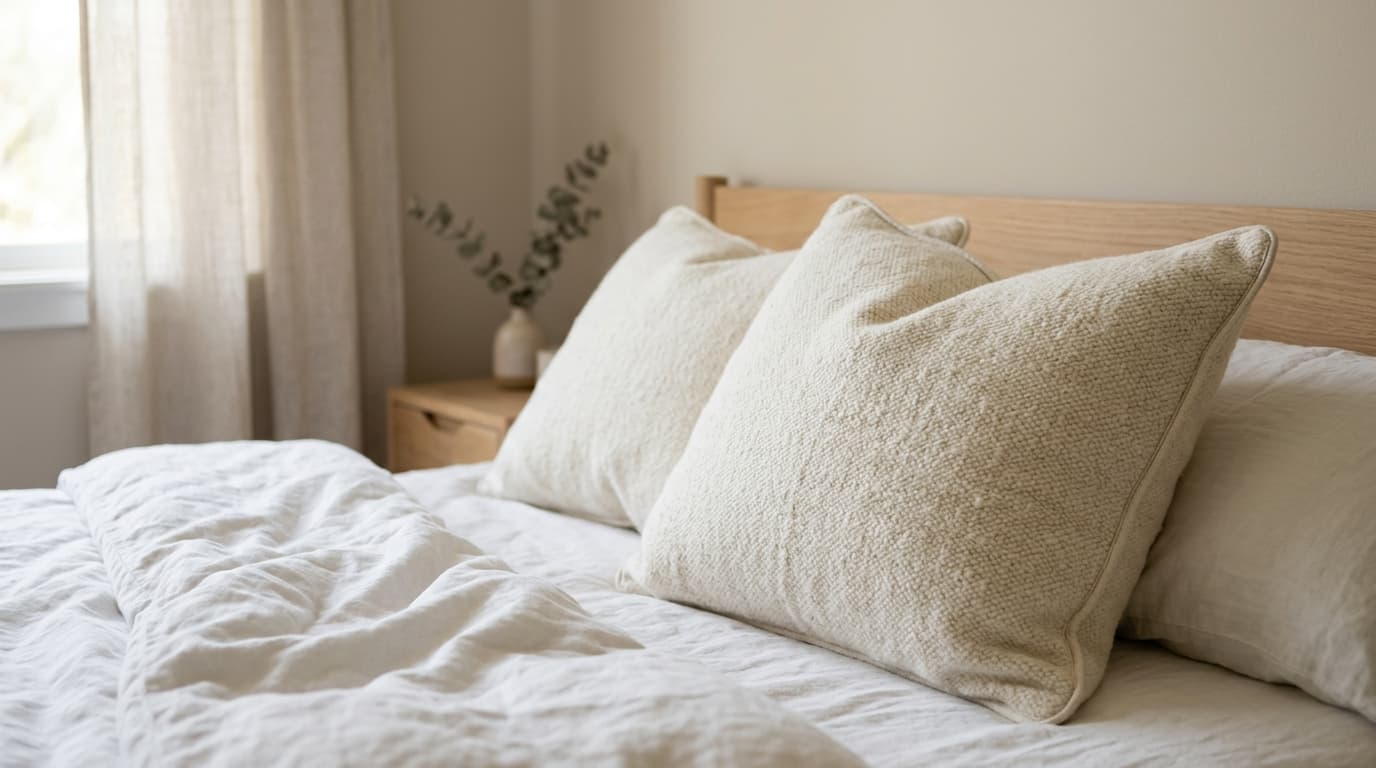
The Woolshire Organic Wool Pillows After 6 Months of Research and User Reports
Research-based review of The Woolshire organic wool pillows covering comfort, temperature regulation, durability, and how they compare to synthetic options.
Most pillows start failing you within a year. The foam compresses, the synthetic fill clumps, and those flame retardant chemicals you tried not to think about keep doing whatever they do inches from your face for eight hours every night. The Woolshire offers a different proposition: handcrafted organic wool pillows designed to last decades, not months.
But do they actually hold up? After reviewing six months of user reports, company documentation, and comparing them against the broader wool pillow market, here's what the evidence shows.
What Makes These Pillows Different
The Woolshire pillows are made in Idaho using virgin wool sourced from Northwest U.S. sheep farms, wrapped in organic Texas cotton. No synthetic fills, no memory foam, no chemical flame retardants. The company emphasizes this isn't just about comfort; it's about what you're not breathing in while you sleep.
For anyone who's researched the chemicals in conventional bedding, from the polyurethane foam off-gassing to the microplastics shedding from synthetic fills, the appeal is obvious. Wool naturally resists dust mites and mildew, regulates temperature, and wicks moisture away from your body. These aren't marketing claims; they're well-documented properties of the material itself.
The pillows come in multiple sizes with customizable fill levels ranging from 1 to 2.25 pounds of wool. This matters more than most people realize. A pillow that works for a side sleeper needs different loft than one for back sleepers, and being able to adjust that fill level lets you dial in actual support rather than compromising.
The 6-Month Reality Check
Here's where honesty about available evidence matters. Independent long-term testing from major publications like Consumer Reports or Sleep Foundation simply doesn't exist for The Woolshire pillows as of early 2026. They're a smaller operation, and premium organic bedding rarely gets the same review attention as mass-market mattresses.
What we do have is user feedback. A Reddit user in the plastic-free living community reported using a full-size Woolshire pillow nightly for six months (since approximately June 2025), paired with a silk pillowcase. Their verdict in December 2025: "very happy" with it. That's one data point, not a clinical study, but it's real-world usage.
The company's own claims acknowledge that wool pillows compress slightly over the first six months of use. This isn't a defect; it's how natural materials behave. They guarantee to add more wool free within the first year if your pillow compresses too much. Whether customers actually need to use this guarantee isn't something we can quantify from available data.
General discussions about wool pillows (not Woolshire specifically) suggest compression of around 30% over time is normal, though regular fluffing helps maintain loft. If your pillow goes completely flat during sleep, that typically indicates insufficient fill rather than material failure.
Comparing Wool to Memory Foam and Synthetic Fills
Memory foam dominates the pillow market because it's cheap to manufacture and provides that initial "melting into the pillow" sensation people associate with comfort. But the tradeoffs are significant.
Memory foam retains heat. If you sleep hot or live in a humid climate, you're fighting against the material rather than working with it. Wool's temperature-regulating properties actively move moisture away from your body and adapt to ambient conditions.
Synthetic fills, whether polyester fiberfill or down alternatives, create environments where dust mites thrive. For allergy sufferers, this means the pillow itself becomes a trigger over time. Wool's natural lanolin creates an inhospitable environment for these common allergens.
Then there's the longevity question. Most conventional pillows are functionally disposable, needing replacement every 1-2 years. The Woolshire claims their pillows last decades with proper care. We can't verify multi-decade durability from a company that's relatively young, but the underlying premise is sound: natural materials maintained properly outlast engineered synthetics designed for planned obsolescence.
What the Review Landscape Tells Us
The Woolshire reports approximately 98% five-star satisfaction across their reviews, though the total volume appears to be in the low hundreds rather than thousands. They don't appear in major 2026 best-of roundups for organic or wool pillows from publications like Forbes Vetted or The Good Trade.
This absence isn't necessarily a negative judgment. Smaller artisan producers often get overlooked in favor of brands with bigger marketing budgets and easier availability. It does mean you're making a decision with less third-party validation than you'd have for mainstream options.
The company owner posted in January 2026 about sleeping poorly on a non-Woolshire hotel pillow after four years of exclusive use. Take that for what it's worth; obviously the founder believes in their product. But it does suggest the kind of personal investment behind a small family operation versus a corporate bedding brand.
Who Should Consider This Purchase
Health-conscious families prioritizing non-toxic sleep environments will find exactly what they're looking for here. If you've been researching the chemicals in memory foam, the microplastics in synthetic fills, or the flame retardants sprayed on conventional bedding, The Woolshire offers a genuinely clean alternative.
Parents seeking safe bedding for toddlers over age 2 can choose the dedicated toddler pillow ($74), designed with appropriate firmness to reduce suffocation risks while supporting developing necks.
Allergy sufferers benefit significantly from wool's natural resistance to dust mites and mildew. Those in humid climates or who sleep hot will appreciate the moisture-wicking and temperature-regulating properties that synthetic pillows simply cannot match.
Anyone who values supporting small family businesses, domestic manufacturing, and traditional craftsmanship over mass-produced imports will appreciate the philosophy behind this cottage economy operation. It's the kind of intentional, quality-focused business that aligns with building generational wealth and rejecting disposable consumer culture.
The Bottom Line
The Woolshire organic wool pillows represent a fundamentally different approach to something you use for a third of your life. The materials are clean, the construction is thoughtful, and the limited user feedback available skews positive.
What we can't tell you with certainty is exactly how your specific pillow will perform over years of use. The independent testing infrastructure simply hasn't caught up with artisan organic bedding. You're buying based on material properties, company guarantees, and the logic that natural, well-made things tend to outlast synthetic, mass-produced alternatives.
For many people, that's enough. The worst-case scenario is a pillow that needs more fill added under warranty during the first year. The best case is decades of comfortable, chemical-free sleep. Given what we know about conventional pillow alternatives, that's a bet worth considering.