
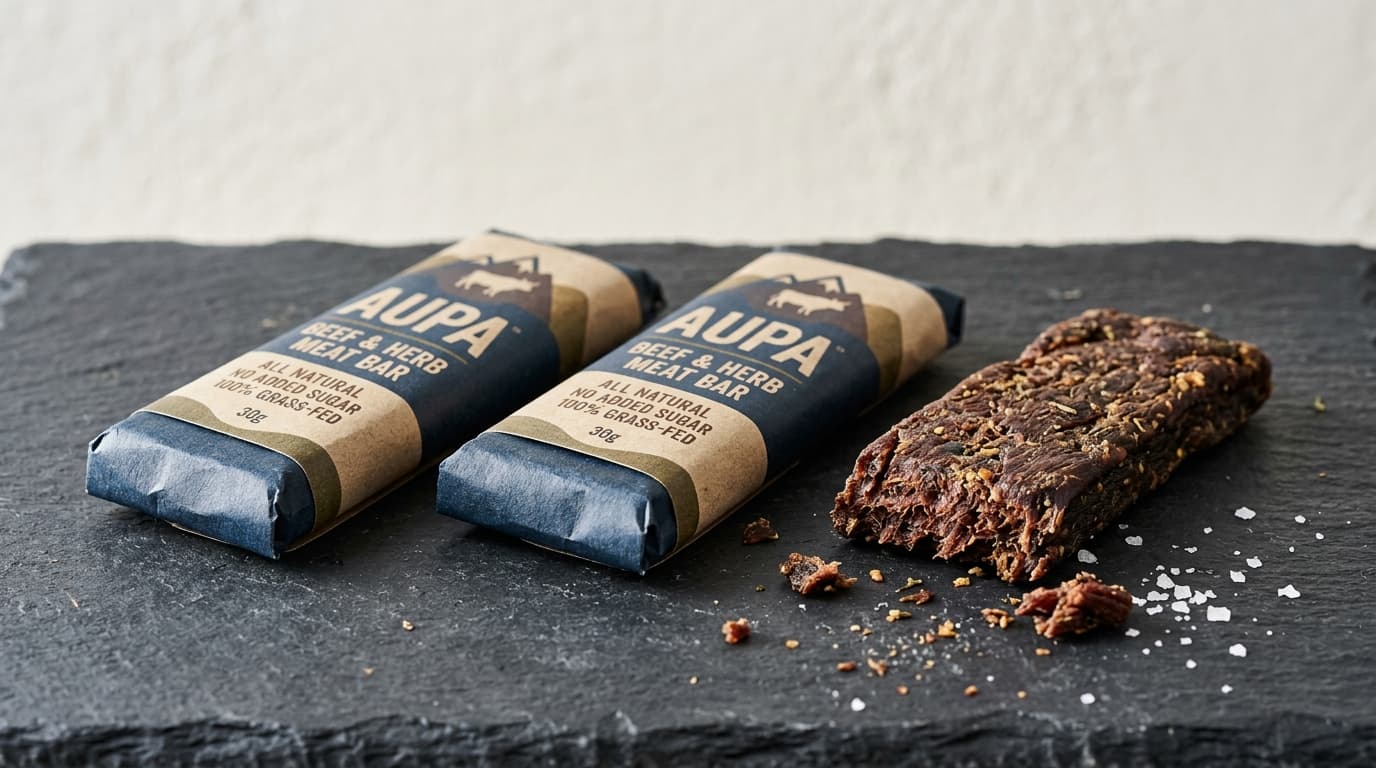
Aupa Meat Bars After Six Months on a Carnivore Diet, A Research-Based Review
A detailed look at Aupa's regenerative meat bars for carnivore dieters, covering ingredients, taste, satiety, and whether the Bitcoin discount justifies the price.
Finding portable food that doesn't betray your dietary principles is one of the quieter frustrations of eating carnivore. Most protein bars are dressed-up candy, loaded with seed oils, soy isolates, and sweeteners that defeat the purpose. Aupa, a Colorado-based company, claims to have solved this problem with meat bars built around grass-fed beef, butter, and tallow. But after examining six months of user reports and independent reviews from carnivore dieters who've made these bars a daily staple, the picture is more nuanced than the marketing suggests.
What's Actually in These Bars
Aupa's ingredient philosophy centers on simplicity. The Apex bar, their strictest carnivore option, contains beef, bison, butter, tallow, and minimal honey. That's it. No whey isolates, no fiber additives, no sugar alcohols pretending to be health food.
The fruit-and-nut variations (Blueberry Almond, Cranberry Pecan) add dried fruit and nuts to the base, which means they're better suited for animal-based eaters following a more flexible approach rather than strict carnivore adherents. Independent guides to carnivore-compliant bars generally advise that legitimate options should have no more than three to five animal-derived ingredients. By that standard, Aupa's plainest offerings qualify, while the flavored versions accommodate those who've reintroduced some plant foods.
The sourcing story matters here. Aupa sources grass-fed beef from Wrich Ranches and Flying B Bar Ranch in Colorado, both of which practice regenerative grazing. This translates to potentially higher omega-3s, CLA, and fat-soluble vitamins compared to conventional feedlot beef, though the magnitude of these differences varies by study and season.
Texture and Taste, Closer to Pemmican Than a Candy Bar
Multiple 2025 reviews describe Aupa bars as having a "soft-crunchy" texture created by dehydrated and powdered meat. If you're expecting the chewy sweetness of a mainstream protein bar, you'll be disappointed. These taste like actual meat mixed with fat, because that's what they are.
Reviewers consistently compare the experience to pemmican, the traditional survival food of rendered fat and dried meat. The flavor is savory-fatty rather than sweet, which takes adjustment if your palate still expects bars to taste like dessert. Users who've stuck with them for months report the savory profile becomes preferable, but the first few bars can feel strange.
Satiety and Daily Use
The high fat and protein content appears to deliver sustained energy without blood sugar spikes, based on user reports. Carnivore dieters who've incorporated these bars into daily routines (as meal replacements during travel, post-workout fuel, or emergency food) consistently note that one bar holds them for several hours.
This makes sense biochemically. Fat provides nine calories per gram versus four for protein or carbohydrates, and the combination slows gastric emptying. For hikers, busy professionals, or anyone who needs calorie-dense food that doesn't require refrigeration, the format works.
However, it's worth noting that no clinical research exists specifically on Aupa bars. Any claims about long-term health impacts must be inferred from their ingredient profile and broader research on high-fat, animal-based diets. Mainstream medical sources continue to emphasize that strict carnivore eating patterns warrant medical supervision beyond a few months, particularly regarding micronutrient balance and cardiovascular markers.
The Price Question
Aupa bars are expensive. Every 2025 review addressing cost acknowledges this directly. Per serving, they cost significantly more than conventional jerky or mainstream protein bars. The premium reflects grass-fed sourcing, regenerative ranching relationships, and small-batch production, but it's still a meaningful consideration.
The calculus changes somewhat if you're paying with cryptocurrency. Aupa accepts Bitcoin and Monero, with discounts for crypto payments. For Bitcoiners who prefer to spend and replace rather than maintain fiat accounts for purchases, this makes Aupa one of the few specialty food companies that genuinely rewards the Bitcoin community. A 2025 YouTube review walked through paying for an Aupa variety pack with Monero, noting the discount code and the appeal for privacy-conscious buyers.
Whether the price is "worth it" depends on what you're comparing against. Versus gas station jerky with questionable ingredients and added sugar, the gap narrows. Versus cooking your own meat at home, nothing portable will compete on cost.
Who These Are Actually For
Based on available evidence, Aupa bars make the most sense for:
- Strict carnivore dieters who need grab-and-go options (stick to the Apex flavor)
- Animal-based eaters with some flexibility who want the fruit-and-nut varieties
- Travelers and hikers who need shelf-stable, calorie-dense food without refrigeration
- Bitcoin holders who want to spend crypto on quality food and capture the payment discount
- Parents following ancestral health protocols looking for kids' lunch options
They're less suited for budget-conscious shoppers prioritizing cost per gram of protein, or anyone who expects bars to taste like traditional snacks.
The Bottom Line
Aupa has built a product that solves a real problem: portable nutrition for meat-based dieters that doesn't compromise on ingredient quality. The regenerative sourcing, simple ingredient lists, and crypto payment options align with the values of their target audience. The bars taste like what they are (meat and fat), not what marketing pretends protein bars should be.
The premium price and savory flavor profile will filter out casual buyers, which seems intentional. For those who've committed to carnivore or animal-based eating and need convenient options that don't require explanation or apology, Aupa delivers. Just understand that you're paying for sourcing transparency and ingredient purity, not clinical proof of health benefits that doesn't yet exist.
If you're curious, starting with a variety pack paid in Bitcoin makes sense. You'll know within a few bars whether the texture and taste work for you, and the crypto discount softens the cost of experimentation.