
Bitcoin Hits $76,500 as NYDIG Expands Into Alcoa's Former New York Smelter
NYDIG nears deal to acquire Alcoa's idle 435 MW Massena East smelter for Bitcoin mining, signaling institutional infrastructure expansion.
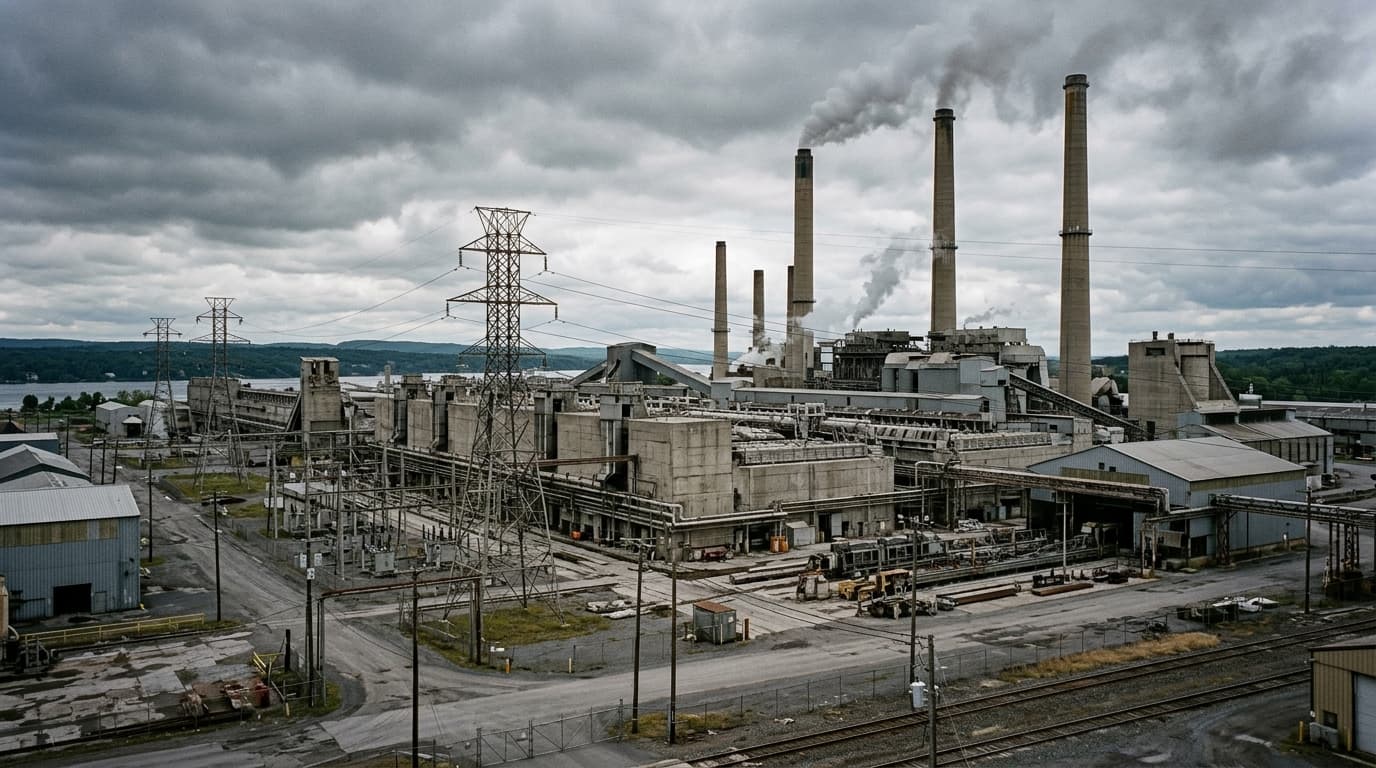
A 1,300-acre aluminum smelter that went dark in 2014 is about to become one of the largest Bitcoin mining operations in the United States. NYDIG is in advanced talks to acquire Alcoa's idle Massena East facility in upstate New York, a deal that would give the institutional mining giant access to 435 megawatts of hydropower capacity and signal a broader trend of crypto companies repurposing America's dormant industrial infrastructure.
The news comes as Bitcoin trades around $77,800 to $78,200, recovering from recent lows near $75,000 but still down over 22% from its October 2025 all-time high above $126,000. The price briefly touched $76,500 on April 19 before climbing higher, buoyed partly by geopolitical tensions and oil price volatility.
What NYDIG Is Buying
The Massena East site isn't starting from scratch. Coinmint, a mining operator in which NYDIG took a stake in October 2024, already runs approximately 54,000 miners at the facility using 166 MW of the available hydropower from the New York Power Authority. The acquisition would give NYDIG room to nearly triple that capacity without the years-long permitting battles and infrastructure buildouts that typically plague new mining developments.
The site currently employs 85 workers, with expansion anticipated after the sale closes, expected by mid-2026.
This follows NYDIG's March 2025 acquisition of Crusoe Energy's mining business, which added over 270 MW to its portfolio. The pattern is clear: institutional miners are buying their way to scale rather than building from the ground up.
Why Old Smelters Make Good Mining Sites
Aluminum smelting and Bitcoin mining share a fundamental requirement: massive amounts of cheap electricity. Smelters were built with robust grid connections, industrial-grade electrical infrastructure, and often preferential power agreements. When aluminum production became uneconomical due to high energy costs (the reason Massena East went idle), these sites retained all that infrastructure with nothing to use it.
Alcoa has reportedly been in discussions to divest roughly 10 dormant U.S. smelters to data centers and mining operations. The company posted $425 million in net income for Q1 2026, boosted by aluminum prices, but clearly sees more value in selling stranded assets than in hoping for a manufacturing revival.
For miners, these sites offer something money alone can't quickly buy: existing permits, community relationships, trained workforces familiar with 24/7 industrial operations, and electrical capacity that would take years to replicate from scratch.
What This Means for Smaller Miners
NYDIG's infrastructure play highlights an uncomfortable reality for retail miners: scale matters enormously in this business. A 435 MW facility with hydropower can negotiate rates and achieve efficiencies that someone running a few ASICs in their garage simply cannot match.
That doesn't mean smaller operators are locked out. Hosting services like Simple Mining offer a middle path, providing access to institutional-grade infrastructure at $0.07-0.08/kWh all-in rates across their U.S.-based data centers. For miners who want exposure to Bitcoin mining without the capital requirements of building their own facility (or acquiring an aluminum smelter), these turnkey solutions handle the hosting, maintenance, and power negotiations.
The tradeoff is control. When you host with a third party rather than owning your own facility, you're dependent on their operations and pricing decisions. NYDIG's approach of acquiring infrastructure outright reflects institutional preference for controlling the full stack, but that requires capital most individual miners don't have.
The Bigger Picture
Bitcoin's volatile Q1 2026, with prices dropping from above $126,000 to the mid-$70,000s, hasn't deterred institutional infrastructure investment. If anything, these acquisitions suggest large players view mining as a long-term bet worth making regardless of short-term price action.
The repurposing of industrial sites also shifts the political dynamics of mining. A facility that preserves or creates jobs in upstate New York reads differently to regulators than a greenfield development competing for energy with residential customers. Alcoa's workers transitioning to mining operations gives the industry a manufacturing-adjacent narrative that may prove valuable as states continue debating crypto's energy footprint.
For now, the Massena East deal remains in advanced talks rather than closed. But the direction is unmistakable: Bitcoin mining is becoming an infrastructure business, and the companies with the capital to acquire that infrastructure are positioning themselves for whatever comes next.