
NYDIG Nears Deal to Transform Alcoa's Idle New York Smelter Into Industrial Bitcoin Mining Hub
NYDIG is close to acquiring Alcoa's 435 MW Massena East smelter for Bitcoin mining, part of a broader trend repurposing industrial sites.
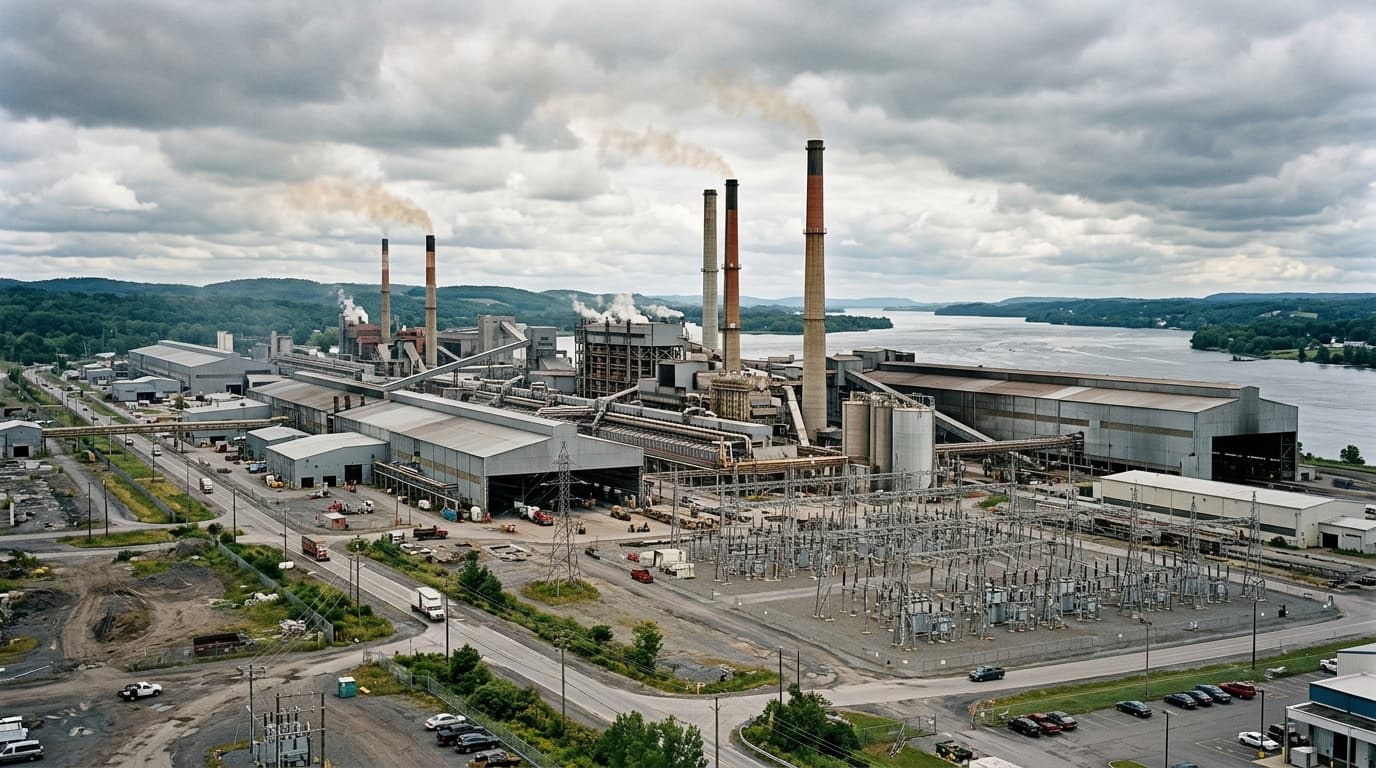
A dormant aluminum smelter on the banks of the St. Lawrence River is about to get a second life. Alcoa Corp. is in advanced talks to sell its idle Massena East facility in upstate New York to NYDIG, with the deal expected to close by mid-2026. If finalized, the acquisition would give the Stone Ridge-owned Bitcoin firm access to 435 megawatts of hydropower capacity and 1,300 acres of pre-built industrial infrastructure.
The move reflects a growing pattern: Bitcoin miners are snapping up legacy industrial sites that already have the grid connections and power infrastructure that would take years and hundreds of millions of dollars to build from scratch.
From Molten Aluminum to Mining Rigs
The Massena East smelter hasn't produced aluminum since 2014, when high energy costs and global competition made the operation uneconomical. But what killed aluminum production is precisely what makes the site attractive for Bitcoin mining: direct access to New York Power Authority hydropower.
The facility isn't starting from zero. Coinmint currently operates approximately 54,000 Bitcoin miners at the site, drawing about 166 MW of the available capacity. NYDIG acquired a stake in Coinmint in October 2024, giving the firm a foothold at Massena East before pursuing full ownership of the underlying real estate.
This acquisition would build on NYDIG's March 2025 purchase of Crusoe Energy's Bitcoin mining business, which added over 270 MW of capacity to its portfolio. The company appears to be methodically assembling industrial-scale mining infrastructure across North America.
The Economics of Repurposing
Why chase old smelters? The math is straightforward. Building new high-voltage transmission infrastructure is expensive, time-consuming, and increasingly difficult to permit. Aluminum smelters, steel mills, and similar heavy industrial facilities were built decades ago when such projects faced fewer obstacles. They already have substations, transmission lines, and land. A Bitcoin miner just needs to plug in.
Alcoa isn't keeping this quiet. The company is actively marketing 10 dormant U.S. smelter sites to data center and mining operators as part of a broader divestiture strategy. Century Aluminum recently sold its Hawesville, Kentucky smelter to TeraWulf for data center use, demonstrating that this isn't a one-off opportunity but an emerging category of real estate transactions.
The Massena site currently employs about 85 full-time workers, with expectations that headcount will grow under NYDIG ownership. Local regulations in Massena have been updated to accommodate cryptocurrency mining operations, suggesting the community sees economic opportunity in the transition.
What This Means for Bitcoin Mining
Industrial-scale operations like NYDIG's represent one end of the Bitcoin mining spectrum. These facilities compete on efficiency, access to cheap power, and scale. They're the mining equivalent of factory farms.
But there's another approach. For individuals interested in participating in Bitcoin's security model without industrial infrastructure, companies like Solo Satoshi offer home mining solutions using Bitaxe and other open-source hardware. The economics are different (solo mining is more like playing the lottery than earning steady income), but it allows anyone to contribute hashrate from their living room. Some users even repurpose the heat output.
Both models coexist because they serve different purposes. Industrial miners like NYDIG are profit-maximizing businesses. Home miners are often enthusiasts or Bitcoiners who want direct participation in the network's consensus mechanism regardless of whether it's strictly profitable.
Looking Ahead
The NYDIG-Alcoa deal isn't finalized, and mid-2026 is still months away. But the direction is clear. As Bitcoin mining matures as an industry, operators are moving beyond converted warehouses and shipping containers toward purpose-acquired industrial infrastructure.
There's a certain elegance to it. Sites built to power energy-intensive manufacturing in the 20th century are finding new purpose securing a 21st-century monetary network. Whether that's ultimately a good use of hydropower capacity is a debate that will continue. But for now, the market has rendered its verdict: these facilities are worth more to Bitcoin miners than they are sitting idle.