
Blockstream Jade Plus Review, the Air-Gapped Signer Built for Everyday Bitcoin Use
A research-based review of the Blockstream Jade Plus hardware wallet covering air-gapped QR signing, stateless mode, and multisig performance.
The Blockstream Jade Plus ships at $149 and promises something unusual: a fully air-gapped Bitcoin signer that's also meant for regular use. Eighteen months after its January 2025 launch, it has accumulated enough real-world feedback to assess whether that promise holds up.
Most hardware wallets optimize for either maximum security (at the cost of usability) or convenience (at the cost of security theater). The Jade Plus attempts a middle path: open-source transparency, air-gapped operation via QR codes, and a design that doesn't punish you for actually using it. The question is whether that balance works in practice.
What You're Actually Getting
The Jade Plus is a Bitcoin-only hardware wallet priced at $149 for the standard version, with metal variants (Lunar Silver and Genesis Grey) running $169. Blockstream keeps the original Jade in the lineup at $79 for users who don't need the upgraded hardware.
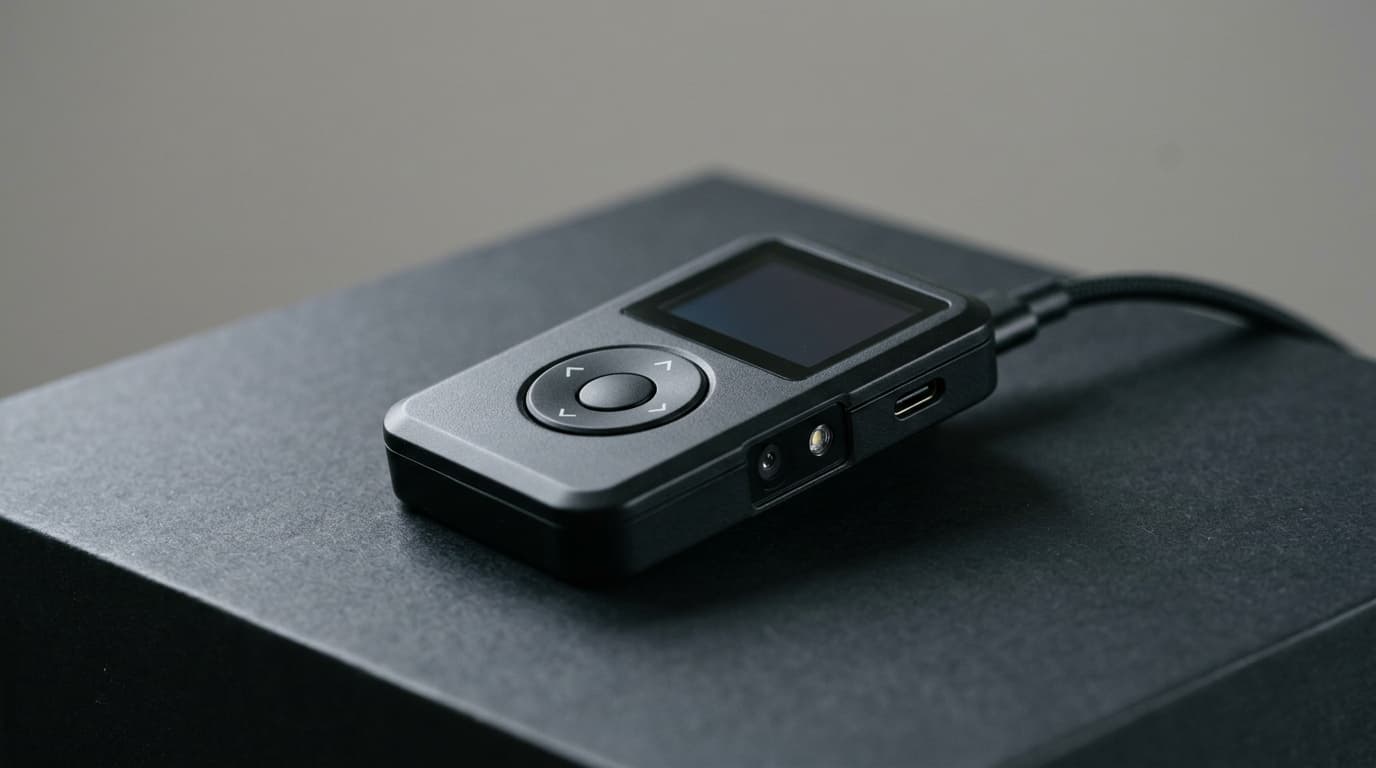
The physical differences from the original Jade matter for daily use: a larger screen that makes transaction verification less of a squint-fest, an improved camera for faster QR scanning, and a more substantial build that feels less like a toy. Multiple 2026 reviews consistently highlight the screen upgrade as the most noticeable practical improvement, with WalletLab scoring it 4.5/5 for Bitcoin-only users and CryptoSlate giving it 7.5/10.
The device supports Bitcoin mainnet in full air-gapped mode. Liquid Network assets require a USB or Bluetooth connection to the Blockstream app, a tradeoff that matters if you use L-BTC or Liquid-issued stablecoins regularly.
Air-Gapped Signing in Practice
The core appeal of the Jade Plus for active users is its QR-based air-gapped workflow. Rather than connecting via USB or Bluetooth, you exchange data through animated QR codes between the Jade Plus and a companion app like Sparrow, Nunchuk, Specter, or BlueWallet.
The process works like this: you create a transaction in your companion app, which generates a PSBT (Partially Signed Bitcoin Transaction) displayed as an animated QR code. The Jade Plus camera scans this, you verify the transaction details on the device screen, sign it, and the Jade Plus displays a new QR code containing the signed transaction. Your companion app scans this and broadcasts it to the network.
No USB cable touches your signing device. No Bluetooth connection exists to intercept. The attack surface genuinely shrinks.
Blockstream's documentation emphasizes verifying addresses and amounts on the Jade Plus screen before signing, and offers QR density and frame rate adjustments if companion apps struggle with scanning. This suggests the company has dealt with enough real-world scanning issues to build workarounds into the system.
The Blind Oracle Model
Here's where the Jade Plus diverges from conventional hardware wallet design, and where you need to understand what you're agreeing to.
Most hardware wallets use a secure element, a tamper-resistant chip that stores your keys and makes physical extraction extremely difficult. The Jade Plus doesn't use a secure element. Instead, it employs what Blockstream calls a "blind oracle" PIN model.
When you unlock the device via QR (to stay fully air-gapped), it communicates with an external oracle through a four-QR-scan exchange. The oracle helps decrypt your keys without ever learning what those keys are, and the process is designed so that an attacker who physically steals your device can't brute-force the PIN offline.
Nuri's July 2026 review calls this a "novel blind-oracle security model" that's both a strength and a "homework assignment." The strength: it achieves meaningful protection without relying on closed-source secure element chips you can't audit. The homework: you need to actually understand and trust this mechanism, which adds complexity compared to the "it just works" approach of secure element devices.
For users who prioritize open-source auditability and want to verify rather than trust, this is a feature. For users who want maximum physical tamper resistance with minimal thinking, Nuri explicitly recommends looking elsewhere: "look elsewhere if you want a secure element and zero homework."
Stateless Mode and SeedQR
The Jade Plus offers a genuinely interesting capability for multisig users and those managing multiple wallets: stateless signing via SeedQR.
In this mode, the device doesn't retain your wallet information between sessions. Instead, you scan a SeedQR (a QR-encoded version of your 12 or 24-word recovery phrase) each time you want to sign. The device temporarily loads your keys, signs what you need, and forgets everything when you're done.
This sounds inconvenient until you consider the use case. If you're managing a 2-of-3 multisig setup with seeds stored in different physical locations, being able to scan a SeedQR and sign without the device ever "knowing" that seed permanently has real security benefits. You can store the SeedQR in a safe deposit box, fire safe, or other secure location, and the signing device itself becomes a generic tool rather than a target containing keys.
Blockstream recommends creating a handwritten SeedQR during setup and explicitly warns against photographing it or storing it digitally. They suggest their Metal or Capsule products for physical backup, which is sensible advice for any recovery phrase storage.
The SeedQR-only access path is exclusive to the Jade Plus and doesn't support USB or Bluetooth, maintaining full air-gap isolation for users who choose this workflow.
Multisig and Sparrow Integration
For users building multisig setups with Sparrow or Nunchuk, the Jade Plus integrates through xpub export via animated QR. Your companion app receives enough information to generate receive addresses, track balances, and create transactions without the Jade Plus ever connecting directly to anything networked.
The device supports Miniscript, which enables more sophisticated Bitcoin scripting beyond basic multisig. This positions the Jade Plus as a capable signer for advanced configurations, not just a simple single-sig cold storage device.
WalletLab's May 2026 review specifically highlights multisig and stateless workflows as areas where the Jade Plus excels compared to the original Jade, suggesting it's optimized for engaged users rather than pure beginners.
The Air-Gap Bundle Option
Blockstream sells a Jade Plus Air-Gap Bundle that combines the device with a JadeLink air-gapped USB drive and Blockstream Metal SeedQR storage. The JadeLink enables air-gapped firmware updates via SD card workflow, meaning you can update device firmware without ever connecting it to an internet-enabled computer.
This matters because firmware updates are typically the moment when air-gapped devices become temporarily connected. The bundle architecture maintains isolation throughout the device lifecycle, which appeals to users for whom consistent air-gap discipline is a priority.
Security Track Record
As of mid-2026, no reviewed source reports any major security incident or fund loss attributable to the Jade Plus itself. CryptoSlate's March 2026 review notes that a security group called DARKNAVY disclosed a flaw, which was responsibly patched with no evidence of real-world exploitation.
This clean record since the January 2025 launch is meaningful but not sufficient on its own. Hardware wallets are long-term security tools, and eighteen months of operation doesn't prove invulnerability. What it does suggest is that the open-source development model and Blockstream's security response process have handled at least one disclosed vulnerability appropriately.
Legitimate Criticisms
The Jade Plus isn't universally praised. Several points of criticism appear consistently across 2026 reviews and user feedback.
Price premium concerns: Some users perceive the $149-169 price as driven more by the upgraded case, camera, and display than by fundamentally new security capabilities. At least one mid-2025 Trustpilot review called it "primitive functionality" for the price, though this appears to be a minority view.
Customer support friction: A six-month daily use review from June 2026 notes difficulties reaching live support and slower response times. Blockstream's extensive written documentation partially offsets this, but users expecting responsive human support may be disappointed.
Complexity versus plug-and-play: The air-gapped workflow, while more secure, requires more steps than simply plugging in a USB cable. The blind oracle unlock process involves four QR scans between the Jade Plus and companion device. For users who value simplicity above all, this is friction.
Physical security tradeoffs: Without a secure element, the Jade Plus's physical tamper resistance differs from competitors like Coldcard or Trezor Safe models. The blind oracle model compensates for this in specific attack scenarios, but it's a different security architecture that may not satisfy users who want maximum physical extraction resistance.
Who Should Consider This
The Jade Plus works best for Bitcoiners who value open-source auditability, want genuinely air-gapped operation, and are willing to understand the device's security model rather than simply trusting it. It's particularly well-suited for:
- Multisig users building setups with Sparrow, Nunchuk, or Specter who want stateless signing capabilities
- Privacy-conscious users who want to minimize device connectivity
- Technical users who prefer auditable security over black-box secure elements
- Active users who sign transactions regularly and appreciate the improved screen and camera for day-to-day operation
It's less ideal for users who want a set-and-forget cold storage device with minimal interaction, those who prioritize altcoin support, or anyone uncomfortable with the blind oracle model's conceptual complexity.
The Bottom Line
The Jade Plus has matured into a legitimate daily-driver hardware wallet for engaged Bitcoin users. The larger screen, improved camera, and QR-based air-gapped workflows address real usability complaints from the original Jade while maintaining the open-source transparency that distinguishes Blockstream's approach.
At $149, it occupies a middle ground: more premium than entry-level devices, less expensive than flagship competitors. Whether that price point makes sense depends on whether you value what the Jade Plus specifically offers (open-source auditability, QR air-gapping, stateless operation) over what it doesn't (secure element, broad altcoin support, plug-and-play simplicity).
For Bitcoiners who treat auditability as a requirement and regularly sign transactions in multisig or privacy-focused setups, the Jade Plus delivers a compelling combination of security and usability. For users who want maximum physical security with minimal homework, the market offers alternatives worth considering.
The device doesn't revolutionize hardware wallet security. What it does is execute a specific vision, open-source, air-gapped, Bitcoin-focused, with enough polish for everyday use.