
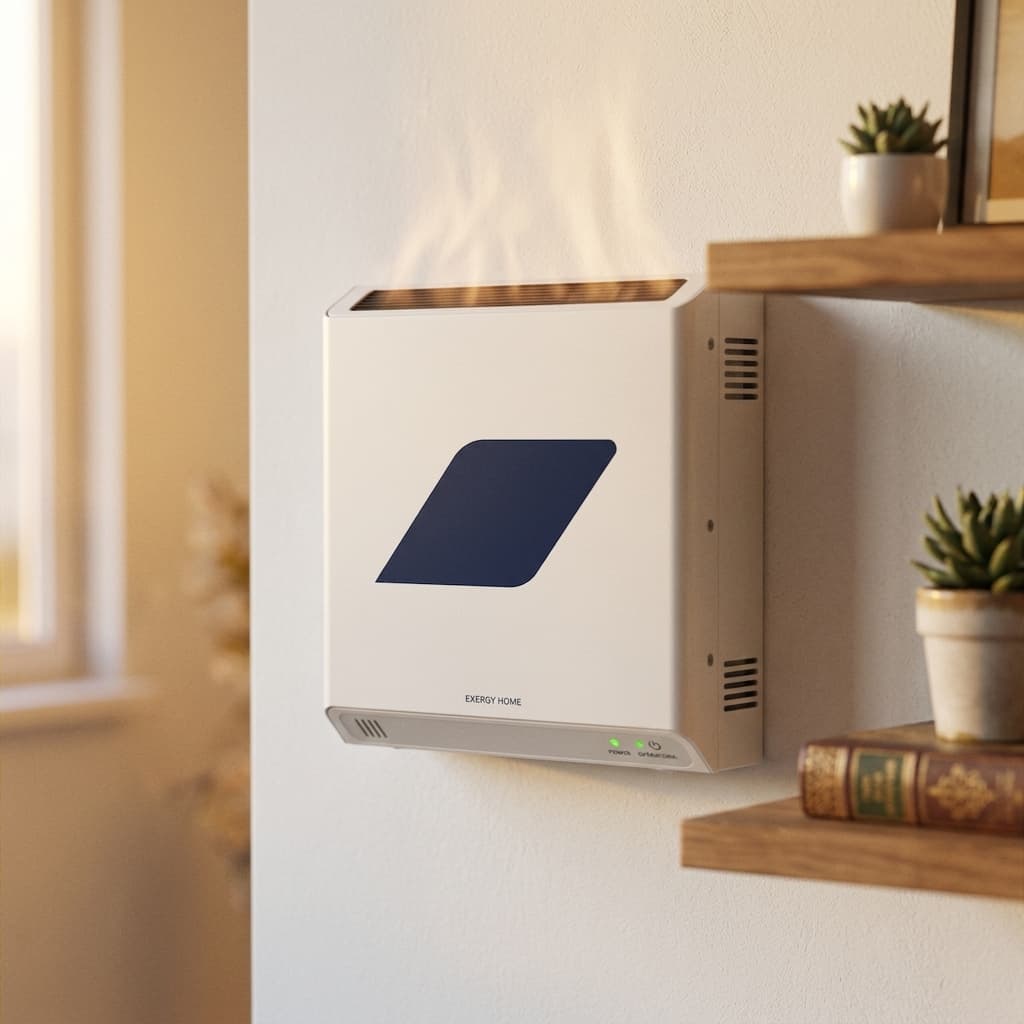
How to Set Up Exergy Bitcoin Mining Heaters for Winter Heating
Step-by-step guide to installing Exergy Bitcoin mining heaters, covering placement, electrical requirements, pool setup, and heating cost calculations.
A 1500-watt electric space heater and a 1500-watt Bitcoin mining heater consume identical electricity and produce identical heat. The difference is that one of them pays you back in Bitcoin while warming your home. That's the core proposition behind Exergy, an engineering firm designing heating systems that turn your winter electricity bill into both warmth and mining rewards.
If you're considering one of these dual-purpose units for the 2026 heating season, here's what you need to know about setup, configuration, and realistic expectations.
Before You Begin: What You'll Need
Exergy's hashrate heaters integrate Bitcoin mining ASICs into home heating infrastructure. Before installation, gather the following:
- A dedicated electrical circuit (120V or 240V depending on your unit)
- Ethernet cable and router access
- A Bitcoin wallet address for receiving mining payouts
- A mining pool account (more on this below)
- Basic tools for mounting or positioning
Exergy maintains documentation on GitHub for smart home integration and miner configuration. Review the specific manual for your model before starting, as requirements vary by unit wattage and form factor.
Step 1: Choosing the Right Location
Placement matters for both heating efficiency and mining performance. Position your Exergy unit centrally in the room you want to heat, maintaining 12 to 18 inches of clearance on all sides for proper airflow. Mining hardware generates consistent heat output, but that heat needs to circulate freely to warm your space effectively.
For a 1500W unit, expect approximately 5,118 BTU per hour of heat output (calculated as watts multiplied by 3.412). This adequately heats rooms between 150 and 250 square feet. Larger spaces may require multiple units or supplemental heating.
Garages and workshops work particularly well for these heaters. These spaces often need supplemental warmth, can accommodate slightly more industrial-looking equipment, and tolerate the modest fan noise that mining hardware produces. If noise sensitivity is a concern in living areas, consider placing units in adjacent rooms or using ducting to direct warm air where needed.
Step 2: Electrical Connection
Exergy heaters typically plug into standard outlets, but the specific requirements depend on your unit's wattage:
120V Units: Plug into a standard household outlet on a dedicated circuit. Avoid using extension cords or power strips, which can create fire hazards with continuous high-draw appliances.
240V Units: Require a dedicated 240V outlet, similar to what you'd use for a dryer or electric range. If you don't have one in your desired location, you'll need an electrician to install it. The upfront cost is typically $150 to $300 but allows for higher-wattage operation and better electrical efficiency.
Before powering on, verify your home's electrical panel can handle the additional load. A 1500W heater draws approximately 12.5 amps on a 120V circuit, which is close to the maximum for a standard 15-amp breaker. Dedicated circuits prevent tripped breakers and potential safety issues.
Step 3: Network Configuration
Connect your Exergy unit to your router via Ethernet cable. While some Bitcoin mining heaters support WiFi, wired connections provide the stability that mining requires. Dropped connections mean lost hashing time and reduced earnings.
Once connected, access your unit's configuration interface through a web browser. You'll typically find the device's IP address either:
- Displayed on the unit's screen (if equipped)
- Listed in your router's connected devices
- Discoverable via the manufacturer's mobile app
Log into the interface using the default credentials from your documentation, then change the password immediately. Internet-connected mining hardware has been targeted by malware that redirects mining rewards to attackers.
Step 4: Mining Pool Setup
Solo mining with a single home heater is theoretically possible but practically pointless. Your odds of finding a block are negligible, meaning you'd likely heat your home all winter without earning a single satoshi. Instead, join a mining pool to receive consistent, proportional payouts.
Popular pools compatible with home mining hardware include:
- Braiins Pool
- Ocean
- Foundry USA
- F2Pool
Create an account with your chosen pool, then configure your Exergy unit with:
- Stratum URL: The pool's server address (e.g., stratum+tcp://pool.example.com:3333)
- Worker Name: Usually your username.workername
- Password: Often just "x" or left blank, depending on the pool
Enter your Bitcoin wallet address in the pool's payout settings. Most pools have minimum payout thresholds, typically 0.001 to 0.01 BTC, before they'll send earnings to your wallet.
Step 5: Thermostat Integration (Optional)
For seamless operation, integrate your Exergy heater with existing smart home systems. This allows the unit to cycle based on room temperature rather than running continuously. When the room reaches your target temperature, the miner pauses; when it cools, mining and heating resume automatically.
Exergy's GitHub documentation covers integration with common smart home platforms. The practical benefit is treating the unit like any other thermostat-controlled heater while mining during active heating cycles.
Calculating Your Heating Cost Offset
Here's where expectations need grounding. A Bitcoin mining heater consumes electricity at the same rate as a standard electric heater. The question is how much of that cost you'll recover through mining rewards.
Start with your local electricity rate. At $0.12 per kWh, a 1500W heater running 8 hours daily costs approximately $1.44 per day, or about $43 per month.
Your mining earnings depend on:
- Your unit's hashrate
- Current network difficulty
- Bitcoin's price
- Pool fees (typically 1-2%)
Post-halving economics in 2026 mean home mining profitability is tighter than in previous cycles. If your electricity costs exceed roughly $0.08 to $0.10 per kWh, don't expect mining rewards to fully offset your heating bill. The realistic outcome for most users is a partial subsidy, perhaps recovering 20% to 50% of electricity costs depending on Bitcoin's price and network conditions.
The honest framing: you're paying for heat regardless. The mining rewards reduce the net cost rather than eliminating it.
Troubleshooting Common Setup Issues
Unit won't connect to pool: Verify your stratum URL includes the correct port. Check that your firewall isn't blocking outbound connections on mining ports (typically 3333, 3334, or 8332).
Low hashrate reported: Allow 10 to 15 minutes for the unit to reach full operating temperature and stable performance. Persistent low hashrate may indicate thermal throttling from inadequate airflow.
No payouts received: Confirm your wallet address is correctly entered in pool settings. Check that you've met the pool's minimum payout threshold. Review pool dashboards to verify your worker is submitting valid shares.
The Bigger Picture
Some experts view heat reuse as Bitcoin mining's emerging utility, enabling energy-efficient decentralized systems that wouldn't otherwise make economic sense. When you're already paying for electric heat, capturing additional value from that electricity expenditure changes the calculation.
That said, these heaters aren't for everyone. If you have access to cheap natural gas heating, the economics likely don't favor switching to electric mining heaters. They make the most sense for homes already reliant on electric heat, spaces needing supplemental warmth, or Bitcoin enthusiasts who want to contribute hashrate to network decentralization while getting tangible utility from the process.
Set your expectations appropriately, configure carefully, and your Exergy heater should provide years of dual-purpose service through cold winters ahead.