
Trezor Safe 7 Review, Does Post-Quantum Security Justify the Premium Price
An honest research-based review of Trezor Safe 7's quantum-ready features. We examine whether the $249 price delivers real security or future-proofing most holders don't need.
The Trezor Safe 7 is the first hardware wallet to ship with NIST-standardized post-quantum cryptography protecting its firmware. At $249, it costs nearly double the Trezor Safe 5. The question worth asking: are you paying for meaningful security today, or for insurance against a threat that may not materialize for years?
After reviewing documentation, third-party analysis, and user feedback, the answer is nuanced. The Safe 7 delivers genuine technical advances, but its post-quantum features protect a narrower slice of your security than the marketing suggests.
What "Quantum-Ready" Actually Means
Trezor uses the SLH-DSA-128 signature scheme, standardized by NIST in 2024, to secure three specific operations: the boot process, firmware updates, and device authentication. This matters because a quantum computer powerful enough to break classical cryptography could theoretically forge firmware updates, compromising your wallet at its foundation.
Here's what quantum-ready does not mean: your Bitcoin isn't quantum-resistant. Bitcoin still relies on ECDSA signatures at the protocol level. Until the Bitcoin network itself upgrades to post-quantum algorithms (a change requiring broad consensus that hasn't happened), your on-chain transactions remain vulnerable to the same theoretical future quantum attacks regardless of which hardware wallet you use.
Trezor is clear about this distinction in their technical documentation, stating the Safe 7 is "designed to accommodate future post-quantum cryptography" rather than claiming complete quantum-proofness. But marketing materials emphasize "quantum-ready" prominently, and some buyers may not grasp the limitation.
As Bitcoinionaire's July 2026 analysis put it: Safe 7 is "the most defensible hardware wallet currently available for a holder with a large, long-horizon Bitcoin position," but the justification is narrower than marketing suggests. The post-quantum layer protects against future firmware-signature forgery, not current transaction-level attacks.
The Three-Chip Security Architecture
Beyond the quantum angle, Safe 7 introduces a genuinely innovative hardware stack:
TROPIC01 is a secure element co-developed with Tropic Square that's fully open and auditable. This is unusual. Most secure elements are black boxes protected by NDAs, making independent security research difficult. When Ledger Donjon disclosed a laser fault-injection attack against TROPIC01 in June 2026, the open design meant researchers could analyze and address it transparently.
Infineon OPTIGA Trust M V3 provides an additional layer rated EAL6+, one of the highest security certifications available.
STM32U5 microcontroller handles general processing.
This multi-chip approach means an attacker would need to compromise multiple independent security boundaries. For retail users facing realistic threats (phishing, supply-chain tampering, malware), this architecture provides robust protection.
Hardware and Usability
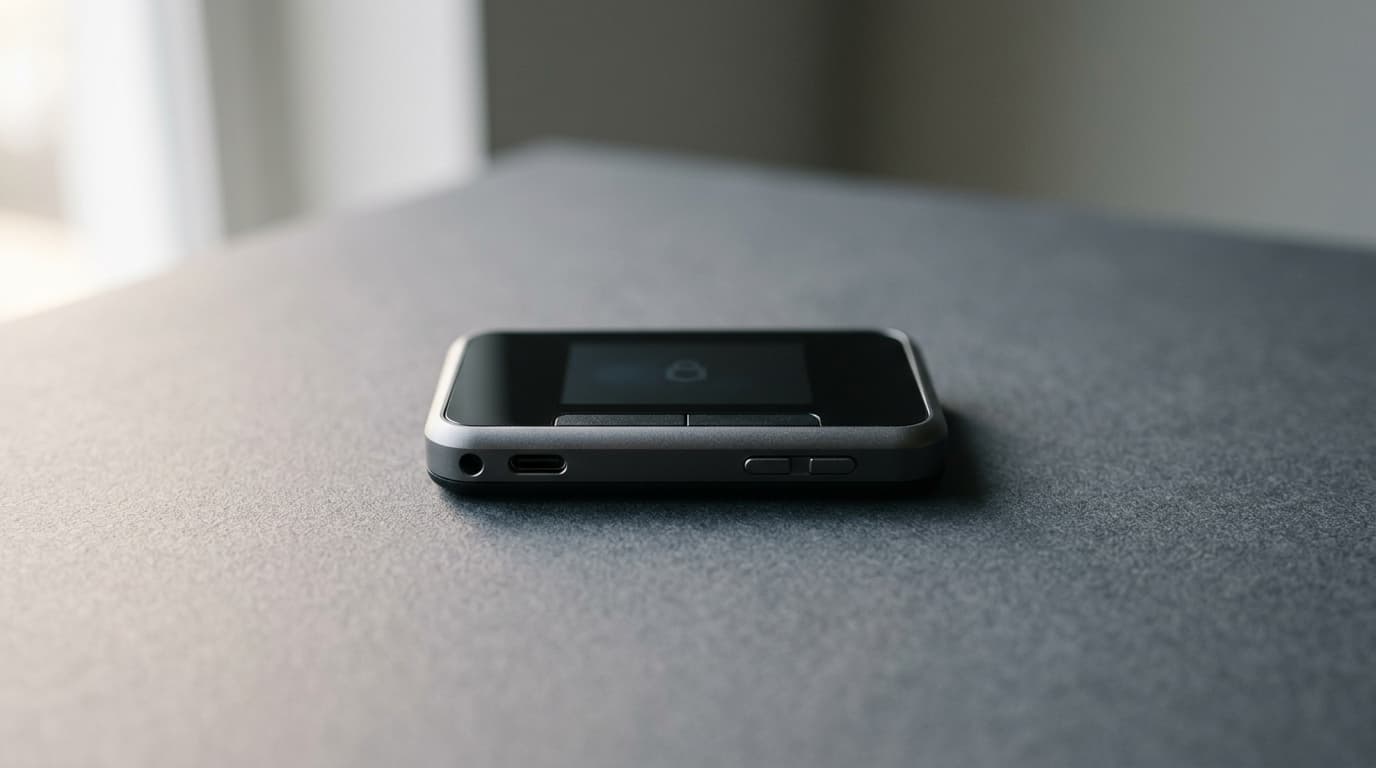
The Safe 7 is Trezor's first wireless wallet, adding encrypted Bluetooth 5.0+ alongside USB-C. The 2.5-inch touchscreen (520×380 pixels) sits under Gorilla Glass 3 in an aluminum unibody rated IP54 for dust and splash resistance. At 45 grams and roughly credit-card sized, it's genuinely portable.
The LiFePO₄ battery (330 mAh) supports Qi2 wireless charging. Trezor claims this chemistry offers around four times more charge cycles than conventional lithium-ion, addressing a legitimate concern about long-term battery degradation in a device meant to last years.
Users on Trezor's product page rate it 4.9/5 based on 37 verified reviews as of August 2026. ColdStorageCrypto gave it 4.9/5 in February 2026, calling it "Best Overall Hardware Wallet for 2026." CryptoSlate scored it 7.8/10 in July 2026, noting it as a "forward-looking entry" while acknowledging the quantum features' current limitations.
The $249 Question
Trezor's lineup prices out clearly: Safe 3 around $59-79, Safe 5 around $129-169, Safe 7 at $249. The Safe 7 premium buys you:
- Post-quantum firmware protection via SLH-DSA-128
- Three-chip security architecture with auditable TROPIC01
- Bluetooth connectivity
- Wireless charging
- Larger, brighter display
- IP54 durability rating
For users with smaller balances or shorter holding periods, hardware-wallet reviewers suggest the Safe 5 offers sufficient security at much lower cost. The Safe 7's feature set is, frankly, overkill for someone storing a few thousand dollars worth of Bitcoin.
But for high-stakes, long-horizon holders, the calculus shifts. If you're planning to hold significant Bitcoin for a decade or more, the Safe 7's quantum-ready bootloader protects against scenarios where future quantum adversaries could forge firmware updates to compromise devices still in circulation. It's insurance against a specific, plausible (if not imminent) threat.
The Open-Source Factor
Separate from the quantum narrative, Trezor's commitment to open-source firmware and auditable hardware deserves weight. The Safe 7 continues this philosophy with TROPIC01's transparent design.
When vulnerabilities emerge (as they did with the June 2026 fault-injection disclosure), open systems allow faster identification and patching. Closed secure elements may have similar vulnerabilities that remain hidden. This transparency is part of what the premium pays for, regardless of whether quantum threats materialize.
Who Should Buy the Safe 7
The Safe 7 makes sense if you:
- Hold substantial Bitcoin positions you intend to keep for many years
- Value open-source, auditable security over proprietary black boxes
- Want Bluetooth connectivity for mobile use
- Care about having the most future-proof firmware architecture available
The Safe 5 probably makes more sense if you:
- Have moderate holdings with a medium-term horizon
- Don't need wireless connectivity
- Prefer to save $120 on features that address theoretical future threats
The Bottom Line
The Trezor Safe 7 is a genuinely excellent hardware wallet with meaningful security innovations. Its post-quantum features represent real engineering, not marketing theater. But those features protect firmware integrity and device trust, not your Bitcoin transactions (which remain classically signed until blockchains upgrade).
At $249, you're paying for the most defensible long-term security architecture currently available in a consumer hardware wallet, wrapped in premium hardware with convenient wireless features. Whether that justifies the premium depends on your threat model, your holdings, and your time horizon.
For serious, long-term Bitcoin holders who want to minimize future regret, the Safe 7 earns its price. For everyone else, the quantum-ready future can wait.